
Download Official Form 3816 (PDF)
Opens the official government PDF in a new tab
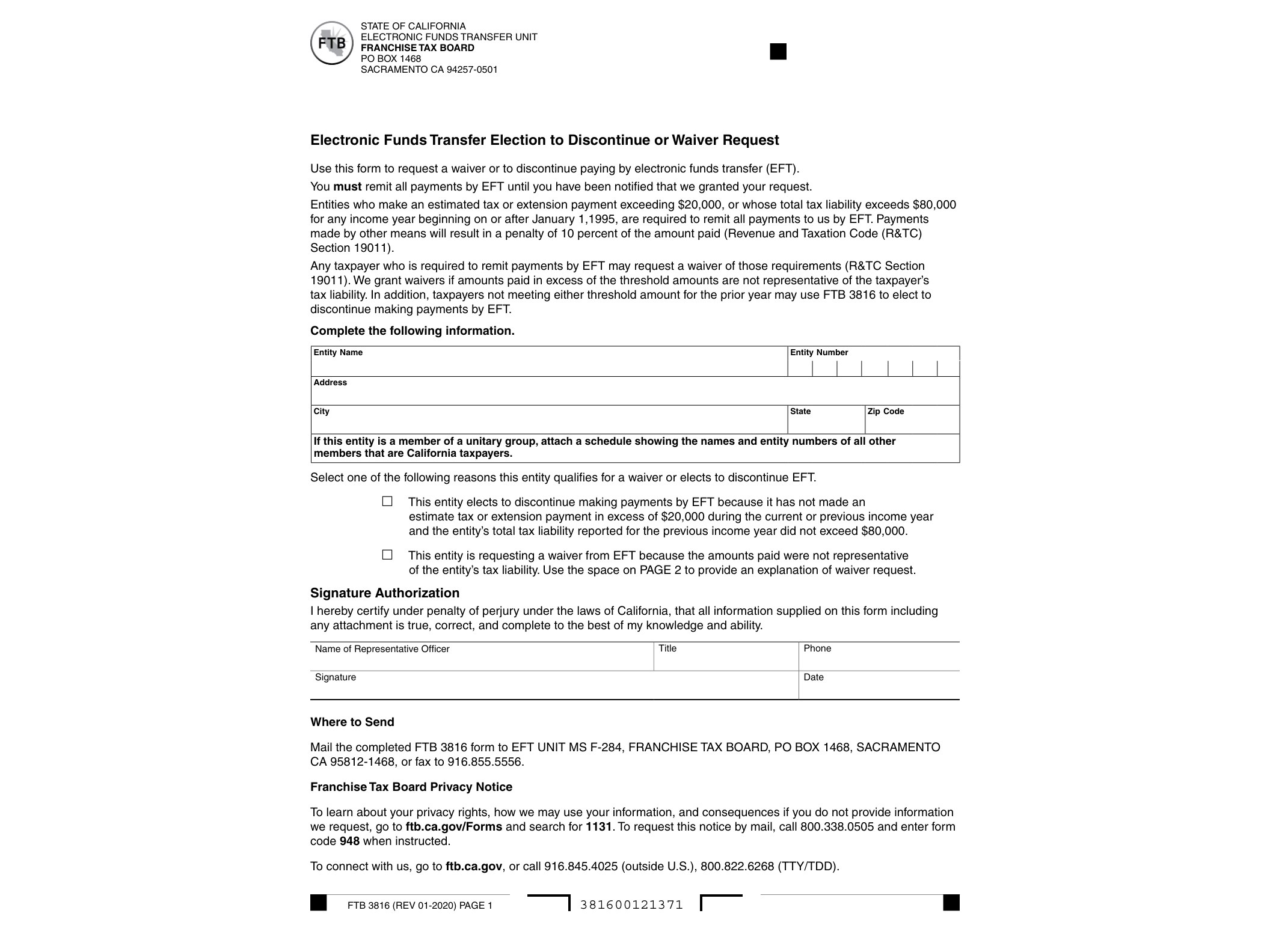
Form FTB 3816 is the document California businesses use when they need to step away from the state’s mandatory Electronic Funds Transfer (EFT) program, or when they want to ask the Franchise Tax Board for an exemption before ever being required to enroll. If your business was previously mandated to pay taxes electronically and circumstances have changed, or you believe the requirement shouldn’t apply to you in the first place, this is the form that handles that request.
What This Form Actually Does
The Franchise Tax Board requires certain corporations, partnerships, and other entities to remit their tax payments electronically once they hit specific thresholds, usually based on estimated tax or extension payment amounts. Once you’re enrolled in mandatory EFT, you don’t just stop sending payments electronically because it’s inconvenient. You have to formally notify the FTB using Form 3816.
The form serves two distinct purposes. First, it lets a taxpayer who is currently required to pay via EFT formally elect to discontinue that method, typically because they no longer meet the threshold that triggered the mandate. Second, it allows a taxpayer to request a waiver from the EFT requirement altogether, often because complying would create an undue hardship or because the entity has a legitimate reason it shouldn’t be subject to the mandate.
This is different from the enrollment side of things, which is handled through FTB 3815, the Electronic Funds Transfer Authorization Agreement. Where 3815 gets you into the EFT system, 3816 is how you get out or ask to be excused from it.
Who Needs to File FTB 3816
This form is relevant to corporations and other business entities registered with the Franchise Tax Board that have been notified they must pay taxes electronically. Common scenarios include:
- A business that no longer meets the payment threshold that originally triggered mandatory EFT participation
- An entity that has ceased operations, dissolved, or otherwise no longer has a filing obligation with the FTB
- A taxpayer requesting a waiver because electronic payment presents a genuine hardship, such as lack of access to the required banking infrastructure
- A business that was mistakenly enrolled or notified of the requirement and needs to formally contest it
Individual taxpayers generally aren’t the audience for this form. It’s built for business entities dealing with California’s corporate and franchise tax obligations.
When to Submit the Form
Timing matters here. If you’re trying to discontinue EFT payments, you’ll want to submit the form well before your next scheduled tax payment is due, since the FTB needs processing time to update your account status. Waiting until the last minute risks having a payment rejected or processed incorrectly, which can trigger penalties even if your underlying tax liability was paid on time.
For waiver requests, submit the form as soon as you receive notice of the mandatory EFT requirement, or as soon as the circumstances justifying the waiver become clear. The FTB reviews these requests on a case-by-case basis, so having documentation ready to support your reasoning speeds things along.
How to Fill It Out
The form is a fillable PDF, so you can complete it digitally before printing or submitting. You’ll need basic identifying information: legal business name, FTB account or entity ID number, and contact details for whoever is authorized to make this request on behalf of the entity.
From there, the form asks you to specify whether you’re electing to discontinue an existing EFT arrangement or requesting a waiver from the requirement entirely. Each option typically requires a brief explanation. For discontinuation, you’ll state why you no longer meet the mandatory threshold. For a waiver, you’ll need to lay out the specific hardship or reason the requirement shouldn’t apply.
Double-check the entity information against what the FTB has on file before submitting. Mismatched account numbers or business names are one of the most common reasons these requests get delayed or bounced back for correction.
Businesses that also handle fiduciary tax matters across state lines sometimes deal with parallel paperwork, like New York’s Form IT-205-A for fiduciary allocation or Form IT-205-T for allocating estimated payments to beneficiaries, so it’s worth keeping your multi-state filing calendar organized if your entity operates in more than one jurisdiction.
Once submitted, keep a copy of the completed form and any confirmation you receive from the FTB. If a payment issue comes up later, having proof of when you filed the discontinuation or waiver request can save you from unnecessary penalty notices.
Download Official Form 3816 (PDF)
Opens the official government PDF in a new tab