
Download Official Form 199 (PDF)
Opens the official government PDF in a new tab
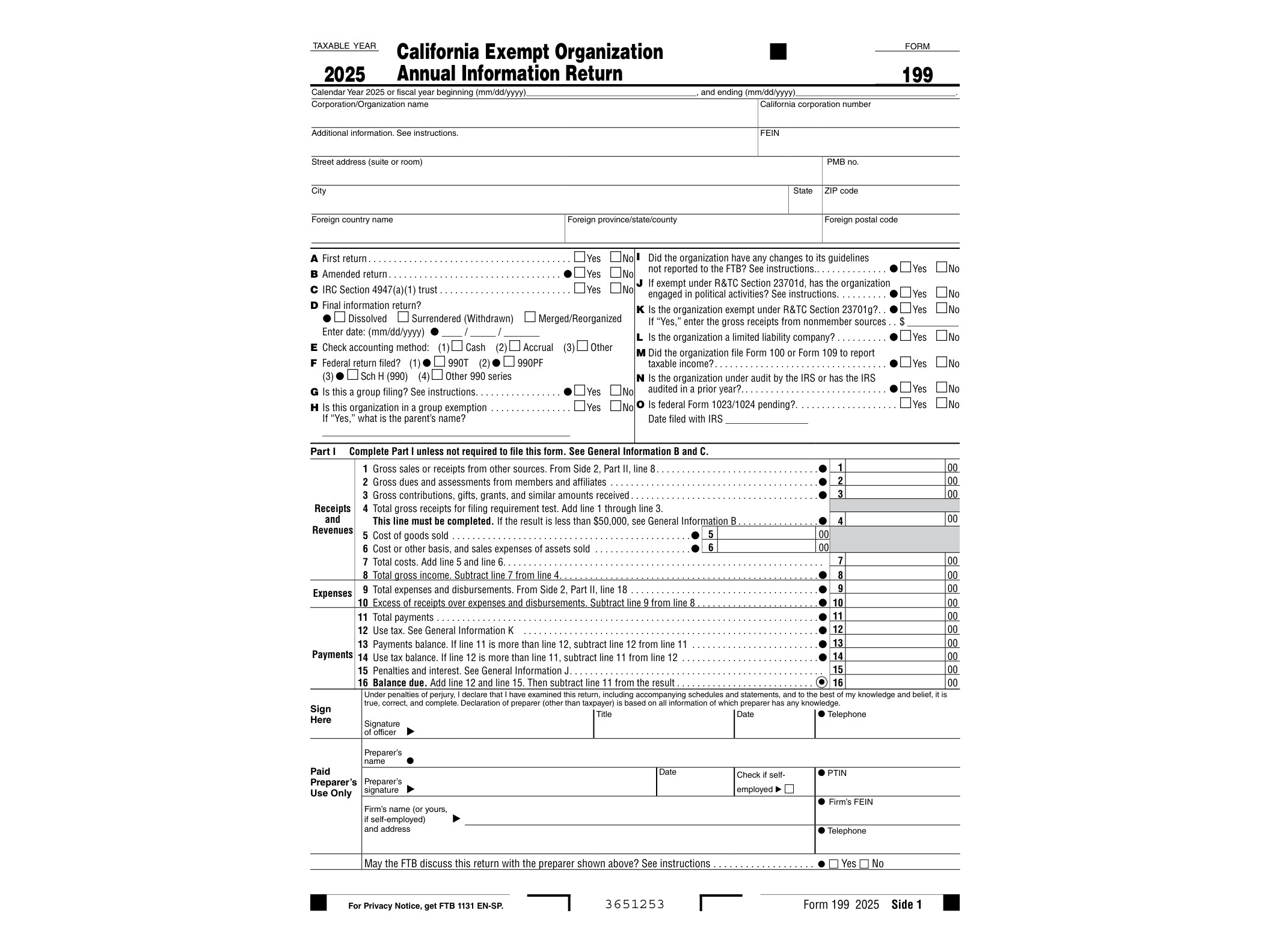
Form 199 is the annual information return that California requires from tax-exempt organizations operating in the state. It’s issued by the California Franchise Tax Board (FTB) and serves a purpose similar to the federal Form 990, but it’s specific to California’s own exemption and reporting rules. If your nonprofit, association, or exempt trust does business or is organized in California, this form is likely part of your annual compliance checklist.
The return collects details about an organization’s income, expenses, assets, and activities during the tax year. The FTB uses this information to confirm that an organization continues to qualify for its tax-exempt status under California law, separate from whatever exemption it holds at the federal level. Even if you’ve already filed Form 990 or 990-EZ with the IRS, California still wants its own version of that financial snapshot.
Who Needs to File Form 199
Most organizations that have obtained tax-exempt status in California — under sections like 23701d (the equivalent of federal 501(c)(3)) or other exemption categories — are required to file Form 199 annually. This includes public charities, private foundations, civic leagues, social clubs, and other nonprofit entities recognized by the state.
There’s a size-based distinction that matters here. Organizations with gross receipts normally $50,000 or less can typically file the simpler FTB 199N (California e-Postcard) instead of the full Form 199. Once gross receipts exceed that threshold, or if the organization holds significant assets, the full Form 199 becomes mandatory. Private foundations, regardless of size, generally must file the complete form rather than the postcard version.
Some entities are exempt from filing altogether, such as churches and certain government-affiliated organizations, but it’s worth confirming your organization’s specific status rather than assuming an exemption applies.
When the Form Is Due
Form 199 is due on the 15th day of the 5th month after the close of the organization’s accounting period. For organizations operating on a calendar year, that means the return is generally due by May 15. If your organization needs more time, California allows an automatic extension period, though any tax owed still needs to be addressed by the original deadline to avoid interest charges.
Late filing can trigger penalties, and repeated failures to file can eventually put an organization’s exempt status at risk. Given how closely the FTB tracks these filings against IRS records, gaps or inconsistencies between your federal and state paperwork tend to draw attention.
What Information Goes Into the Return
The form asks for a breakdown of revenue sources, program expenses, administrative costs, and balance sheet figures for the beginning and end of the tax year. Organizations also need to answer questions about any changes in their organizational structure, activities, or purpose during the year, along with disclosures about transactions with officers, directors, or related parties.
Because Form 199 has fillable AcroForm fields, you can complete it directly on a computer using PDF software before printing or submitting it. This makes it easier to keep accurate figures without worrying about handwriting errors, and it also simplifies recordkeeping since you can save a completed digital copy for your files.
If your organization also handles payroll-related tax documents, it may be useful to look at how California Form 3525 works as a substitute for missing W-2 or 1099-R statements, since exempt organizations sometimes run into reporting gaps for employees or contractors. And if your nonprofit operates as part of a partnership structure or needs more time on related state filings, the extension process described in Form 3538 (565) follows a similar logic to the extension provisions available for exempt organizations.
Getting and Filing the Form
Form 199 is available directly from the FTB’s website as a fillable PDF. Once completed, organizations can file it either electronically or by mail, depending on their preference and whether they’re required to e-file based on their revenue level. Many nonprofits choose to work with an accountant familiar with California exempt organization rules, since the form intersects with broader questions about unrelated business income and state-specific exemption categories that don’t always mirror federal treatment.
Keeping copies of prior years’ filings on hand also helps when preparing the current year’s return, since the FTB may cross-reference figures for consistency, similar to how other state credit programs — like the one outlined in Form IT-261 for New York filers — require documentation trails from year to year.
Download Official Form 199 (PDF)
Opens the official government PDF in a new tab