
Download Official Form 705 (PDF)
Opens the official government PDF in a new tab
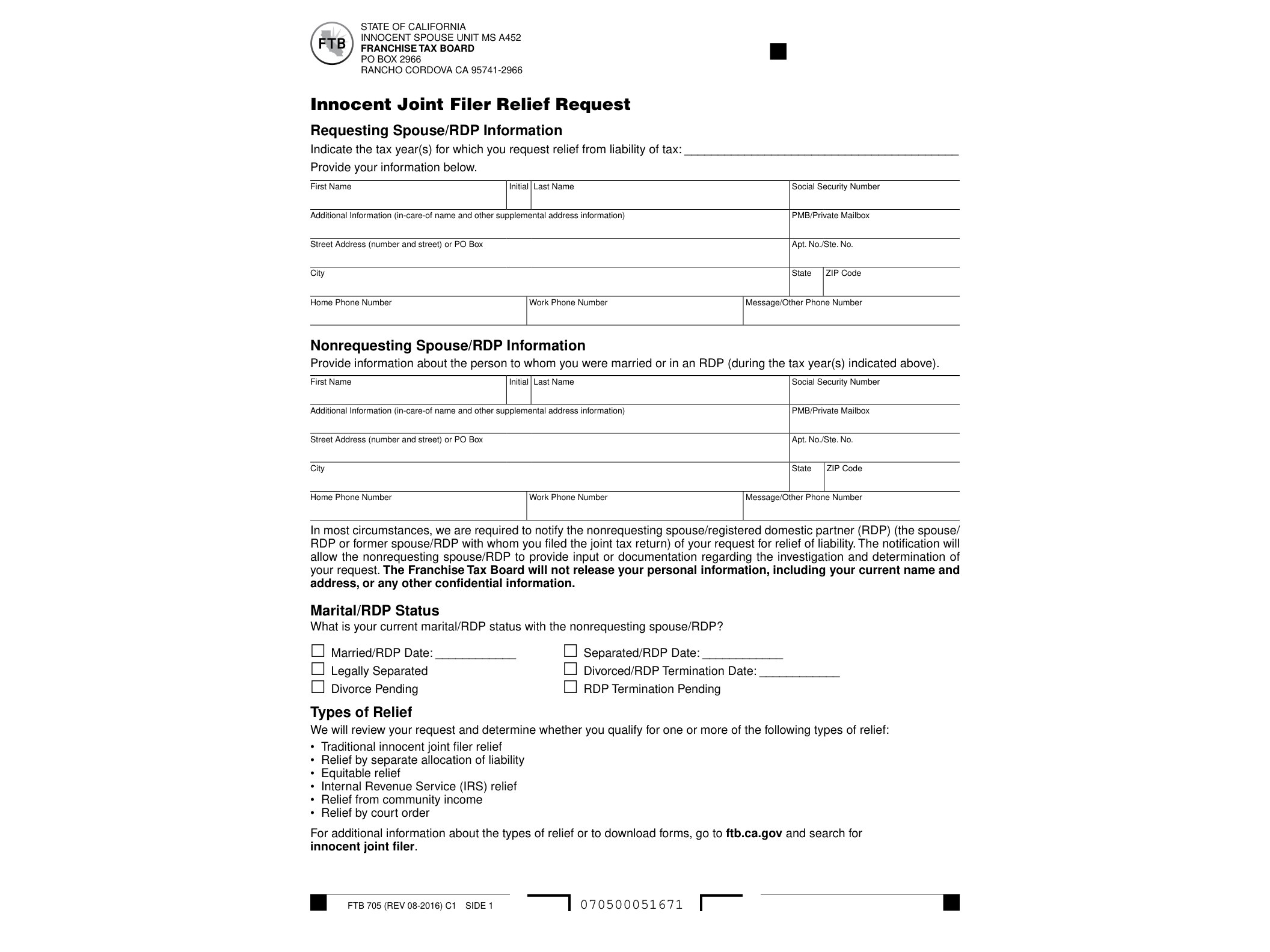
When two people file a joint California income tax return, both are generally on the hook for the full tax bill, including any penalties and interest, even if only one spouse earned the income or made an error on the return. FTB Form 705, officially titled Innocent Joint Filer Relief Request, gives the other spouse a way to ask the California Franchise Tax Board to be released from that shared responsibility under specific circumstances.
This form mirrors the innocent spouse relief process used at the federal level with the IRS, but it applies strictly to California state income tax debt. If you owe money to the FTB because of a joint return your spouse or ex-spouse filed, and you had no knowledge of the underreported income, improper deductions, or other errors that led to the liability, this form is the mechanism for requesting relief.
Who Should File FTB 705
You may qualify to submit this form if:
- You filed a joint California tax return with a spouse or former spouse.
- The return contained an understatement of tax due to erroneous items attributable to the other filer (unreported income, false deductions, incorrect credits, etc.).
- You did not know, and had no reason to know, about the error when you signed the return.
- Given the facts and circumstances, it would be unfair to hold you responsible for the tax debt.
The FTB also considers requests based on separation of liability or equitable relief, which cover situations where the innocent spouse relief category doesn’t quite fit but fairness still calls for some form of relief. These are broader categories built into the same form, so it’s worth reading through all three options before assuming you don’t qualify.
When to Use This Form
Form 705 typically comes into play after the FTB has assessed additional tax on a joint return, sent a bill, or begun collection action, and one spouse wants to dispute their share of that liability. It’s also common after a divorce or separation, when one former spouse discovers a tax debt tied to a return they signed years earlier without full knowledge of what was reported.
There isn’t a single universal deadline for filing, but the FTB generally wants the request submitted within a reasonable time after you become aware of the liability, and definitely before the collection statute expires. If the IRS has already granted you innocent spouse relief on your federal return for the same tax year, that decision carries significant weight with the FTB and can strengthen your California request.
How to Complete and Submit FTB 705
The form is a fillable PDF, so you can type your responses directly into the file before printing and signing it. You’ll need to provide identifying information for both filers, the tax years involved, a description of the erroneous items on the return, and a written explanation of why you didn’t know about the error and why holding you liable would be inequitable. Supporting documentation, such as divorce decrees, financial records, or correspondence showing you were unaware of your spouse’s financial activity, strengthens the request considerably.
Once completed, the form gets mailed to the address listed in the instructions on the FTB website. The Board reviews the request, may ask for additional documentation, and will typically notify the other spouse listed on the return that a relief request has been filed, since that person has the right to respond or contest the claim.
State-specific relief and exemption forms like this one often get overlooked because most people assume tax relief only comes from the IRS. But every state tax agency has its own version of the process, with its own rules and paperwork. New York, for example, has its own set of specialized withholding certificates, including exemptions for military spouses and service members, enrolled tribal members through Form IT-2104-IND, and participants in the START-UP NY program. Whether you’re dealing with California or another state, it pays to check what specific relief mechanisms exist before assuming a federal solution covers everything.
If you’re unsure whether your situation fits the innocent spouse category, separation of liability, or equitable relief, reviewing the instructions carefully or consulting a tax professional familiar with California procedures can save you from submitting an incomplete or misdirected request.
Download Official Form 705 (PDF)
Opens the official government PDF in a new tab