
Download Official Form IT612I (PDF)
Opens the official government PDF in a new tab
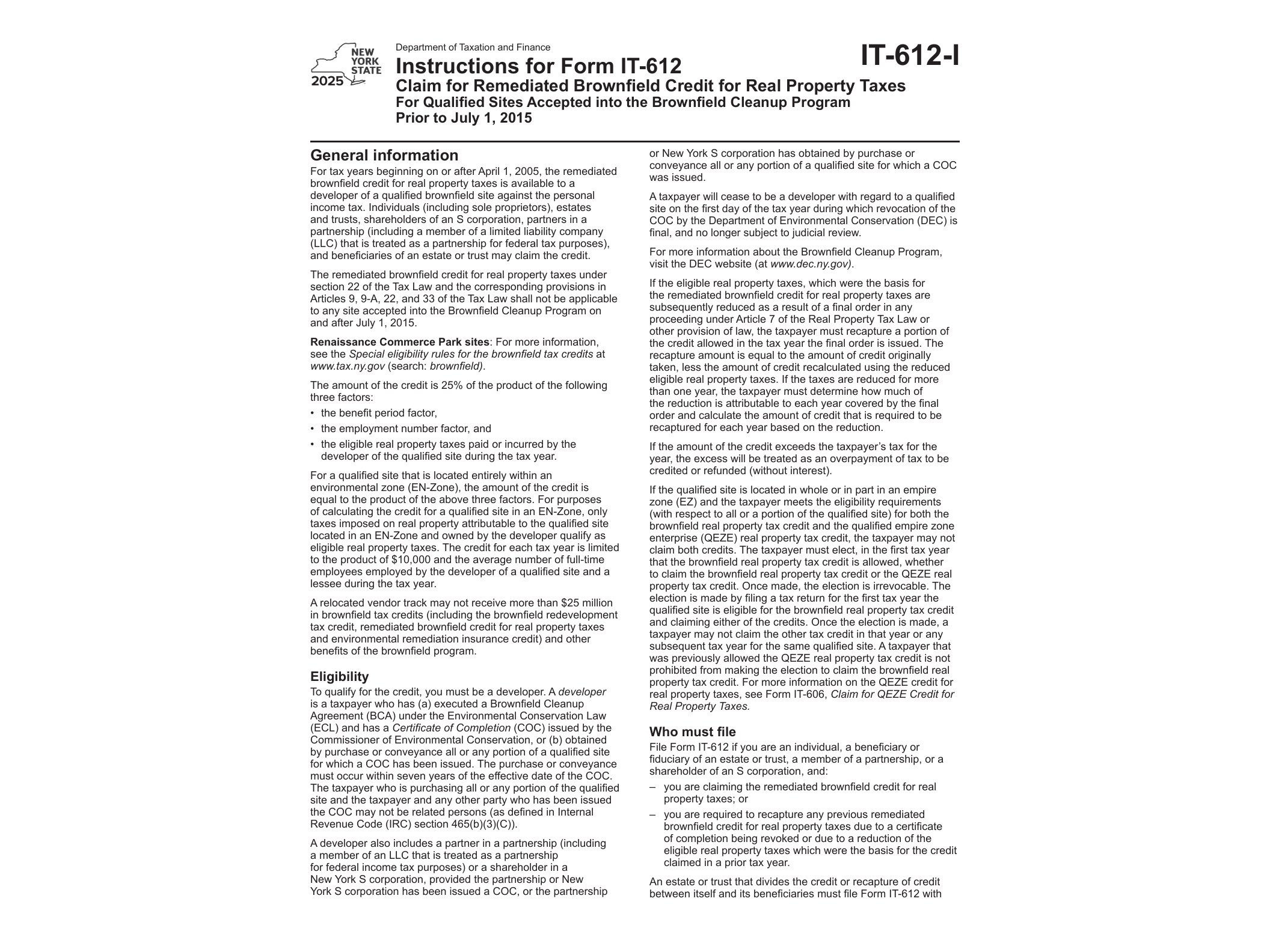
Form IT-612I is the instructional guide published by the New York State Department of Taxation and Finance to accompany Form IT-612, Claim for Remediated Brownfield Credit for Real Property Taxes. If you or your business owns property that was part of a brownfield cleanup program in New York, this credit can offset a portion of the real property taxes you paid on that site. The instructions walk you through eligibility, calculations, and how the credit interacts with other New York State tax credits.
The Remediated Brownfield Credit exists to encourage the redevelopment of contaminated or underused industrial sites. Once a property has completed remediation under New York’s Brownfield Cleanup Program (BCP) and received a Certificate of Completion from the Department of Environmental Conservation, the owner may become eligible to claim credits related to that site for a set number of years. The real property tax component covered by Form IT-612 is one of three related credits available to qualified brownfield sites, alongside credits for remediation costs and environmental remediation insurance.
Who Needs This Form
This form is relevant to individuals, corporations, partnerships, and other business entities that own qualified brownfield sites in New York State and have received a Certificate of Completion under the BCP. If your site is located in an environmental zone (EN-Zone) or meets other statutory conditions, the credit percentage and calculation method may differ, and the instructions explain how to determine which rules apply to your situation.
Property owners who are part of a partnership or S corporation claiming the credit at the entity level also need this guide, since it explains how to report shares of the credit passed through to partners or shareholders. If your brownfield project is still in progress and hasn’t received its Certificate of Completion, you’re not yet eligible to file this claim.
When to Use Form IT-612
You file Form IT-612 with your New York State income tax return for the tax year in which you’re claiming the credit. The credit is generally available for the tax year the Certificate of Completion is issued and for a limited number of years afterward, depending on when the certificate was issued and which version of the brownfield law applies to your site. The instructions in Form IT-612I clarify these timing rules, including special provisions for certificates issued before and after certain legislative changes.
Because brownfield credits often overlap with other environmental tax incentives, taxpayers dealing with contaminated property should also review related guidance. For example, sites that carried environmental remediation insurance during cleanup may qualify for a separate credit explained in Form IT-613I. Property owners in designated economic zones might also want to compare this credit against the QEZE property tax credit detailed in Form IT-606I, since only one of these credits can typically apply to the same property tax payments.
How to Get and Complete the Form
Form IT-612I is a print-and-fill document — there’s no fillable digital version through New York State’s system. You’ll need to download the PDF, print it, and complete Form IT-612 by hand using the calculations and definitions provided in the instructions. The guide includes worksheets for determining your qualified real property taxes, the applicable credit percentage based on your site’s classification, and how to allocate the credit among partners or shareholders if you’re filing through a pass-through entity.
Before starting, gather your Certificate of Completion, records of real property taxes paid on the qualified site during the tax year, and documentation showing the site’s BCP classification. The instructions also cover how to carry forward unused credit amounts if your credit exceeds your tax liability for the year, since brownfield credits aren’t always fully refundable in a single filing period.
If your business has multiple credits related to environmental cleanup or production activities, it’s worth checking whether any other New York credit forms apply to your situation, such as those covering agricultural or production-based incentives like the one described in Form IT-636I, to make sure you’re not missing an available offset for your tax year.
Download Official Form IT612I (PDF)
Opens the official government PDF in a new tab