
Download Official Form ST55 (PDF)
Opens the official government PDF in a new tab
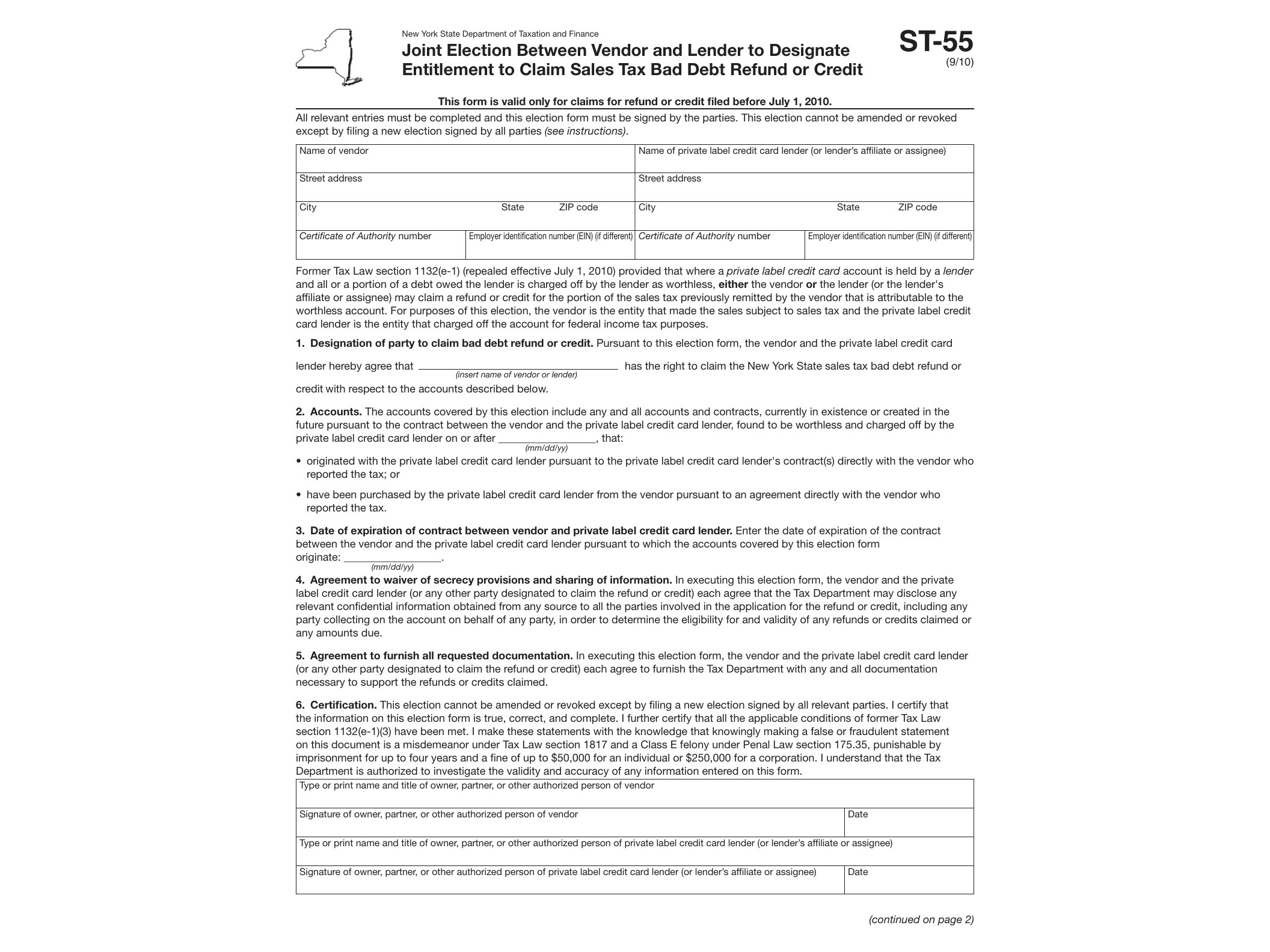
Form ST-55, officially titled “Joint Election Between Vendor and Lender to Designate Entitlement to Claim Sales Tax Bad Debt Refund or Credit,” is a New York State Department of Taxation and Finance form used in a fairly specific corner of sales tax law: what happens when a sale goes bad because the buyer never pays, and the debt ends up in the hands of a private label credit card lender instead of the original vendor.
Under New York sales tax rules, a vendor who makes a taxable sale and remits sales tax to the state can later claim a refund or credit for that tax if the customer never actually pays for the purchase (a “bad debt”). But many retailers don’t hold their own consumer credit accounts anymore. Instead, they use a private label credit card program run by a bank or finance company. When a customer defaults on that card, the question becomes: who gets to claim the sales tax bad debt deduction, the retailer who made the sale, or the lender who absorbed the loss on the unpaid account?
Form ST-55 exists to settle that question in writing. It’s a joint election signed by both the vendor and the lender, designating which party is entitled to claim the sales tax bad debt refund or credit for a given account or portfolio of accounts. Once filed, this election tells the Tax Department who has the legal right to pursue the refund, which prevents both parties from trying to claim the same bad debt credit or, just as problematic, neither party claiming it because each assumes the other will.
Who Needs to File Form ST-55
This form is relevant to two types of parties working together: retail vendors who sell on credit, and the lenders or financial institutions that issue private label credit cards on behalf of those retailers. If your business has a store-branded credit card program where a bank handles the lending and your business handles the sales, this form is how the two of you agree, formally, on who claims the sales tax bad debt deduction when accounts go uncollectible.
Both the vendor and the lender must sign the form. It’s a joint election, not something either party can file unilaterally. The agreement typically needs to specify the accounts or account types it covers, since a vendor and lender relationship can span multiple card programs or agreements over time.
When This Form Is Used
Form ST-55 comes into play when a private label credit card relationship is being established or restructured, and the vendor and lender want clarity on bad debt refund rights going forward. It’s also used when a dispute or ambiguity exists about which party previously claimed, or should have claimed, a bad debt credit. Filing this election removes the guesswork for both the businesses involved and for the Tax Department, which otherwise has no easy way to verify who’s entitled to the refund when a third-party lender is involved in the transaction chain.
This is a niche form. Most small retailers who extend credit directly to customers, or who sell exclusively for cash or standard credit cards (Visa, Mastercard, etc. processed through normal merchant services), won’t ever need it. It’s specifically for the private label card scenario where sales tax liability and credit risk are split between two separate business entities.
How to Get and Complete Form ST-55
Form ST-55 is available directly from the New York State Department of Taxation and Finance as a PDF. It is not an interactive, fillable form, so you’ll need to print it out and complete it by hand. Both the vendor and lender representatives must sign the document to make the election valid.
Because this form deals with bad debt credits and refund entitlement, it’s worth keeping in mind that it operates alongside other New York sales tax reporting forms. If your business occasionally deals with casual or isolated sales reporting, you may also want to review the instructions for Form ST-131, which cover a different but related sales tax reporting obligation. Vendors who also handle individual purchaser reporting duties might find the Form ST-141-I instructions useful as a reference for how New York structures its sales and use tax paperwork more broadly. Businesses operating parking facilities with separate New York tax obligations, meanwhile, should check out the requirements under Form TP-832.
Once signed by both parties, keep a copy of Form ST-55 with your sales tax records. If the Tax Department ever questions a bad debt refund claim tied to a private label credit account, this election is the document that establishes who had the right to make that claim in the first place.
Download Official Form ST55 (PDF)
Opens the official government PDF in a new tab