
Download Official Form ST131I (PDF)
Opens the official government PDF in a new tab
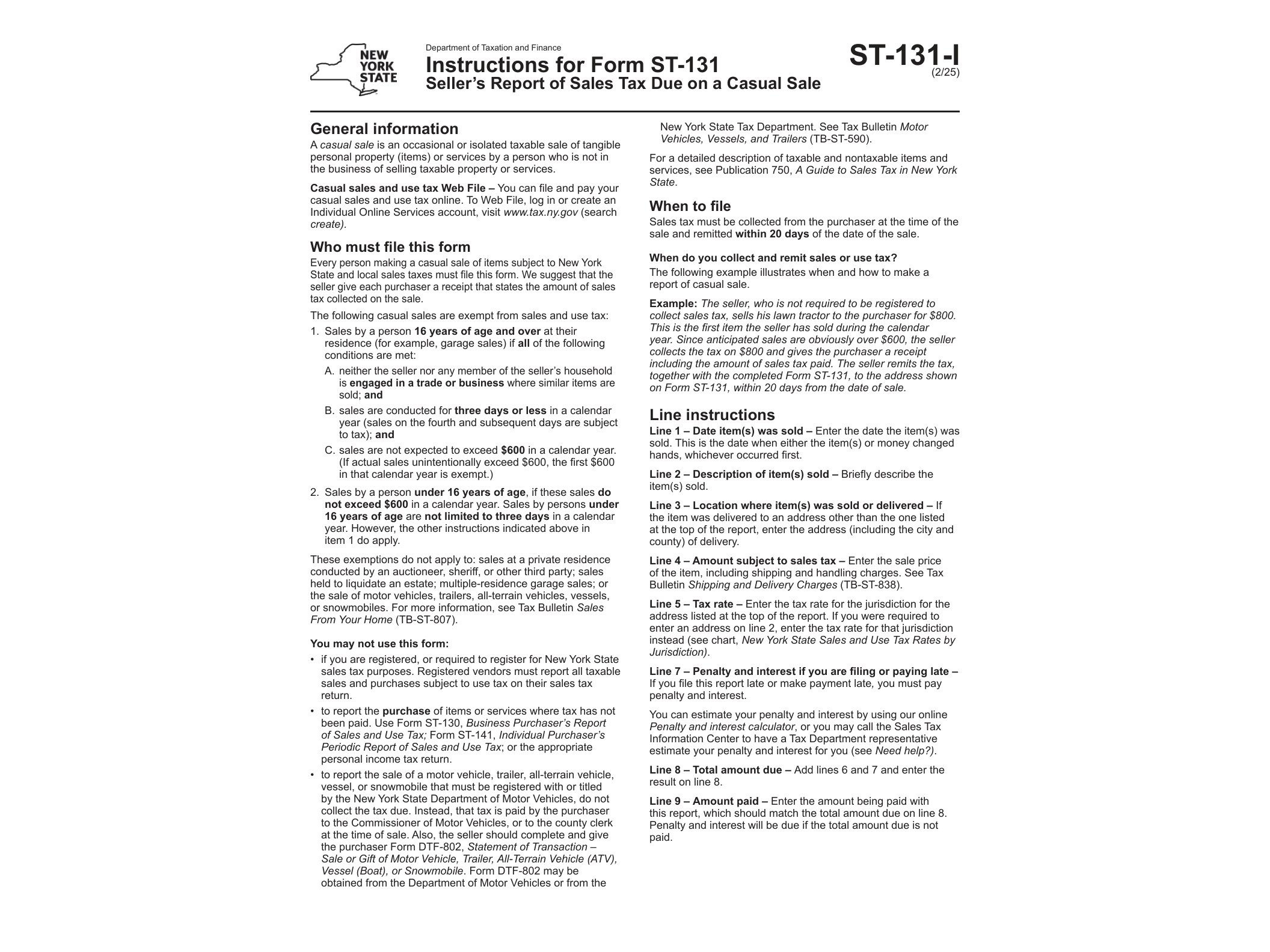
Form ST-131-I provides the official instructions for completing Form ST-131, the Seller’s Report of Sales Tax Due on a Casual Sale, issued by the New York State Department of Taxation and Finance. This document walks sellers through exactly how to report and remit sales tax when they sell certain items outside the normal course of a retail business, such as a private sale of a boat, a snowmobile, or other tangible personal property that isn’t typically sold at a store.
A “casual sale” in New York tax law refers to an isolated or occasional sale made by someone who isn’t regularly engaged in the business of selling that type of property. Because these sellers aren’t registered vendors, they don’t have a regular sales tax account to report through. Instead, the state requires them to file Form ST-131 directly, and the ST-131-I instructions explain line by line how to fill it out correctly, what documentation to attach, and where to send the payment.
Who Needs This Form
You’ll need to reference these instructions if you’re an individual or business that sold a taxable item in New York as a one-time or infrequent transaction, rather than as part of your normal commercial activity. Common examples include selling a boat, aircraft, snowmobile, or all-terrain vehicle privately to another individual. If the buyer didn’t pay sales tax directly to the state through a different process (like vehicle registration at the DMV, which handles some vehicle sales separately), the seller is generally the one responsible for collecting and remitting that tax using Form ST-131.
This differs from businesses that collect sales tax regularly and file periodic returns. Those businesses typically use other mechanisms entirely, similar to how booking intermediaries rely on documents like Form ST-155 to certify tax collection responsibilities in their own specific transactions.
When to Use Form ST-131
The form must be filed after a casual sale takes place, within the timeframe specified by the Department of Taxation and Finance. The instructions clarify the deadline, which is generally tied to the date of sale, and explain what counts as a taxable casual sale versus a transaction that may be exempt. Not every private sale triggers this requirement, so reviewing the ST-131-I instructions carefully before assuming you owe tax is worth the time, since exemptions can apply depending on the item sold and the circumstances of the transaction.
How the Instructions Guide You Through the Form
The ST-131-I document breaks down each section of Form ST-131, including:
- How to identify the seller and buyer with accurate contact and identification information
- How to describe the item sold, including any serial numbers, registration numbers, or identifying details required by the state
- How to calculate the sales tax due based on the sale price and the applicable local tax rate for the jurisdiction where the sale occurred
- Where and how to submit payment along with the completed form
- What supporting documentation, such as a bill of sale, should accompany the filing
Because local tax rates vary by county and municipality in New York, the instructions emphasize using the correct rate table so the tax calculation matches where the transaction legally took place, not necessarily where the buyer or seller lives.
Getting and Filling Out the Form
Form ST-131-I, like Form ST-131 itself, is not available as a fillable PDF. You’ll need to print both the instructions and the form, then complete the paperwork by hand using black ink, making sure your entries are legible since the Department processes these forms manually. Double-check your math on the tax due calculation before mailing it in, since errors can delay processing or trigger a follow-up notice.
If you’re unsure whether your transaction qualifies as a casual sale or falls under a different reporting category, it helps to compare your situation against other specialized sales tax forms the state publishes, such as the options available to materialmen described in Form ST-112, or fuel-related reporting requirements like those in Form FT-945/1045-W. Each of these forms addresses a distinct type of transaction, and matching your situation to the correct one avoids unnecessary delays or incorrect filings.
Keep a copy of the completed Form ST-131 and these instructions for your records after filing, since you may need to reference them if the state has questions about the transaction later.
Download Official Form ST131I (PDF)
Opens the official government PDF in a new tab