
Download Official Form 780 (PDF)
Opens the official government PDF in a new tab
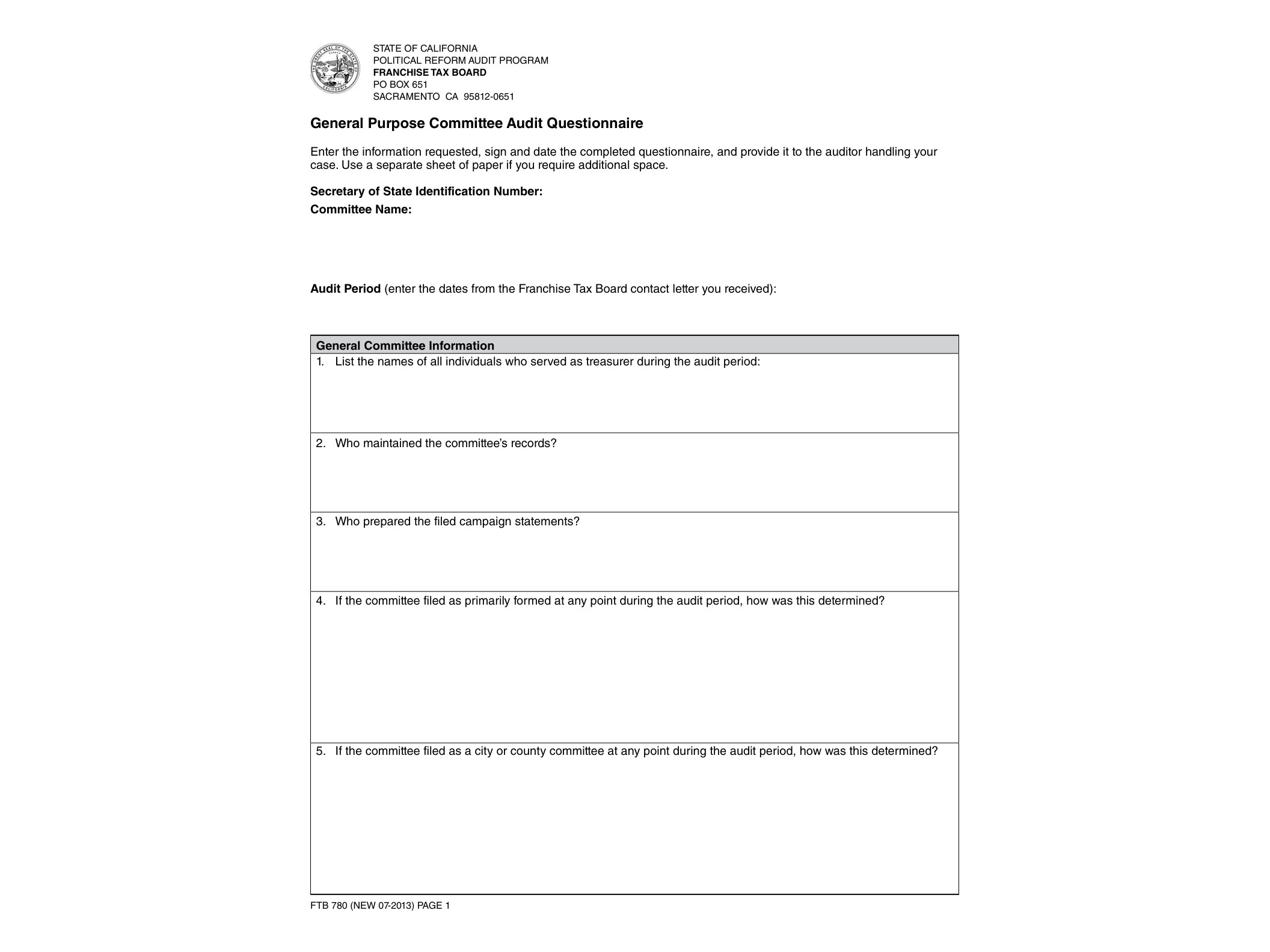
Form 780 is issued by the California Franchise Tax Board as part of its Political Reform Audit Program. If your organization operates as a general purpose committee under California’s Political Reform Act — think political action committees, party committees, or similar entities that raise and spend money to support multiple candidates or ballot measures — this questionnaire is how the FTB gathers detailed information about your committee’s financial operations during an audit cycle.
Unlike a standard income tax form, Form 780 isn’t something you file voluntarily every year. The FTB selects committees for audit either randomly or based on specific criteria tied to campaign finance reporting requirements. Once your committee is chosen, you’ll receive this questionnaire as part of the audit process, and completing it accurately is not optional — it’s a required step in demonstrating compliance with state political reform law.
Who Needs to Complete Form 780
This form applies specifically to general purpose committees, as opposed to committees formed to support or oppose a single candidate or ballot measure. General purpose committees typically have broader financial activity spanning multiple election cycles and multiple beneficiaries, which is exactly why the FTB’s audit questionnaire asks for a more comprehensive breakdown of contributions received, expenditures made, and internal recordkeeping practices.
Treasurers, committee officers, or the accounting staff responsible for a committee’s books are usually the ones tasked with filling this out. If your committee has never been audited before, receiving Form 780 can feel unexpected, but it’s a routine part of how California enforces transparency in campaign finance.
When This Form Comes Into Play
Form 780 shows up during an active audit engagement initiated by the FTB. The questionnaire generally asks about the committee’s structure, bank accounts, contribution sources, expenditure categories, and whether the committee has maintained supporting documentation for its filings with the Secretary of State or local filing officers. The FTB uses your answers to cross-reference against previously submitted campaign statements, so accuracy matters — discrepancies between what you report on Form 780 and what appears in your public filings can trigger further scrutiny.
Because this form has fillable AcroForm fields, you can complete it directly on a computer using free PDF software before printing or submitting it electronically, depending on what the audit notice instructs. That said, treat the digital fields as a convenience for legibility, not a shortcut around careful review. Auditors expect complete, consistent answers, and leaving fields blank or providing vague responses tends to generate follow-up requests that extend the audit timeline.
How to Get and Complete Form 780
The official PDF is available directly from the Franchise Tax Board’s forms library. Since it’s an AcroForm, you can type your responses into the designated boxes rather than handwriting them, which helps keep the document readable and professional when submitted back to the auditor. Before you start, gather your committee’s bank statements, contribution logs, expenditure receipts, and any prior campaign statements filed with state or local agencies — you’ll need these on hand to answer several sections accurately.
If your committee’s treasurer or bookkeeper is unfamiliar with how audit questionnaires like this differ from standard tax forms, it can help to compare the process conceptually with other detailed information-reporting requirements, similar to how taxpayers handle supplemental documentation on forms like the IT-213-ATT child information attachment or depreciation schedules such as Form IT-211 — both require pulling together supporting records before you can complete the form correctly.
Once completed, submit Form 780 according to the instructions in your audit notice, whether that’s mailing a signed copy or uploading it through whatever secure portal the FTB specifies for your audit. Keep a copy for your committee’s own records, since audit questionnaires often get referenced again if the FTB has follow-up questions or if the committee is audited again in a future cycle.
Download Official Form 780 (PDF)
Opens the official government PDF in a new tab