
Download Official Form DTF275 (PDF)
Opens the official government PDF in a new tab
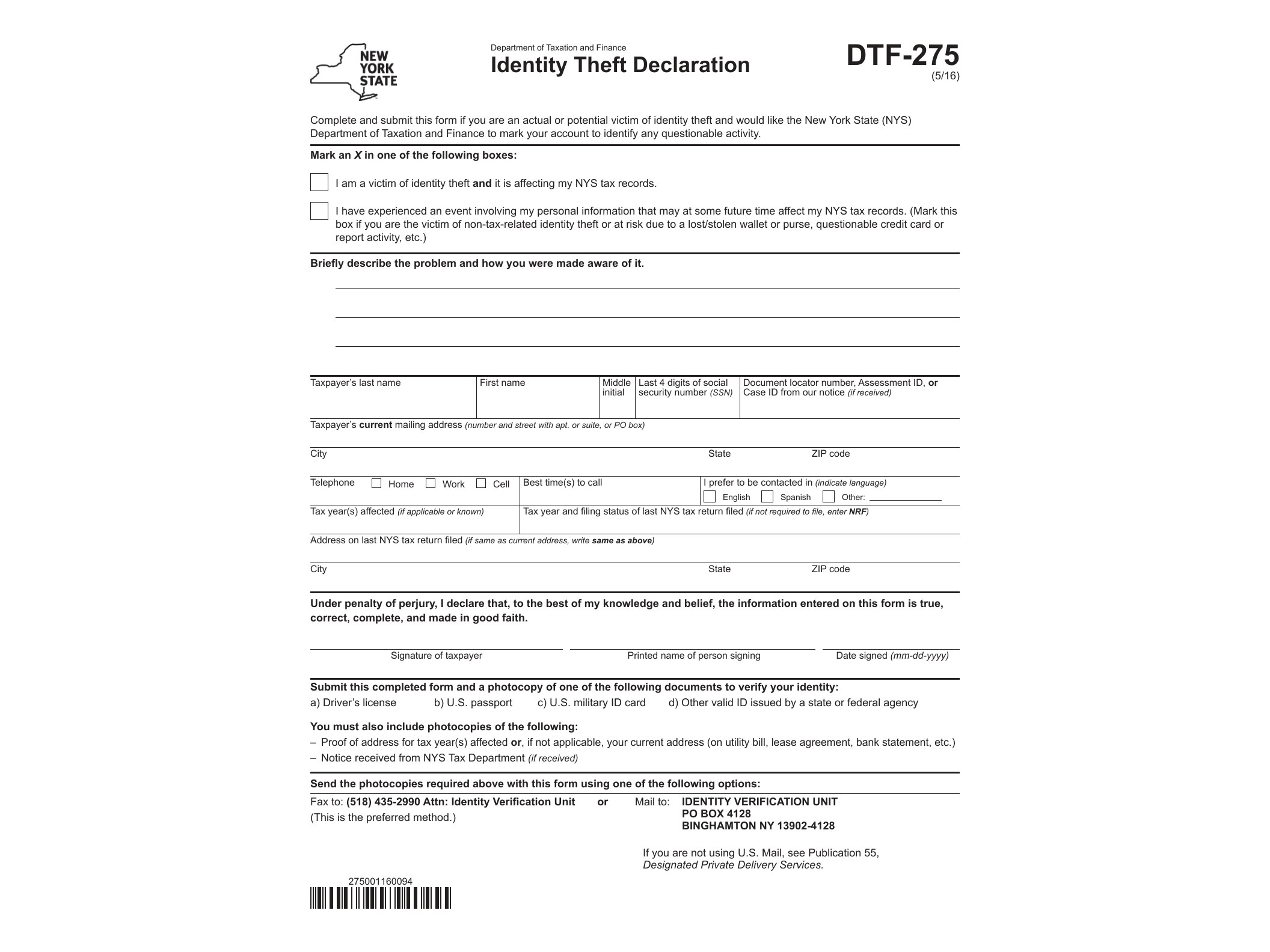
Form DTF-275, Identity Theft Declaration, is used by the New York State Department of Taxation and Finance to document cases where someone believes their tax records have been compromised by identity theft. If you’ve discovered that a return was filed in your name without your knowledge, or that someone used your Social Security number to claim a refund or file a return with the state, this is the form that starts the process of sorting it out with the tax department.
Unlike routine tax filings, DTF-275 isn’t tied to a specific tax year or a particular income form. It’s a fraud-reporting document. Its purpose is to give the Tax Department a formal, signed statement from you confirming that a return, refund claim, or other tax activity linked to your identity wasn’t something you authorized. That declaration then becomes part of the record the department uses when investigating the fraudulent activity and correcting your account.
Who Needs to File This Form
You’d typically need DTF-275 if:
- You received a notice from New York State about a tax return you never filed.
- Your refund was rejected because the state’s records show a return was already processed under your Social Security number.
- You suspect someone used your identity to open a tax account, claim a credit, or receive a refund fraudulently.
- A tax preparer or third party misused your information without your consent.
This isn’t a form most taxpayers will ever need. It exists specifically for situations where fraud has already happened or is strongly suspected, not for general privacy concerns or minor filing errors.
When to Use Form DTF-275
The Tax Department usually requests this declaration after flagging suspicious activity on an account, though taxpayers can also submit it proactively once they realize something is wrong. If you’ve already contacted the department about a fraud-related notice, they’ll often ask you to complete and return this form as part of verifying your identity and clearing up the discrepancy. The sooner it’s submitted after discovering the issue, the faster the department can start correcting your records and preventing further fraudulent activity tied to your name.
It’s worth noting that this state-level declaration is separate from any identity theft affidavit you might file with the IRS. New York State maintains its own process, and DTF-275 is specifically for state tax matters, not federal ones. If both your state and federal returns were affected, you’ll likely need to address each agency separately.
How to Get and Complete the Form
Form DTF-275 is available as a fillable PDF directly from the New York State Department of Taxation and Finance website. Because it has AcroForm fields, you can type your information directly into the document on a computer before printing it for signature, rather than filling it out by hand. This makes it easier to keep the entries legible, which matters since the department will be cross-referencing your details against their existing records.
When filling it out, you’ll generally need to provide identifying information such as your name, Social Security number, address, and a description of the fraudulent activity you’re reporting. Be as specific as possible about what happened, when you noticed it, and any notices or correspondence you’ve already received from the state. Supporting documentation, like a copy of a police report or an IRS identity theft affidavit if you filed one, can strengthen your declaration, though requirements may vary depending on your specific case.
Once completed, the form typically needs to be signed and mailed or submitted according to the instructions provided with the notice you received, since identity theft cases often require coordination with a specific unit within the department rather than general filing channels.
If you’re dealing with other New York State tax matters alongside this issue, such as partnership allocations covered in the Form Y-204 Yonkers Nonresident Partner Allocation guide, or credits like the one explained in our Form DTF-621 QETC Employment Credit overview, it’s worth keeping your records organized since an identity theft investigation can sometimes affect processing timelines for other filings tied to the same account. Residency questions can also come into play in fraud cases involving multi-state activity, which is where resources like the FTB Publication 1031 residency guidelines might be useful for cross-referencing your filing status if California returns are also involved.
Keep a copy of everything you submit, along with any confirmation of receipt from the Tax Department. Identity theft cases can take time to resolve, and having your own paper trail makes it easier to follow up if the process stalls or if you need to reference your original declaration later.
Download Official Form DTF275 (PDF)
Opens the official government PDF in a new tab