
Download Official Form 109 (PDF)
Opens the official government PDF in a new tab
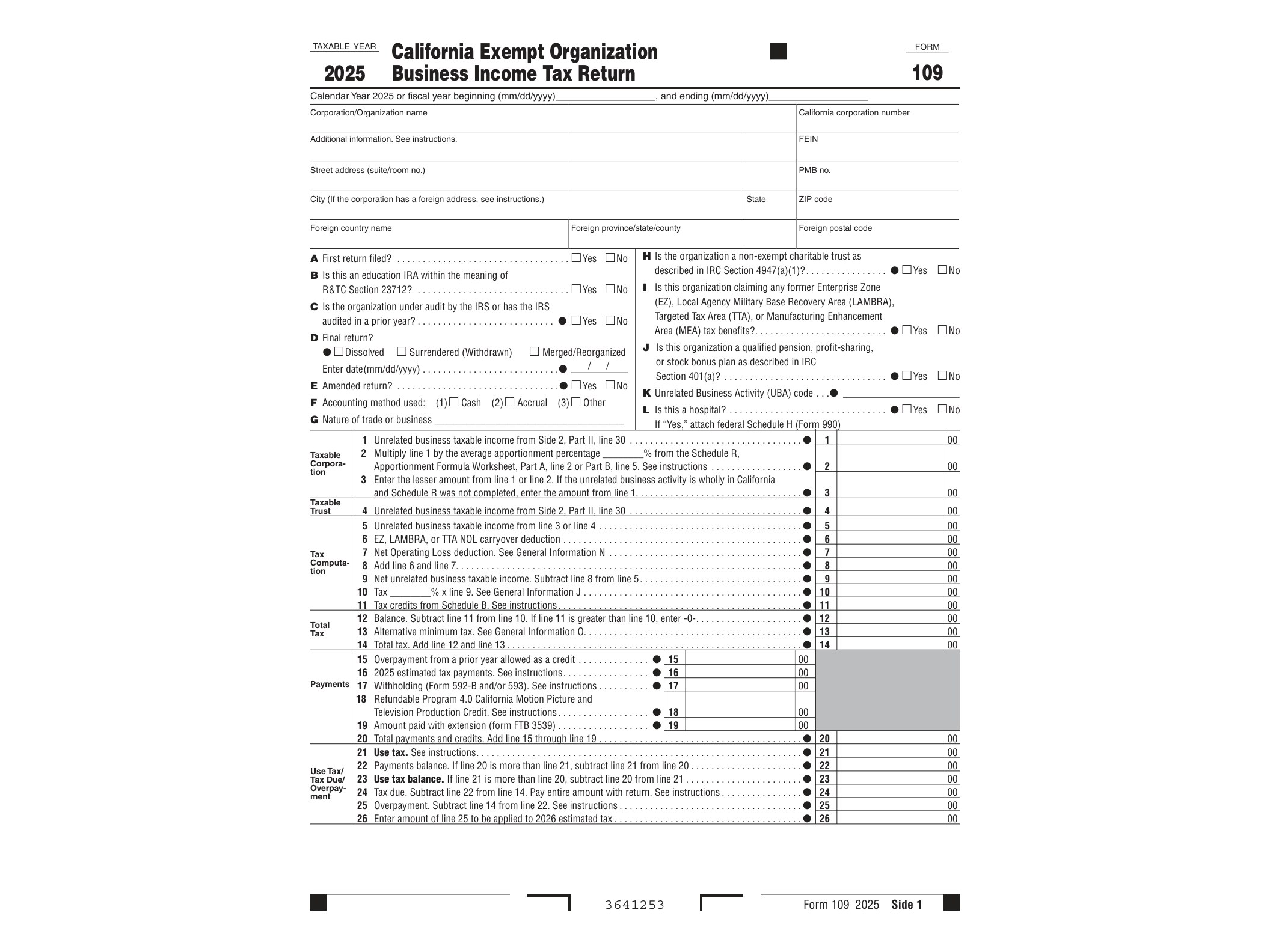
Form 109 is the return the California Franchise Tax Board uses to collect tax on unrelated business income earned by organizations that otherwise hold tax-exempt status. If your nonprofit, association, or exempt trust brought in income from activities not substantially related to its exempt purpose, this is the form that reports it and calculates what’s owed to California.
The key concept here is unrelated business taxable income, often shortened to UBTI. Being tax-exempt at the state and federal level doesn’t mean every dollar an organization earns is free from tax. If a charity runs a side business, rents out property in a way that doesn’t tie to its mission, or generates income from debt-financed property, that income can trigger a filing requirement even though the organization’s core activities remain exempt.
Who Needs to File Form 109
Organizations exempt under California Revenue and Taxation Code Section 23701 (or the federal equivalent under IRC Section 501) must file Form 109 if they have gross income from an unrelated trade or business of $1,000 or more during the tax year. This applies broadly to:
- Nonprofit corporations and associations recognized as exempt in California
- Exempt trusts, including certain pension and retirement trusts
- Homeowners’ associations with unrelated business income
- Political organizations with taxable income under IRC Section 527
Even organizations that never expected to owe income tax should check whether any side revenue streams count as unrelated business activity. Common triggers include advertising income, rental income from debt-financed property, and revenue from services sold to the general public rather than members or beneficiaries.
When the Form Is Due
For the 2024 tax year, Form 109 generally follows the same due date as the organization’s exempt organization return: the 15th day of the 5th month after the close of the tax year for most exempt corporations, or the 15th day of the 4th month for trusts. Calendar-year filers typically face a May 15 deadline. Organizations that need more time can request an automatic extension, though any tax due still needs to be paid by the original deadline to avoid penalties and interest — a concept similar to how LLCs handle extensions using California Form 3537.
What You’ll Need to Complete the Return
Form 109 asks for a breakdown of unrelated trade or business income, deductions directly connected to that income, and calculation of the tax owed using California’s corporate or trust tax rates, depending on the organization’s structure. You’ll need:
- Federal Form 990-T, if one was filed, since California often mirrors federal UBTI calculations with state adjustments
- Detailed income and expense records for the unrelated activity
- Your organization’s California entity number and federal EIN
- Prior year returns for reference on carryovers, such as net operating losses
The 2024 version of Form 109 is a fillable AcroForm PDF, so it can be completed digitally before printing or submitting according to FTB instructions. This makes it easier to double-check calculations and keep a clean digital copy for your records.
Estimated Tax and Payment Considerations
If the organization expects to owe $500 or more in tax for the year, California generally requires estimated tax payments throughout the year rather than a single payment at filing time. This is comparable to how partnerships and S corporations track estimated tax obligations, as outlined in guidance like Form IT-2659 for New York filers, even though the specific rules differ by state. Missing estimated payments can lead to underpayment penalties, so it’s worth calculating projected UBTI early in the year rather than waiting until the return is due.
Organizations with nonresident partners or shareholders involved in related structures should also be aware of exemption certificates like Form IT-2658-E, which may apply in parallel multi-state filing situations, particularly for organizations with operations spanning multiple states.
Because unrelated business income rules involve fact-specific determinations, organizations unsure whether certain revenue qualifies should review FTB Publication 1050 or consult a tax professional familiar with exempt organization filings before submitting Form 109.
Download Official Form 109 (PDF)
Opens the official government PDF in a new tab