
Download Official Form IT2664 (PDF)
Opens the official government PDF in a new tab
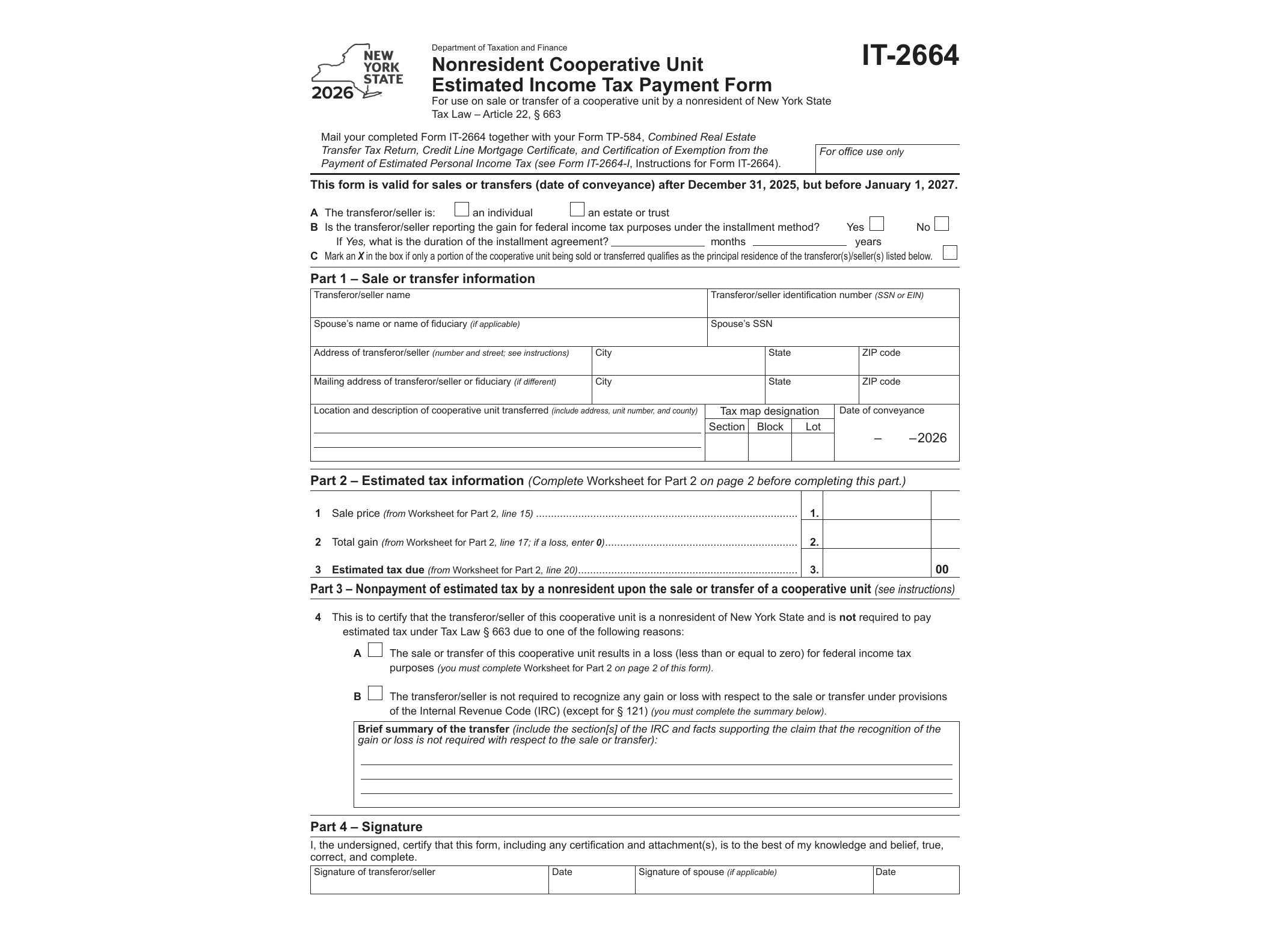
Form IT-2664 is the New York State Department of Taxation and Finance form that nonresident sellers of cooperative housing units use to pay estimated income tax on the gain from that sale. If you own shares in a co-op corporation tied to a residential unit in New York and you’re not a New York resident, the state requires you to pay estimated tax on your profit at the time of closing, rather than waiting until you file your annual return.
This form works alongside the better-known IT-2663, which applies to nonresident sales of real property. Cooperative units are structured differently from a legal standpoint — you own shares in a corporation instead of holding title to real estate directly — so New York created a separate form to address the tax treatment of these transactions.
Who Needs to File Form IT-2664
You need this form if all of the following apply: you are a nonresident of New York State (individual, estate, or trust), you are transferring shares of stock in a cooperative housing corporation, and that transfer relates to a residential unit located in New York. The obligation to file and pay falls on the seller, and in practice, the closing attorney or title company usually prepares the form and collects payment as part of the closing process.
Corporations, partnerships, and other entities selling co-op shares may also have filing obligations under related provisions, but the IT-2664 itself is generally structured for individual nonresident sellers and fiduciaries handling estates or trusts.
When This Form Is Used
Form IT-2664 is completed at the time of the sale or transfer of the cooperative unit — not at year-end like a typical estimated tax voucher. The estimated payment is due on or before the closing date. This tax year 2026 version reflects the rates and thresholds applicable to closings occurring during that tax year, so it’s important to use the version matching the year of the transaction rather than an older revision.
Because the payment is tied to a real estate-related event rather than a quarterly schedule, sellers often only encounter this form once, at the point of sale. The amount paid with IT-2664 is treated as an estimated payment against the seller’s eventual New York nonresident income tax liability, which gets reconciled when the nonresident files their regular New York income tax return for that year.
How to Complete and Submit It
The form asks for identifying information about the seller and the cooperative unit, the sale price, the seller’s basis in the shares, and the calculated gain. From there, the estimated tax due is computed using the applicable New York nonresident tax rate. Because the PDF is a fillable AcroForm, you can type your entries directly into the document before printing it for signature — no need to hand-write the figures, which reduces errors at closing.
Once completed, the form and payment typically go through the title company or closing attorney handling the transaction, who forwards everything to the Department of Taxation and Finance. Keep a copy for your records, since you’ll need the payment amount when preparing your annual nonresident return.
If you’re dealing with other New York tax credits or filings around the same time, it’s worth checking related guidance, such as the Form IT-267 geothermal energy credit breakdown, which covers a separate New York tax benefit that might apply to your situation. Sellers who also handle business filings in other states may find the overview of California’s Form 199 exempt organization return useful for comparison purposes, and anyone missing wage statements from a prior employer during a move should look at the explanation of California Form 3525 as a substitute for a missing W-2 or 1099-R.
Always download the current-year version directly from the New York State Department of Taxation and Finance to make sure the rates and instructions match your closing date.
Download Official Form IT2664 (PDF)
Opens the official government PDF in a new tab