
Download Official Form DTF17 (PDF)
Opens the official government PDF in a new tab
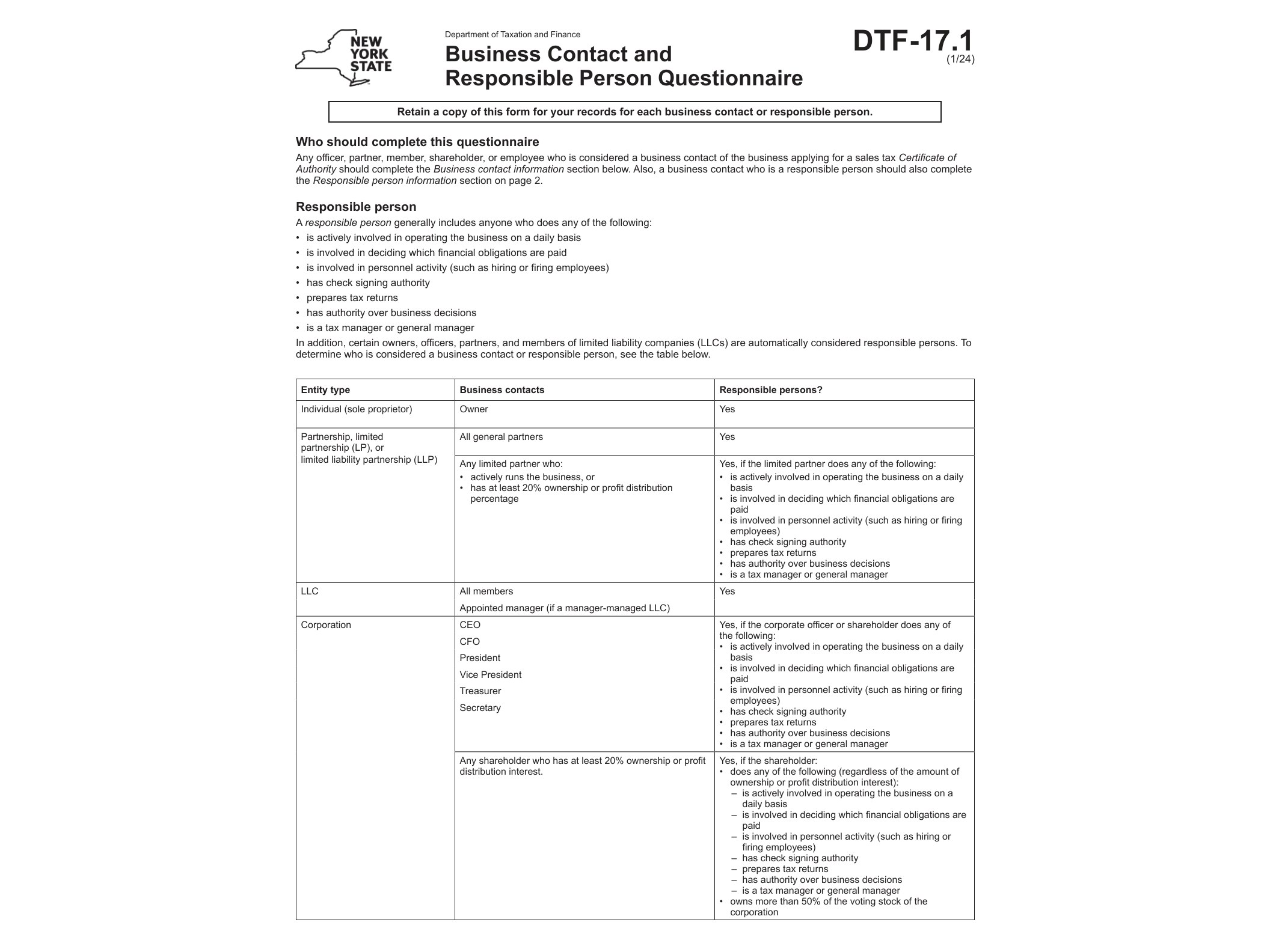
Form DTF-17.1, issued by the New York State Department of Taxation and Finance, is the Business Contact and Responsible Person Questionnaire. It’s a companion document used alongside Form DTF-17, the Application to Register for a Sales Tax Certificate of Authority. While DTF-17 registers the business itself, DTF-17.1 collects detailed information about the individuals behind that business — owners, officers, partners, or anyone with authority over financial decisions and tax obligations.
The state uses this questionnaire to verify who is actually responsible for collecting and remitting sales tax on behalf of the business. New York takes sales tax compliance seriously, and identifying a responsible person matters because that individual can be held personally liable for unpaid sales tax if the business fails to meet its obligations. This is why the Tax Department wants clear documentation of contact details, ownership stakes, and each person’s role within the company before issuing a Certificate of Authority.
Who Needs to File This Form
Any business applying for a New York State Certificate of Authority to collect sales tax will likely need to submit DTF-17.1 alongside their main application. This includes:
- New business owners starting a retail, wholesale, or service operation subject to sales tax
- Corporations naming officers or directors as responsible parties
- Partnerships identifying general partners
- LLCs listing managing members
- Sole proprietors confirming their own contact and identification details
If your business structure involves multiple stakeholders, the Tax Department may require a separate questionnaire for each responsible person, not just one form covering the entire entity. This ensures every individual with financial control or decision-making authority is properly documented.
When Is DTF-17.1 Used
This form typically comes into play during the initial registration process, when a business first applies for its Certificate of Authority. It can also resurface if the Tax Department requests updated information — for example, when there’s a change in ownership, a new officer joins the company, or the department flags an account for review. Businesses that have had compliance issues in the past, such as unpaid sales tax liabilities, may also be asked to resubmit this questionnaire to confirm current responsible parties.
Unlike some state forms tied to petroleum business tax refunds or reimbursements — such as Form AU-474 or Form AU-473 — DTF-17.1 isn’t about claiming money back. It’s strictly an identity and accountability document tied to sales tax registration and ongoing compliance.
How to Get and Complete the Form
Form DTF-17.1 is available directly from the New York State Department of Taxation and Finance website as a downloadable PDF. Note that this particular form does not have fillable digital fields — you’ll need to print it out and complete it by hand using black or blue ink. Make sure your handwriting is legible, since illegible entries can delay processing of your Certificate of Authority application.
When filling it out, you’ll typically need to provide:
- Full legal name and Social Security Number of the responsible person
- Home address and phone number
- Title or position within the business
- Percentage of ownership or financial interest, if applicable
- Signature certifying the accuracy of the information provided
Once completed, this form is submitted together with your DTF-17 application, not separately. Keep a copy for your own records before mailing or submitting it, since you may need to reference the information later if your business undergoes any tax review.
If you’re also dealing with fuel tax reimbursements as part of your business operations, you might find Form AU-630 relevant, though it serves a completely different purpose from DTF-17.1. Each of these forms addresses a specific piece of New York’s tax compliance system, and understanding which one applies to your situation can save you time and prevent processing delays.
Because this form directly affects who can be held personally liable for sales tax debts, it’s worth taking the time to fill it out carefully and completely rather than rushing through it. Errors or omissions can trigger follow-up requests from the Tax Department, slowing down your certificate approval.
Download Official Form DTF17 (PDF)
Opens the official government PDF in a new tab