
Download Official Form 541 (PDF)
Opens the official government PDF in a new tab
Form 541 is the California Fiduciary Income Tax Return, issued by the California Franchise Tax Board (FTB). It’s used to report income, deductions, gains, and losses earned by estates and trusts that are administered in California or have California-source income. If you’re serving as an executor, trustee, or administrator of an estate or trust, this is the form that reports its tax obligations to the state.
Unlike a personal income tax return, Form 541 doesn’t cover an individual’s wages or personal deductions. It applies specifically to fiduciary entities: decedents’ estates, simple trusts, complex trusts, grantor trusts (in certain cases), and bankruptcy estates. The fiduciary — the person legally responsible for managing the estate or trust assets — is the one who signs and files this return on behalf of the entity.
Who Needs to File Form 541
California requires a fiduciary to file Form 541 if the estate or trust meets any of the following conditions:
- The estate or trust has gross income over $10,000 (regardless of net income) that is California source income, or
- The estate or trust has net income over $100, or
- The fiduciary needs to report income distributable to beneficiaries who are California residents, even if the trust itself is administered elsewhere.
Trusts with multiple trustees, out-of-state trusts with California beneficiaries, and estates going through probate in California courts typically fall under this filing requirement. If the estate or trust also has beneficiaries in other states, allocation rules determine how much income is taxable to California versus elsewhere.
When Form 541 Is Due
For most fiduciaries operating on a calendar year, Form 541 is due by the 15th day of the 4th month after the close of the taxable year — generally April 15 for calendar-year filers. Estates and trusts operating on a fiscal year follow the same rule, adjusted to their specific year-end. Extensions are available, similar to those offered for individual and business returns, but any tax owed still needs to be paid by the original due date to avoid penalties and interest.
What Information Goes Into the Return
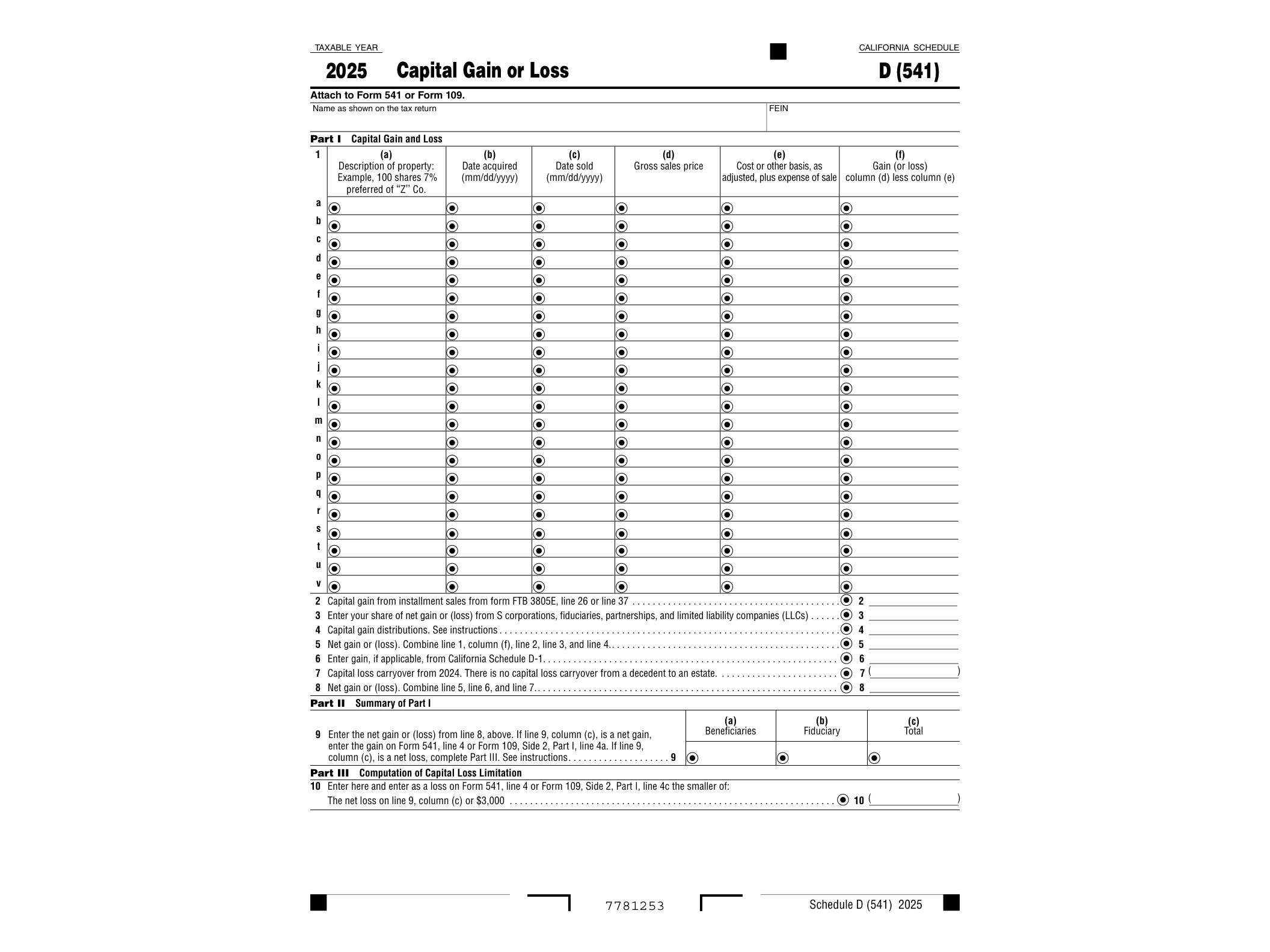
Form 541 asks for details about the type of entity (decedent’s estate, simple trust, complex trust, etc.), the fiduciary’s contact information, and a full accounting of income sources — interest, dividends, capital gains, rental income, and business income attributable to the estate or trust. It also requires reporting distributions made to beneficiaries, since those amounts are typically passed through and taxed at the individual level rather than at the entity level.
Along with the main form, fiduciaries often need to attach California Schedule K-1 (541), which breaks down each beneficiary’s share of income, deductions, and credits. This schedule is essential because beneficiaries use it to report their share of trust or estate income on their own California returns.
How to Get and Complete the Form
The 2021 version of Form 541 is available directly from the Franchise Tax Board’s website as a fillable PDF, meaning you can type information directly into the form fields before printing or saving it. Since it’s an AcroForm, most PDF readers will support the fillable fields without needing special software.
Before filling it out, gather documentation on all income received by the estate or trust during the tax year, records of any distributions made to beneficiaries, and details of any deductions the fiduciary is claiming, such as trustee fees or administrative expenses. If the estate or trust also has business interests structured as an LLC, it may be worth reviewing how Form 568 for California LLCs interacts with fiduciary reporting, since income from an LLC held in trust often needs to be reconciled across both filings.
Fiduciaries who are new to California tax forms may also find it useful to compare how individual filing works, particularly if beneficiaries are filing their own returns using resources like the Form 540 2EZ tax table for Head of Household filers, since distributions from the estate often flow into a beneficiary’s personal return.
Filing Form 541 correctly protects the fiduciary from personal liability for the estate’s or trust’s tax obligations and ensures beneficiaries receive accurate information for their own filings. Given the legal responsibilities involved, many fiduciaries choose to work with a tax professional experienced in estate and trust taxation, especially when multiple beneficiaries or out-of-state income sources are involved.
Download Official Form 541 (PDF)
Opens the official government PDF in a new tab