
Download Official Form 8455 (PDF)
Opens the official government PDF in a new tab
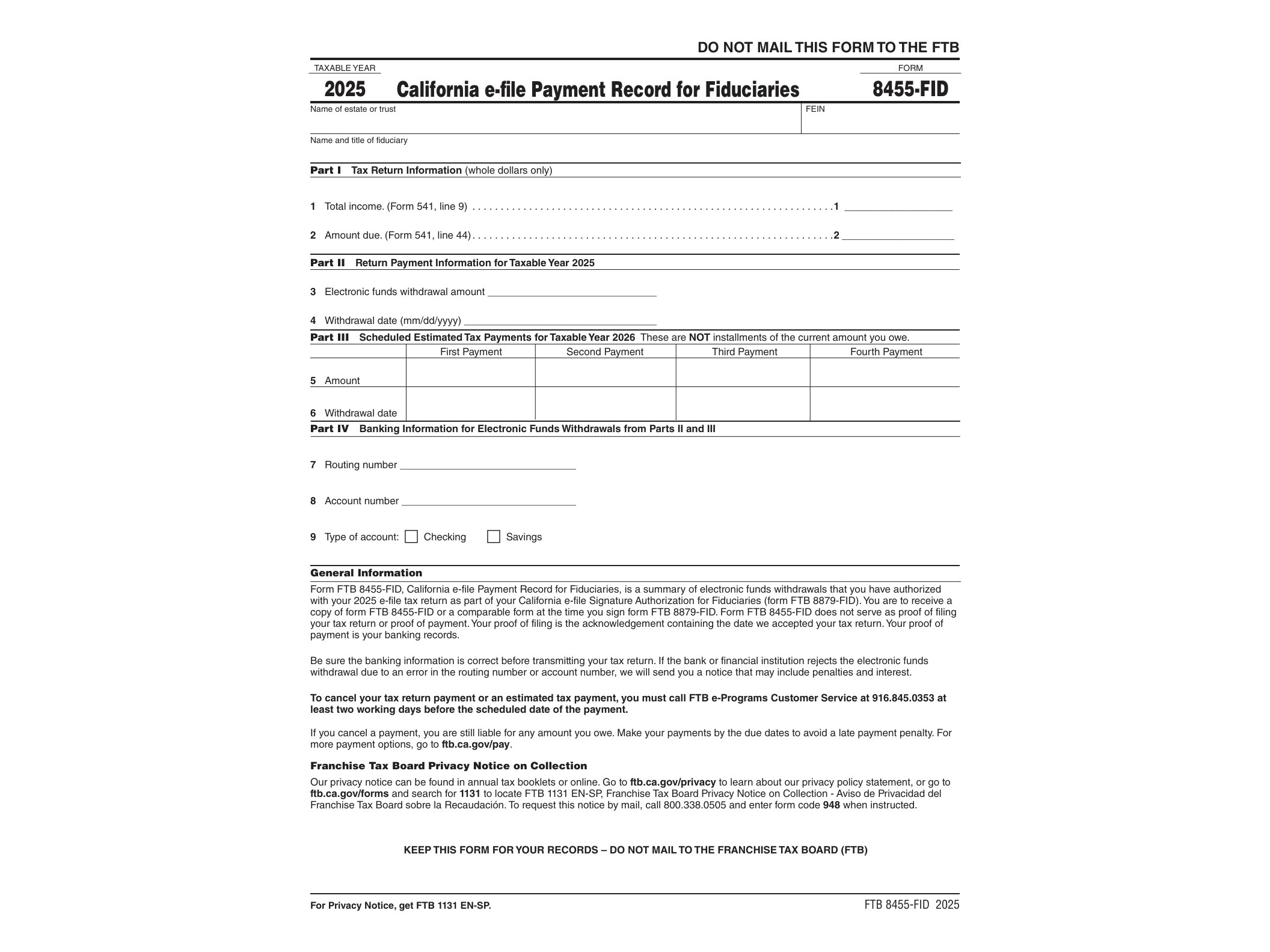
Form 8455-FID is a California Franchise Tax Board record used specifically for fiduciary tax returns filed electronically. If you’re handling a trust or estate return in California and the return includes a payment made by electronic funds withdrawal, this form documents that transaction. It’s not something you mail in with your return in most cases — it’s a record the preparer or fiduciary keeps on file, though the FTB can request it at any time.
Think of Form 8455-FID as the fiduciary-side counterpart to individual e-file payment authorizations. When a trust or estate owes California tax and the fiduciary elects to pay electronically as part of the e-filed return, the state needs a documented authorization showing the bank account details, the amount being withdrawn, and the signature of the person responsible for the fiduciary entity. That’s exactly what this form captures.
Who Actually Needs This Form
The people who fill this out are trustees, executors, administrators, or any other fiduciary responsible for filing California Form 541 (the California Fiduciary Income Tax Return) electronically. If the return shows a balance due and the fiduciary chooses to pay via electronic funds withdrawal directly from a bank account rather than mailing a check, Form 8455-FID becomes part of the required paperwork trail.
Tax professionals preparing fiduciary returns on behalf of clients are usually the ones generating and retaining this form. It’s less something an individual taxpayer would encounter and more of a back-office compliance document tied to the mechanics of e-filing a trust or estate return. That said, if you’re serving as a trustee without a paid preparer and you’re e-filing the return yourself through approved software, you’ll need to complete it too.
It’s worth noting the difference between this form and similar-sounding paperwork for individuals. If you’re filing a personal California return and choosing not to e-file at all, you’d be looking at something like Form 8454, the e-file opt-out record for individuals. Form 8455-FID serves a completely different purpose — it’s about authorizing payment within an e-filed fiduciary return, not opting out of electronic filing.
When You’ll Use It
You’ll typically fill out Form 8455-FID during the same filing season as the fiduciary return itself, right before or at the time of e-filing. The form asks for the bank routing number, account number, account type, the payment amount, and the requested withdrawal date. It also requires a signature from the fiduciary (or an authorized representative) confirming that the electronic withdrawal is authorized.
Because trusts and estates can involve unique tax situations — multiple beneficiaries, distributions, or income sourced from various states — the underlying Form 541 return can get complicated. But the payment record itself is fairly straightforward paperwork once the return is finalized and the balance due is known.
How to Get and Complete the Form
Form 8455-FID is available directly from the California Franchise Tax Board as a fillable PDF. Since it has AcroForm fields, you can type your information directly into the document using standard PDF software rather than printing it out and writing by hand. This makes it easier to keep a clean digital copy for your records, which is important since the FTB doesn’t require you to submit the form with the return — you just need to retain it in case of an audit or review.
When filling it out, double-check the bank account information carefully. An incorrect routing or account number can delay the payment or cause the withdrawal to fail, which creates unnecessary complications for a fiduciary already managing the mechanics of settling an estate or trust’s tax obligations. Keep a signed copy alongside the e-filed Form 541 and any other supporting fiduciary records, similar to how you’d retain documentation for state tax credits or specialized filings, such as the recordkeeping practices used for programs like EZ investment tax credit claims in other states.
If you’re also dealing with related California tax matters involving domestic partnerships within an estate or trust structure, it may help to review FTB Publication 737 for additional context on how California treats those filing situations.
Download Official Form 8455 (PDF)
Opens the official government PDF in a new tab