
Download Official Form IT613 (PDF)
Opens the official government PDF in a new tab
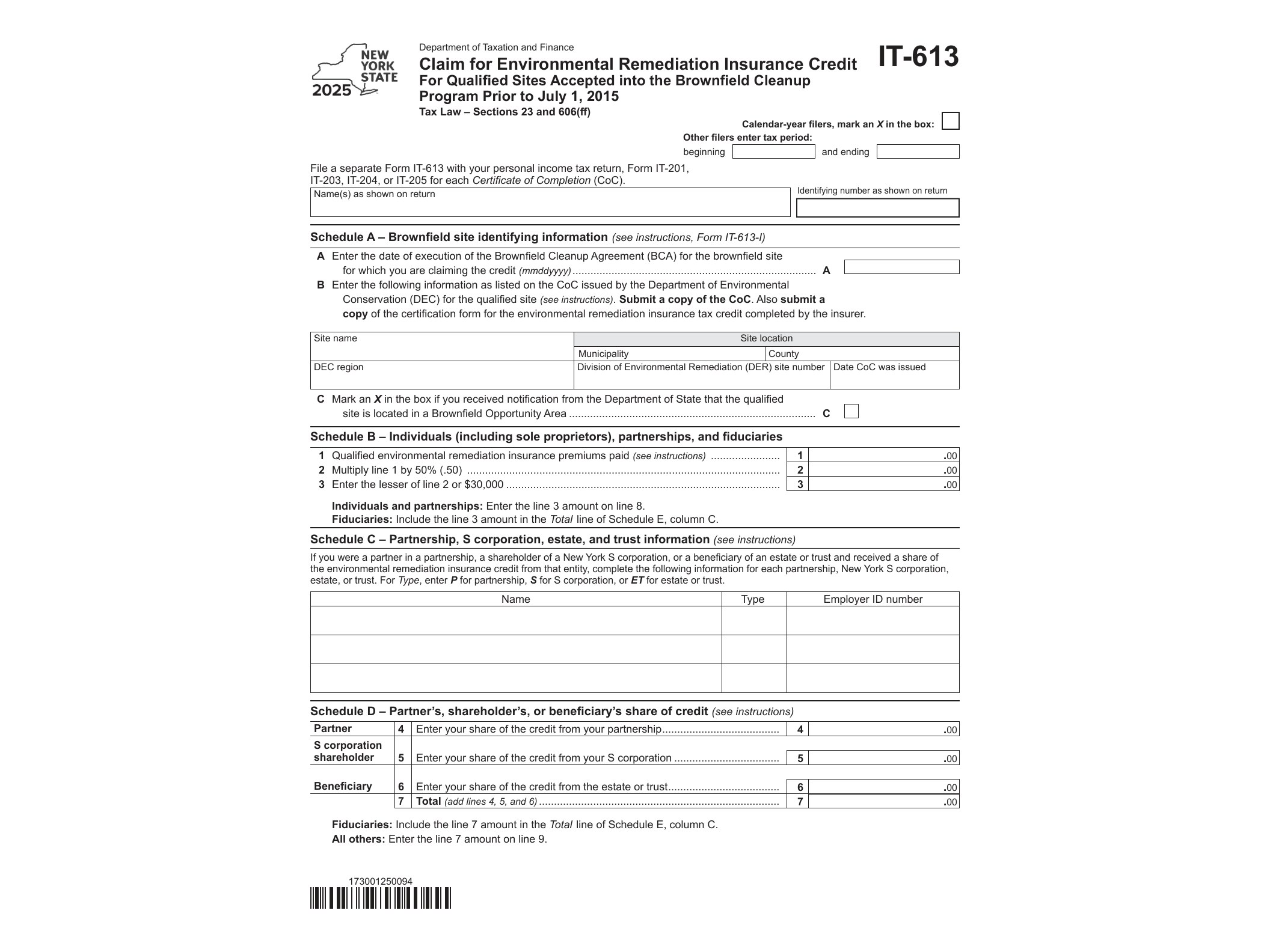
Form IT-613 is the New York State tax form used to claim the Environmental Remediation Insurance Credit. This credit was created to encourage property owners to purchase environmental remediation insurance coverage for sites that have undergone cleanup, giving businesses a financial incentive to protect themselves against the cost of unexpected contamination issues after remediation work is complete. If you paid premiums for this type of insurance policy on a qualifying site in New York, this form is how you convert that expense into a tax credit against your New York State tax liability.
The New York State Department of Taxation and Finance issues this form, and it applies to taxpayers who own or have an interest in real property that was previously remediated and who then purchased an environmental remediation insurance policy for that property. The credit generally covers a portion of the premiums paid, subject to caps set by the state, and it’s meant to work alongside other environmental cleanup incentives rather than as a standalone program. Many businesses that use IT-613 are also familiar with brownfield-related credits, since remediation insurance often comes into play once a site has already gone through formal cleanup under New York’s brownfield programs.
Who Actually Needs This Form
You need Form IT-613 if you’re a corporation, partnership, or individual taxpayer who purchased environmental remediation insurance for a site located in New York State, and that site was subject to a remediation process recognized under state environmental law. This typically means the property went through some form of cleanup certification, and the insurance was purchased to cover potential future remediation costs or liability related to that site. If you’re not sure whether your property qualifies, it’s worth checking your remediation agreement paperwork or consulting with whoever managed the cleanup process, since the credit is tied directly to sites with documented remediation history.
This form is closely related to the broader family of New York brownfield tax incentives. If your business went through a full brownfield redevelopment process, you may already be filing Form IT-611.1 for the Brownfield Redevelopment Tax Credit, and IT-613 often gets filed in the same tax year as a complementary claim covering the insurance side of the same remediated property.
When You Use It
You file Form IT-613 with your New York State income tax return for the tax year in which you paid the environmental remediation insurance premiums. For tax year 2025, that means the premiums need to have been paid during the 2025 tax year, and you’ll attach this form to your regular NYS return, whether that’s a personal income tax return or a corporate franchise tax return. Partnerships and S corporations that pay these premiums pass the credit through to their partners or shareholders, who then claim their share on their own individual filings using the information reported on this form.
Because this credit is narrow in scope, many businesses only encounter it once, in the year they secure the insurance policy for a remediated site. If your business is involved in multiple state incentive programs, you might also be filing other credit claims in the same return. Businesses in the Excelsior Jobs Program, for example, use a separate form to claim their benefits, and it can be useful to review Form IT-607 for the Excelsior Jobs Program Tax Credit if your company participates in that program alongside environmental remediation activity.
How to Get and Complete the Form
Form IT-613 is available directly from the New York State Department of Taxation and Finance as a fillable PDF, which means you can type your information directly into the form fields on your computer before printing or attaching it electronically to your filing software. The form asks for identifying information about the property, details on the remediation insurance policy including the insurer and premium amounts paid, and a calculation section that applies the applicable credit percentage and caps.
Before filling it out, gather your insurance policy documents, proof of premium payments, and any remediation certification paperwork tied to the property. Double-check the credit calculation limits published for the current tax year, since these figures are set by statute and can change. If your business also has security-related tax credits in play, note that Form IT-631 for the Security Officer Training Tax Credit follows a similar attachment process, so once you’re familiar with how one of these supplemental credit forms works, the others tend to follow the same general filing logic.
Download Official Form IT613 (PDF)
Opens the official government PDF in a new tab