
Download Official Form 1052 (PDF)
Opens the official government PDF in a new tab
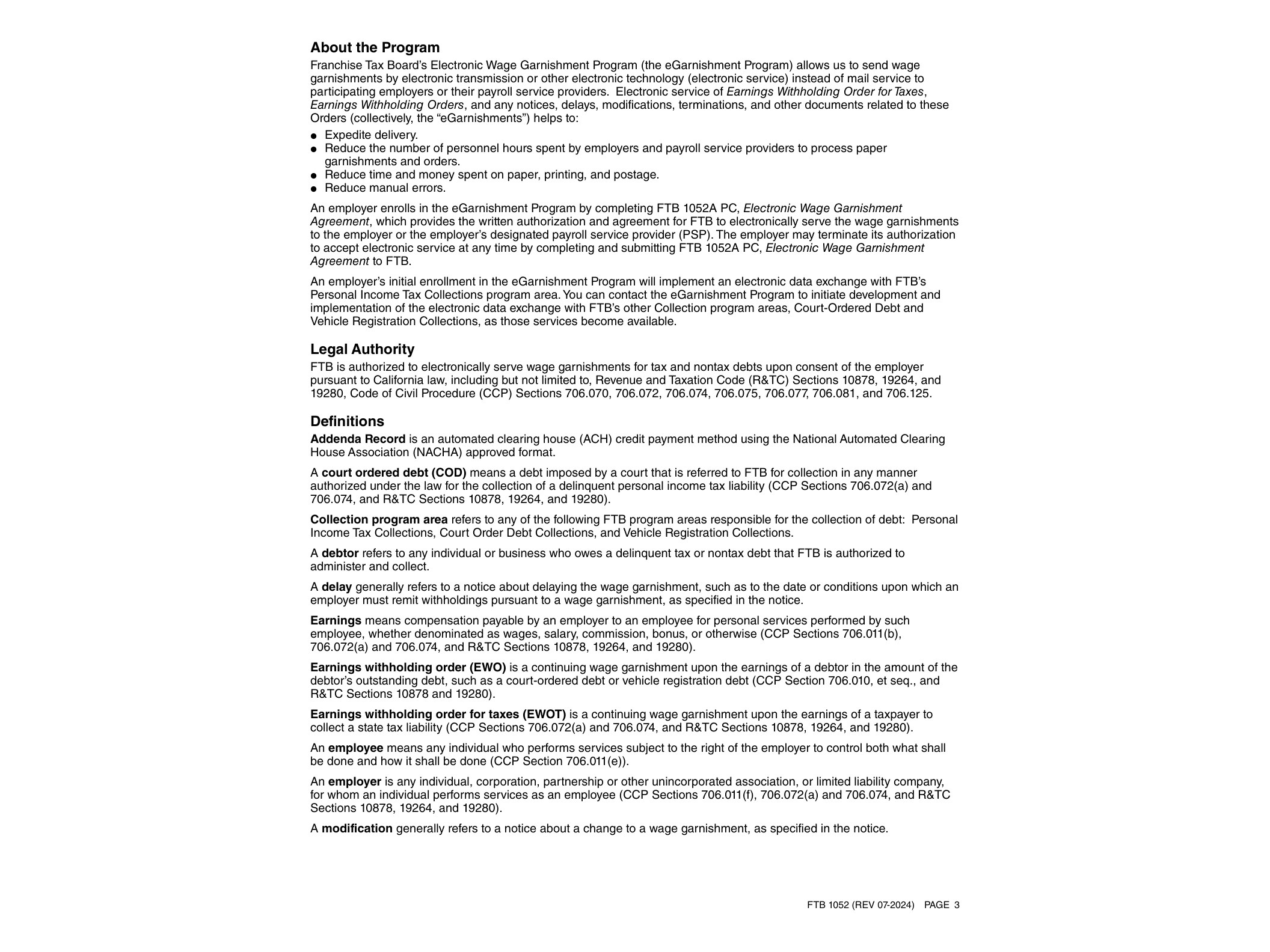
FTB 1052 is the participation guide the California Franchise Tax Board publishes for employers and payroll service providers who want to join the state’s Electronic Wage Garnishment (EWG) program. Rather than a form you fill out and mail back on its own, this document walks businesses through the technical and administrative steps needed to receive and respond to wage garnishment orders electronically instead of through paper mail.
Employers who are ordered to garnish an employee’s wages on behalf of the FTB typically receive a paper Earnings Withholding Order for Taxes. The EWG program lets participating employers exchange that information electronically instead, which cuts down on mailing delays, lost paperwork, and manual data entry. FTB 1052 explains the enrollment requirements, file formats, transmission methods, and contact points needed to set this up correctly.
Who Needs FTB 1052
This guide is aimed primarily at:
- Employers with a large enough workforce that manual wage garnishment processing becomes a burden
- Payroll processors and third-party administrators managing garnishments for multiple client companies
- HR and payroll compliance staff responsible for setting up new electronic reporting relationships with California tax agencies
If your business already handles wage garnishments for state tax debts, unemployment insurance, or other state-ordered withholdings, your payroll team may already be familiar with the manual process. FTB 1052 is the reference document for moving that workflow into an electronic format, which is especially useful for companies operating in multiple states and trying to standardize how they handle withholding orders.
When This Document Is Used
Businesses typically request or reference FTB 1052 when they’re first setting up electronic garnishment reporting with the FTB, or when their payroll system is being updated to support electronic file transmission. It’s also useful during audits of internal payroll processes, since it lays out the technical specifications the FTB expects participants to follow.
Because tax debt collection and penalty enforcement are closely linked, employers dealing with wage garnishments may also want to understand how the FTB calculates penalties in the first place. Our breakdown of the FTB 1024 Penalty Reference Chart covers how different penalty types are assessed, which can help payroll and finance teams understand why a garnishment order was issued in the first place.
How to Get and Fill Out FTB 1052
FTB 1052 is available directly from the California Franchise Tax Board’s forms library as a PDF. It’s important to note this form does not have digitally fillable fields — you’ll need to print it out and complete any required sections by hand before submitting or referencing them according to the FTB’s instructions. There’s no online submission portal built into the PDF itself; it functions as an informational and procedural guide rather than a data-entry form.
Once printed, review the enrollment requirements carefully, since the FTB typically requires a formal agreement or setup process before a business can begin transmitting garnishment data electronically. Payroll administrators should confirm with their internal IT or payroll software vendor whether their current system supports the file specifications outlined in the guide.
Employers juggling multiple state compliance obligations often find it helpful to compare programs across states. For example, businesses expanding into New York may also want to look at credit programs such as the Hire a Veteran Credit (Form IT-643) or the Workers with Disabilities Tax Credit (Form IT-644), both of which involve their own paperwork and eligibility rules distinct from California’s wage garnishment procedures.
Keeping a printed, signed copy of your FTB 1052 enrollment paperwork on file is a good practice for compliance recordkeeping, particularly if your payroll process is ever reviewed by state auditors or if garnishment disputes arise with an employee.
Download Official Form 1052 (PDF)
Opens the official government PDF in a new tab