
Download Official Form IT647 (PDF)
Opens the official government PDF in a new tab
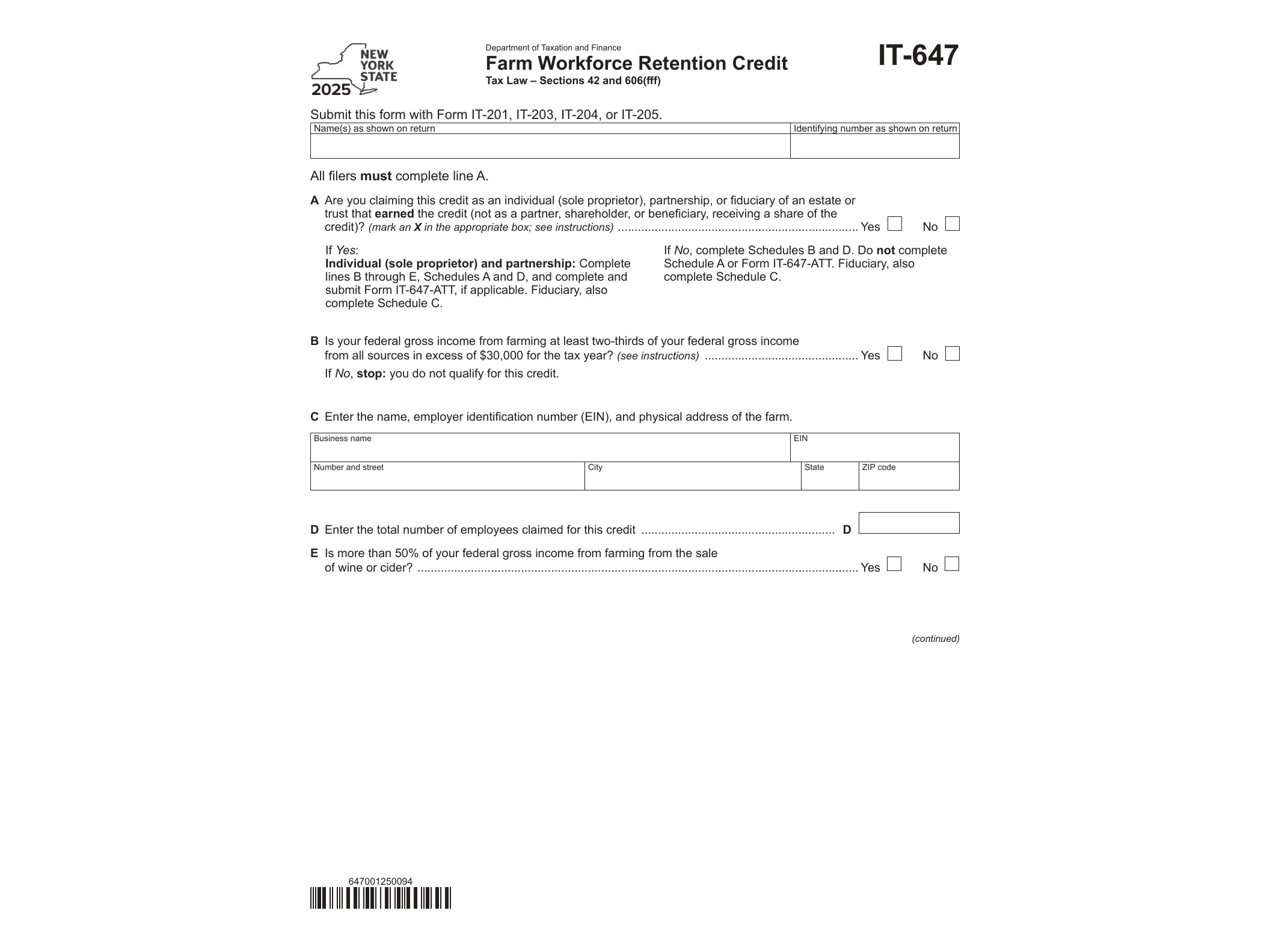
Form IT-647 is how eligible New York farm employers claim the Farm Workforce Retention Credit, a refundable tax credit designed to offset the cost of keeping farm laborers on payroll. The New York State Department of Taxation and Finance updates this form each year to reflect current wage thresholds and credit amounts, and the version discussed here applies to tax year 2025.
The credit exists because farm labor costs in New York have risen steadily, partly due to overtime rule changes affecting agricultural workers. Rather than let these added costs push farms to cut staff, the state offers a per-employee credit that rewards businesses for retaining eligible farm workers throughout the year.
Who Needs to File Form IT-647
This form is for New York farm employers, including corporations, partnerships, sole proprietors, and LLCs engaged in agricultural production. To qualify, the business must employ eligible farm employees who work a minimum number of hours during the tax year on a farm operation located in New York State. Both full-time and part-time workers can count toward the credit, provided they meet the hours and wage requirements set by the Department each year.
Farm owners who already claim other state agricultural credits should check whether IT-647 can be combined with them, since some credits interact or require coordination on the same return. If your farm business also deals with other state filings or penalty notices, resources like the Franchise Tax Board penalty reference guide can be useful for understanding how different states handle noncompliance, even outside New York’s system.
When to Use This Form
Form IT-647 is filed along with your annual New York State tax return for the year in which the wages were paid. For most farm businesses, that means submitting it alongside Form IT-201, IT-203, or the appropriate corporate franchise tax return, depending on the entity type. The credit is calculated based on wages and hours reported during the calendar year, so recordkeeping throughout the season matters just as much as the filing itself.
Farms that pay eligible employees through multiple entities or that have overlapping ownership structures should pay close attention to how the credit gets allocated. The instructions accompanying IT-647 walk through apportionment rules for partnerships and S corporations, since the credit often passes through to individual partners or shareholders rather than being claimed at the entity level.
How to Get and Complete the Form
The form is a fillable PDF, so you can complete it directly on your computer before printing or attaching it to an electronic filing. It requires basic identifying information about the farm business, a breakdown of eligible employees and their qualifying hours, and the wage data needed to calculate the credit amount. Because the credit formula changes slightly from year to year based on minimum wage adjustments, it’s worth reviewing the current instructions rather than relying on a prior year’s calculation.
Employers who also manage payroll deductions or wage garnishments for staff might find it helpful to compare how other states structure similar payroll-related processes, such as the California wage garnishment program guide, which outlines a different but comparably structured employer obligation.
Once completed, Form IT-647 attaches to your main New York tax return rather than being filed separately. Keep supporting payroll records on hand in case the Department requests documentation of the hours and wages reported. Farms operating across state lines, or those handling disaster-related losses affecting their operations, may also want to review resources like the guide on claiming disaster loss deductions, since agricultural operations sometimes deal with both state credit programs and disaster-related tax relief in the same filing year.
Filing accurately the first time avoids delays in receiving the refundable portion of the credit, which can matter significantly for smaller farm operations working with tight seasonal cash flow.
Download Official Form IT647 (PDF)
Opens the official government PDF in a new tab