
Download Official Form DTF625ATT (PDF)
Opens the official government PDF in a new tab
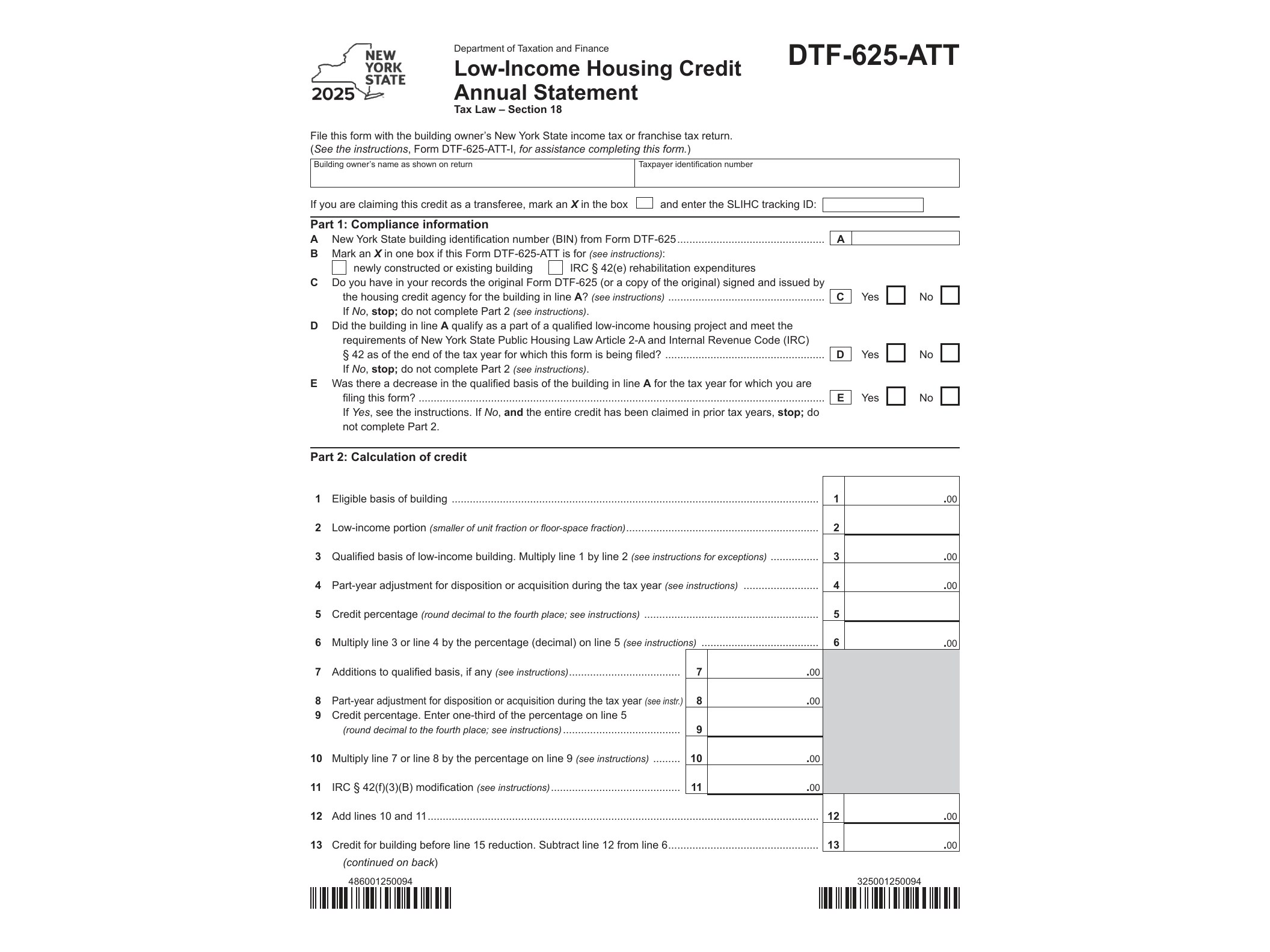
Form DTF-625-ATT is an attachment used by owners of qualified low-income housing projects in New York State to report annual compliance information tied to the state’s Low-Income Housing Credit. It’s issued by the New York State Department of Taxation and Finance and works alongside the main Form DTF-625, providing the detailed unit-by-unit or building-by-building data that the state needs to verify a project remains eligible for the credit each year.
If you own or manage a housing project that received an allocation of the New York State Low-Income Housing Credit, this form isn’t optional paperwork you can skip. The credit is tied to a compliance period, usually spanning 15 years, during which the property must continue meeting income and rent restrictions for qualified tenants. Form DTF-625-ATT is how you document, year after year, that those conditions are still being met.
Who Needs to File Form DTF-625-ATT
This attachment applies to owners of buildings that were allocated credit under New York’s Low-Income Housing Credit program, whether through the initial allocation or a carryover allocation. If your project has multiple buildings under the same allocation, you may need to complete a separate statement for each building, since compliance is generally tracked at the building level rather than the project level as a whole.
Property managers, syndicators, and accountants handling low-income housing partnerships are usually the ones filling this out, since the form requires detailed occupancy and rent data that typically comes from property management records rather than general tax software.
When This Form Is Used
Form DTF-625-ATT is filed annually, alongside the main Form DTF-625, as part of the ongoing compliance monitoring required during the credit period and the extended use period that follows. Missing a filing year or submitting incomplete information can create problems down the line, including potential recapture of previously claimed credits. That recapture risk is exactly what’s covered in a related filing, Form DTF-626, which owners need to understand even if they never expect to trigger it, simply because the annual statement and the recapture form are part of the same compliance chain.
Timing generally follows the state’s tax filing calendar, so it’s worth coordinating this submission with whatever entity return the credit flows through, whether that’s a corporate return, a partnership return, or an individual filer’s return depending on how the ownership structure is set up.
How to Get and Complete the Form
The 2025 version of Form DTF-625-ATT is available as a fillable PDF directly from the New York State Department of Taxation and Finance website. Because it’s an AcroForm, you can type your entries directly into the PDF fields on a computer before printing or saving, which cuts down on handwriting errors and makes it easier to keep a digital copy for your records.
When completing it, have your building identification numbers, unit counts, income certifications, and rent schedules on hand. The form asks for specifics tied to each qualifying building, so trying to fill it out without that documentation in front of you usually means starting over. Double-check the tax year printed on the form matches the year you’re reporting for, since using an outdated version can cause processing delays.
Owners working across multiple credit programs sometimes find it helpful to compare how other states structure similar reporting. California’s Form 3521 serves a comparable purpose for that state’s low-income housing credit, and reviewing it can clarify what kind of ongoing documentation tax agencies typically expect from these programs. Separately, developers involved in workforce training tied to housing construction might also want to look at Form IT-650, since apprenticeship credits sometimes overlap with the same projects claiming housing credits.
Once completed, the DTF-625-ATT should be submitted according to the instructions accompanying the main DTF-625 form, keeping copies for your own compliance files in case of an audit or future recapture review.
Download Official Form DTF625ATT (PDF)
Opens the official government PDF in a new tab