
Download Official Form DTF625 (PDF)
Opens the official government PDF in a new tab
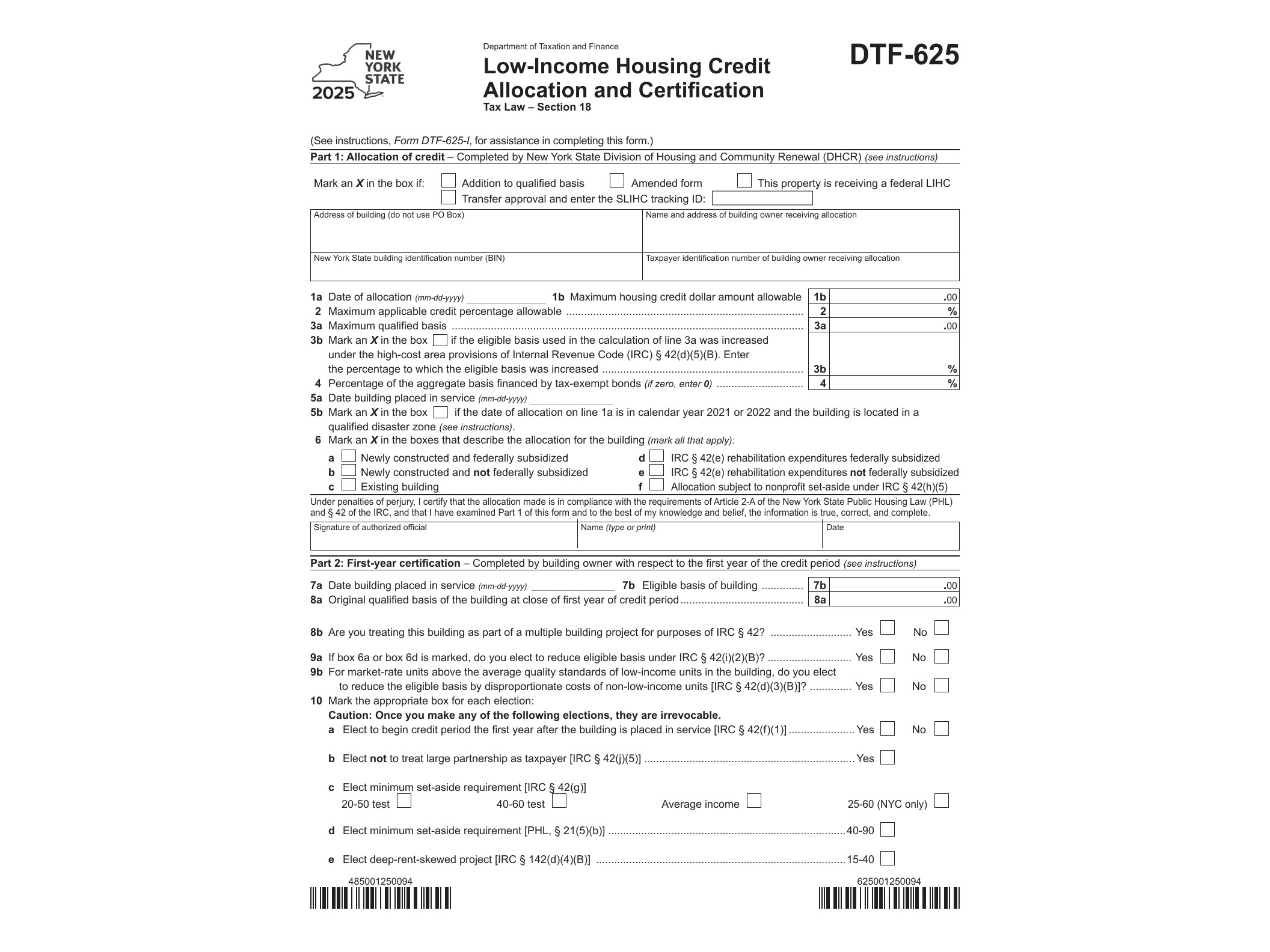
Form DTF-625, Low-Income Housing Credit Allocation and Certification, is the document New York State uses to formally allocate Low-Income Housing Credit (LIHC) amounts to qualified projects and to certify that a building meets the eligibility requirements under the state program. It’s issued by the New York State Department of Taxation and Finance, but the actual certification typically originates with the New York State Division of Housing and Community Renewal (DHCR) or another authorized allocating agency, which determines how much credit a given development can claim.
Unlike a simple tax return schedule, DTF-625 works more like an official record tied to a specific building or project. It confirms the credit period, the amount allocated, and the building’s identifying information, so that owners and investors can later support the credits they claim on their New York tax returns. Without this certification on file, a taxpayer generally can’t substantiate a Low-Income Housing Credit claim if the state ever asks for documentation.
Who Needs to File Form DTF-625
This form is relevant to owners, developers, and syndicators of qualified low-income housing projects in New York State who have been allocated credit under Section 42 of the Internal Revenue Code and the corresponding New York State provisions. If you’re a partner in a partnership that owns a qualifying building, or a shareholder in an entity that holds an allocation, you’ll likely need a copy of this certification to support your share of the credit.
Property managers and accountants handling compliance for affordable housing developments also deal with this form regularly, since the allocation and certification data feeds directly into other related filings. For instance, once a building is certified, owners must track compliance year over year using Form DTF-625-ATT, which reports the annual statement details tied back to the original DTF-625 certification.
When This Form Is Used
Form DTF-625 is typically completed at the point when a project receives its initial credit allocation, and it stays relevant for the entire credit period, which usually spans multiple years. Owners don’t refile a new DTF-625 every tax season; instead, it serves as the baseline certification that supporting schedules and annual statements refer back to. That’s why keeping the original DTF-625 documentation organized alongside partnership records is essential for anyone claiming this credit over several tax years.
There are also situations where a project falls out of compliance, whether through a change in tenant income qualifications or use of the property. In those cases, the state may require the recapture of previously allocated credits, which involves a separate process detailed in Form DTF-626. Having a clean, well-documented DTF-625 on file makes that recapture calculation, if it ever becomes necessary, much easier to manage.
How to Get and Complete the Form
The fillable version of Form DTF-625 is available directly from the New York State Department of Taxation and Finance website as a PDF with AcroForm fields, meaning you can type information directly into the document before printing or saving it. You’ll need details such as the building’s address, the allocating agency’s information, the credit amount and period, and identifying numbers for the ownership entity.
Because this certification interacts with other state credit programs, it helps to review related forms before submitting anything. Some developments involved in workforce training tied to construction, for example, might also intersect with programs like the Empire State Apprenticeship Tax Credit, so it’s worth checking whether your project qualifies for additional state incentives beyond the housing credit itself.
Once completed, the form should be retained with your permanent tax records for the property. Tax preparers filing New York returns that include LIHC claims should have a copy on hand, since the state can request it to verify the credit amounts reported on partnership or corporate returns tied to the building.
Download Official Form DTF625 (PDF)
Opens the official government PDF in a new tab