
Download Official Form DTF630 (PDF)
Opens the official government PDF in a new tab
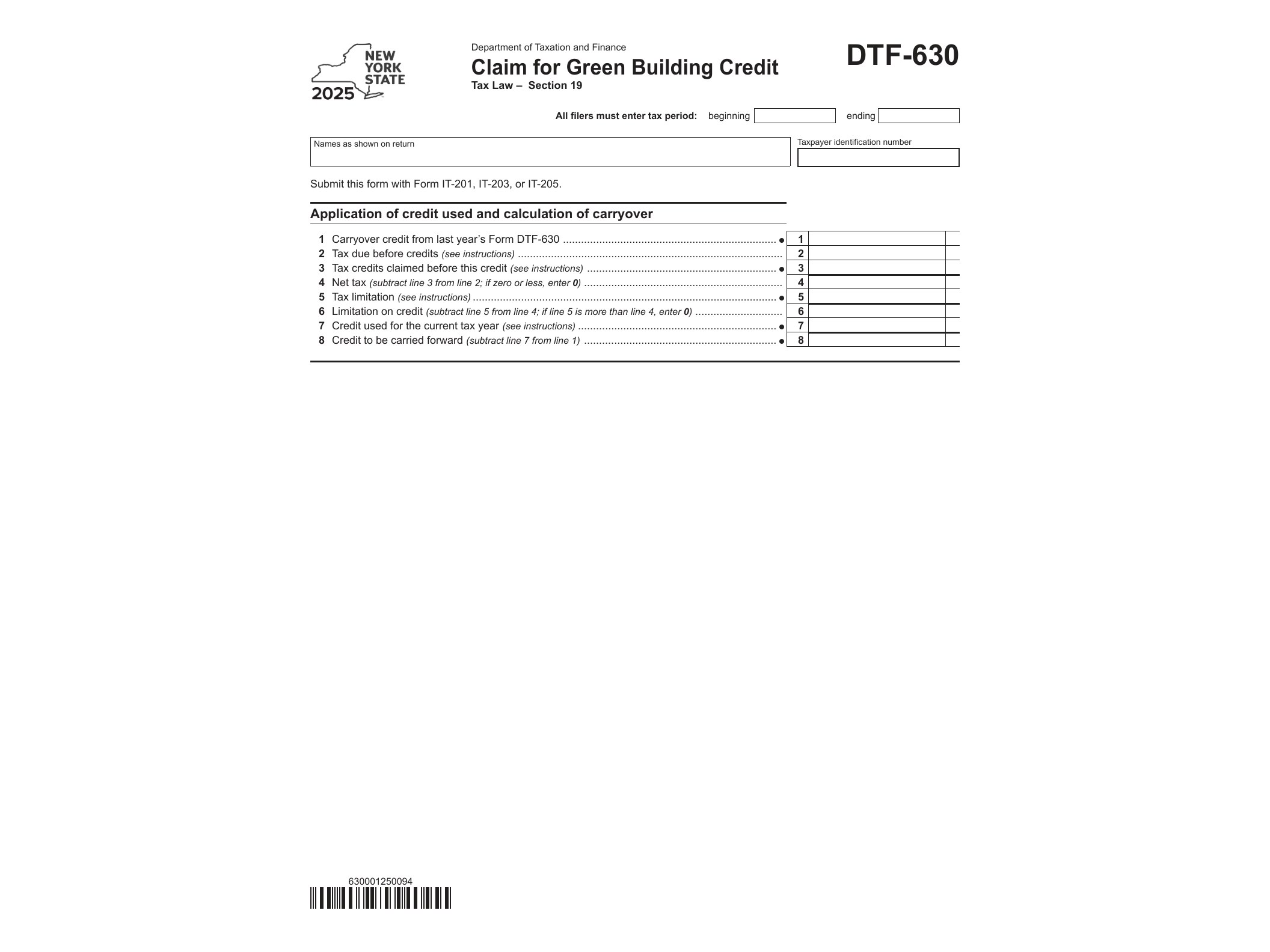
Form DTF-630, Claim for Green Building Credit, is issued by the New York State Department of Taxation and Finance for taxpayers who own, lease, or operate a building that meets specific green building standards under New York’s tax law. This credit was designed to reward property owners and tenants who invest in environmentally efficient construction, materials, and building systems that reduce energy consumption and environmental impact. If you’re claiming this credit for tax year 2025, DTF-630 is the form that documents your eligibility and calculates the amount you can apply against your New York State tax liability.
Who Needs to File Form DTF-630
This form applies to individuals, corporations, partnerships, and other business entities that have been allocated a green building credit component by the New York State Department of Environmental Conservation (DEC). The credit isn’t something you claim just by owning an energy-efficient building — you need to have gone through the DEC’s certification and allocation process first. Once you receive an allocation, you use DTF-630 to actually claim the credit on your New York tax return.
Typical filers include commercial building owners, developers who constructed or renovated a building to green standards, and tenants who made qualifying improvements to leased space. Because the credit can be split among multiple parties involved in a building project, it’s common for architects, contractors, or building managers to also be familiar with this form even if they aren’t the ones filing it directly.
When Is This Form Used
You file DTF-630 with your New York State income tax return for the year in which you’re claiming the credit component. The Green Building Credit is generally spread out over multiple tax years rather than claimed all at once, so if your project received a multi-year allocation, you’ll need to file this form annually for each year you’re eligible to claim a portion of the credit. Tax year 2025 filers should confirm their specific allocation schedule, since the credit components (whole building, tenant space, fuel cells, or photovoltaic module) each have different calculation rules and caps.
It’s worth noting that the Green Building Credit program had specific application windows and project completion deadlines set by the DEC years ago, so new applicants are generally not eligible — this form is mostly relevant to those who already have an approved allocation certificate from a prior application cycle and are still working through their credit period.
How to Fill Out and Submit DTF-630
The form itself is a fillable PDF, so you can complete it digitally before printing or attaching it to your electronically filed return. You’ll need your DEC-issued allocation certificate number, the specific credit component you’re claiming (since the form breaks calculations down by category), and supporting figures such as qualifying costs or eligible building square footage, depending on which component applies to your situation.
Start by entering your identifying information — name, taxpayer ID or EIN, and the tax year you’re filing for. Then move through the credit computation sections that match your allocation type. If you’re claiming credit as a partner, shareholder, or beneficiary rather than the original allocatee, there’s a section for pass-through entity information, since credits often flow through partnerships or S corporations to individual owners.
Once completed, DTF-630 gets attached to your relevant New York State personal or corporate tax return — it’s not filed as a standalone document. Keep your DEC certification paperwork on file, since the state may request it if your credit claim is reviewed.
If you’re also dealing with other New York State tax credit forms this season, it may help to compare how similar credit claim documents are structured. For example, Form DTF-622 for the QETC Capital Tax Credit follows a similar allocation-based claim process, which can give you a sense of what documentation New York typically expects for specialized credits.
For taxpayers who handle e-filing on behalf of clients or a business, understanding the broader e-file compliance landscape is useful too — resources like the Handbook for Authorized e-file Providers outline recordkeeping and submission standards that apply across different state and federal filing situations, even though that particular guide is California-focused.
Because green building credits involve technical calculations tied to construction and energy specifications, many filers work with an accountant or tax preparer familiar with New York’s credit programs rather than completing DTF-630 entirely on their own. Getting the component classification right the first time helps avoid processing delays or requests for additional documentation from the Department of Taxation and Finance.
Download Official Form DTF630 (PDF)
Opens the official government PDF in a new tab