
Download Official Form CT186E (PDF)
Opens the official government PDF in a new tab
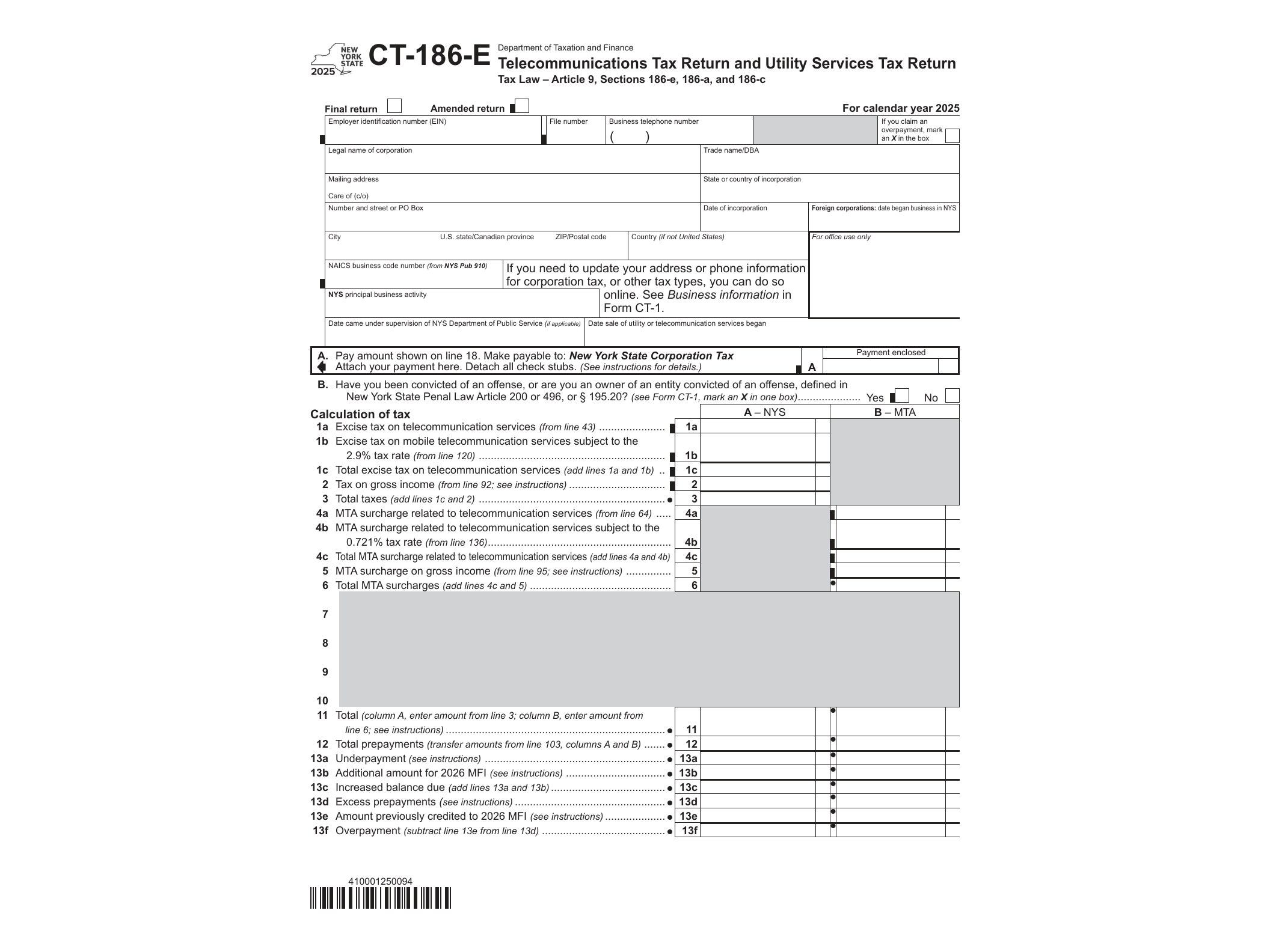
Form CT-186-E is the New York State Department of Taxation and Finance return used by telecommunications and utility companies to report and pay two related taxes: the excise tax on telecommunications services under Section 186-e of the Tax Law, and the utility services tax under Section 186-a. Despite covering two distinct tax provisions, both are filed together on this single combined return, which is why the form carries two names in its title.
The telecommunications tax portion applies to companies that provide telephone, telegraph, or related communications services within New York State. This includes gross receipts from local and toll telephone service, as well as certain mobile telecommunications activity. The utility services tax portion applies to gas, electric, steam, water, and other utility corporations doing business in the state, taxing their gross income or gross operating income depending on how the company is organized.
Any corporation, partnership, or business entity providing these services within New York, whether as a primary business or as an incidental part of broader operations, generally needs to review whether it falls under Article 9’s filing requirements. Small resellers, VoIP providers, and companies offering bundled communication packages often get caught up in the requirement even if telecommunications isn’t their core business line, so it’s worth checking the instructions carefully rather than assuming exemption.
Form CT-186-E for tax year 2025 is used specifically for that filing period, and the state updates the form periodically to reflect changes in tax rates, apportionment rules, or reporting thresholds. Because tax rates and specific line items can shift from year to year, filers should always confirm they’re using the current version tied to the correct tax year rather than reusing an older PDF saved from a prior filing season.
The return itself asks for detailed breakdowns of gross receipts or gross income by category of service, along with any allowable deductions, exemptions, or credits that apply to the filer’s specific business activity. Companies operating in multiple states will also need to address apportionment, since only income attributable to New York activity is subject to these particular taxes. Given the technical nature of these calculations, many businesses rely on their accounting or tax compliance teams to handle the return rather than attempting it without prior experience with utility taxation.
Since this is an AcroForm PDF, it can be filled out digitally using standard PDF software before printing or submitting according to the department’s current filing instructions. This makes it easier to keep accurate records, correct entries before finalizing the return, and maintain a clean digital copy for the company’s tax files. As with most state tax forms, it’s a good idea to save a completed copy along with supporting documentation in case of a future audit or inquiry from the Department of Taxation and Finance.
Filing deadlines for CT-186-E generally follow the state’s standard corporate tax filing calendar, though specific due dates can vary depending on the company’s fiscal year and whether it’s filing on a calendar-year basis. Missing the deadline can trigger penalties and interest, so telecommunications and utility businesses should mark their internal compliance calendars well ahead of the due date rather than waiting until the last minute to gather the necessary financial data.
Businesses dealing with multiple New York State filings often find it useful to understand how different state agencies handle their own specialized forms. For property-related matters, for example, local assessors sometimes reference documentation like the Form RP-3002 certification process for assessing units, or the Form RP-3006 qualifications review, both of which follow a similarly structured application format even though they serve a completely different tax purpose than CT-186-E. Understanding how New York organizes its various tax and assessment forms can make it easier to navigate multiple filing obligations across different departments within the state government.
Download Official Form CT186E (PDF)
Opens the official government PDF in a new tab