
Download Official Form 3578 (PDF)
Opens the official government PDF in a new tab
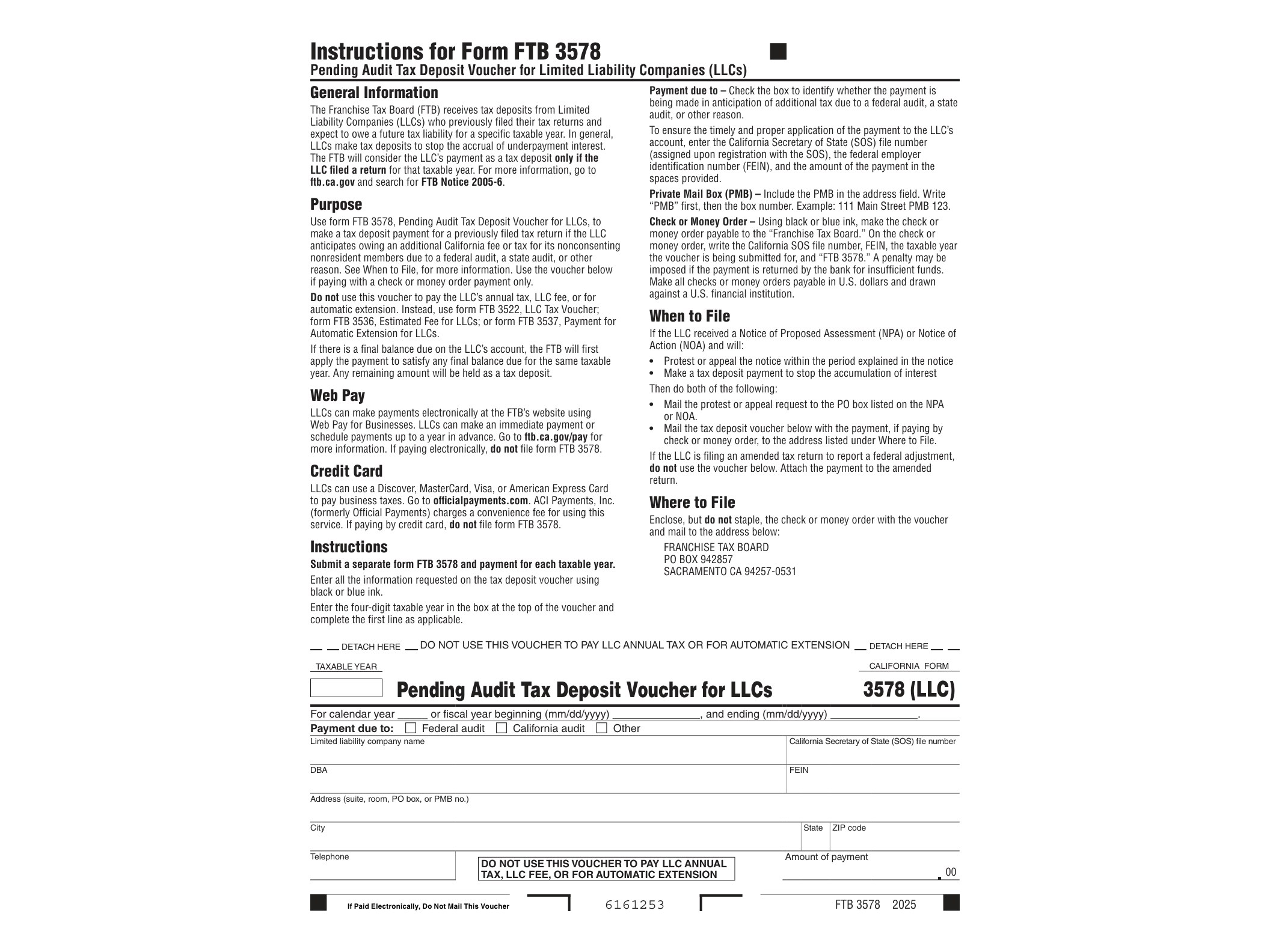
Form FTB 3578 is a voucher issued by the California Franchise Tax Board that lets limited liability companies make a deposit against tax that may end up being owed once an audit is finished. It’s not a bill and it’s not a return — it’s a way for an LLC to set money aside with the FTB while a dispute or audit is still working its way through the system, so that interest doesn’t keep piling up on whatever amount is eventually assessed.
The logic behind this form is fairly simple. When the FTB audits an LLC’s return and proposes additional tax, the LLC often disagrees and wants to protest or appeal before paying anything. But interest on unpaid tax accrues from the original due date regardless of how long the dispute takes. Form FTB 3578 gives the LLC a way to stop that interest clock by depositing funds with the state, without conceding that the tax is actually owed. If the LLC wins its case, the deposit is refunded. If the assessment holds up, the deposited amount is applied against the final tax bill.
Who Needs to File Form FTB 3578
This voucher is specifically built for LLCs that are classified as partnerships or disregarded entities for California tax purposes and that are currently under audit or expect a proposed assessment from the FTB. It’s most relevant to:
- LLCs that have received a Notice of Proposed Assessment and plan to protest it
- LLCs anticipating additional LLC fee or tax liability from an ongoing audit
- Registered agents, accountants, or tax representatives filing a deposit on behalf of the LLC
Single-member LLCs and multi-member LLCs both fall under this rule as long as they’re subject to California’s LLC tax and fee structure. Corporations and other business entities use a different but similar deposit process, so this specific voucher is limited to LLCs.
When to Use the Voucher
The FTB recommends submitting Form FTB 3578 as soon as the LLC decides to make a deposit rather than pay the proposed tax outright. Waiting too long defeats the purpose, since interest keeps accruing until the deposit is received and processed. Common triggers include:
- Receiving a Notice of Proposed Assessment during an active audit
- Filing a formal protest with the FTB’s Appeals Bureau
- Anticipating a settlement or negotiated resolution that could take months to finalize
It’s worth noting that making a deposit under this voucher does not waive the LLC’s right to protest or appeal. The two processes run independently — the deposit simply limits the financial exposure from interest while the legal argument plays out.
How to Fill Out and Submit Form FTB 3578
The form itself is short. It asks for the LLC’s name, California Secretary of State entity number, FEIN, the tax year under audit, and the amount being deposited. Because the PDF is a fillable AcroForm, you can type directly into the fields on a computer before printing, which cuts down on errors compared to handwriting the voucher.
Once completed, the voucher gets mailed to the FTB along with a check or money order for the deposit amount. The FTB does not currently accept this specific deposit electronically, so a paper submission is standard. Keep a copy of the completed voucher and proof of mailing for your records, since you’ll want documentation showing exactly when the deposit was made in case there’s ever a question about how much interest accrued before that date.
LLCs juggling multiple state filing obligations sometimes deal with similar timing and penalty issues in other states. For comparison, entities operating in New York might be more familiar with something like Form IT-2659 for estimated tax penalties, which addresses a related but distinct concern — penalty calculation rather than audit deposits. Exempt organizations operating LLCs in California should also be aware of how Form 109 for exempt organization business income might interact with an ongoing audit, since unrelated business income can sometimes trigger the same kind of assessment dispute that leads to needing FTB 3578 in the first place.
Businesses that operate across state lines and deal with various credits and offsets, such as those familiar with Form IT-268 for the Central Business District Toll Credit, know that state tax agencies each have their own mechanisms for managing disputed amounts. California’s approach through Form FTB 3578 is one of the more straightforward deposit tools available, provided it’s submitted promptly and the paperwork matches what the FTB has on file for the LLC under audit.
Download Official Form 3578 (PDF)
Opens the official government PDF in a new tab