
Download Official Form 3518 (PDF)
Opens the official government PDF in a new tab
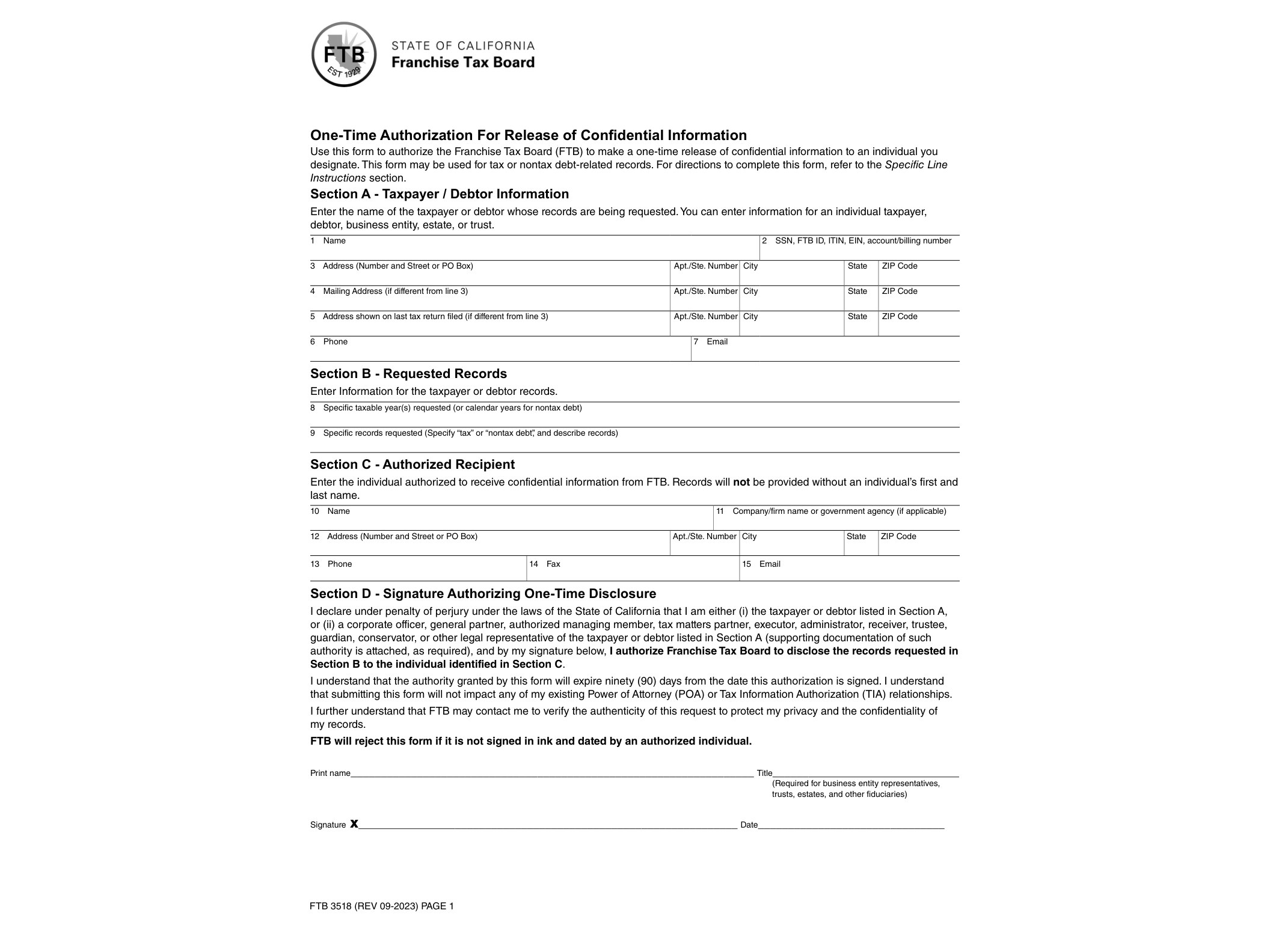
FTB Form 3518, officially titled One-Time Authorization for Release of Confidential Information, is a document issued by the California Franchise Tax Board that lets a taxpayer grant a third party permission to receive specific confidential tax information for a single, limited purpose. Unlike a full power of attorney, this form does not let the designated person act on your behalf, negotiate with the FTB, or make changes to your account. It only allows them to receive certain information you specify.
This distinction matters. Many taxpayers confuse Form 3518 with a power of attorney form, but the two serve very different functions. A power of attorney gives someone representation rights, meaning they can discuss your case, respond to notices, and sometimes negotiate settlements. Form 3518 does none of that. It’s strictly a one-time information release, useful when you need a tax preparer, family member, attorney, or another party to see a specific piece of information without granting them ongoing access or authority over your tax matters.
Who Needs This Form
You’d typically use Form 3518 in situations like these:
- You’re working with a new accountant who needs to verify a prior year’s filing status before taking you on as a client.
- A mortgage lender or financial institution requests confirmation of income details reported to the FTB.
- A family member is helping you resolve a one-time issue and needs to see specific correspondence from the FTB.
- An attorney needs limited information for a legal matter but isn’t being retained as your ongoing tax representative.
If the situation requires someone to actually communicate with the FTB, dispute a bill, or make decisions about your account, this form won’t cover it. You’d need a different authorization, such as FTB Form 3520-PIT or 3520-BE, depending on your situation.
What Information Can Be Released
Form 3518 requires you to specify exactly what information you’re authorizing the FTB to disclose. This could include details from a specific tax year, a particular notice, or documentation related to a refund or balance due. Because the authorization is limited to what you write on the form, vague or overly broad requests may be rejected or require clarification. Being precise about the tax year, document type, or specific issue speeds up processing and avoids back-and-forth with the agency.
How to Fill Out and Submit Form 3518
The form is a fillable PDF, which means you can complete it digitally before printing and signing it. You’ll need to provide:
- Your name, Social Security number or taxpayer ID, and current address
- The name and contact information of the person or entity you’re authorizing
- A clear description of the specific information to be released
- Your signature and the date
Since this authorization is tied to your identity and tax records, the FTB requires an original signature. Electronic submission options vary, so check the current instructions on the FTB website for accepted submission methods, whether that’s mail, fax, or an online portal.
Keep in mind that this authorization expires once the specific information is released or after a defined period, whichever comes first. It’s not a standing authorization, so if you need someone to access updated information next year, you’ll need to submit a new form.
Where This Fits With Other California Forms
Form 3518 often comes up alongside other FTB paperwork, particularly for people managing multiple filings or dealing with entities that have separate reporting requirements. For example, someone forming a nonprofit and going through the California Form 3500 exemption application process might later need Form 3518 if a board member or accountant needs to review specific correspondence from the FTB. Similarly, organizations that used Form 3500-A to submit an exemption request sometimes need a one-time release when working with outside auditors or legal counsel down the line.
Individuals dealing with residency-related tax questions, similar to what’s addressed in Form IT-203-C for nonresident spouse certification in New York, may also encounter situations where a spouse or representative needs limited access to California tax records without full representation authority. Form 3518 fills that specific gap.
Before submitting, double check that you’ve specified the information clearly, signed where required, and included accurate contact details for the person you’re authorizing. Missing details are the most common reason these forms get sent back for correction, which only delays the process you’re trying to speed up in the first place.
Download Official Form 3518 (PDF)
Opens the official government PDF in a new tab