
Download Official Form AU67 (PDF)
Opens the official government PDF in a new tab
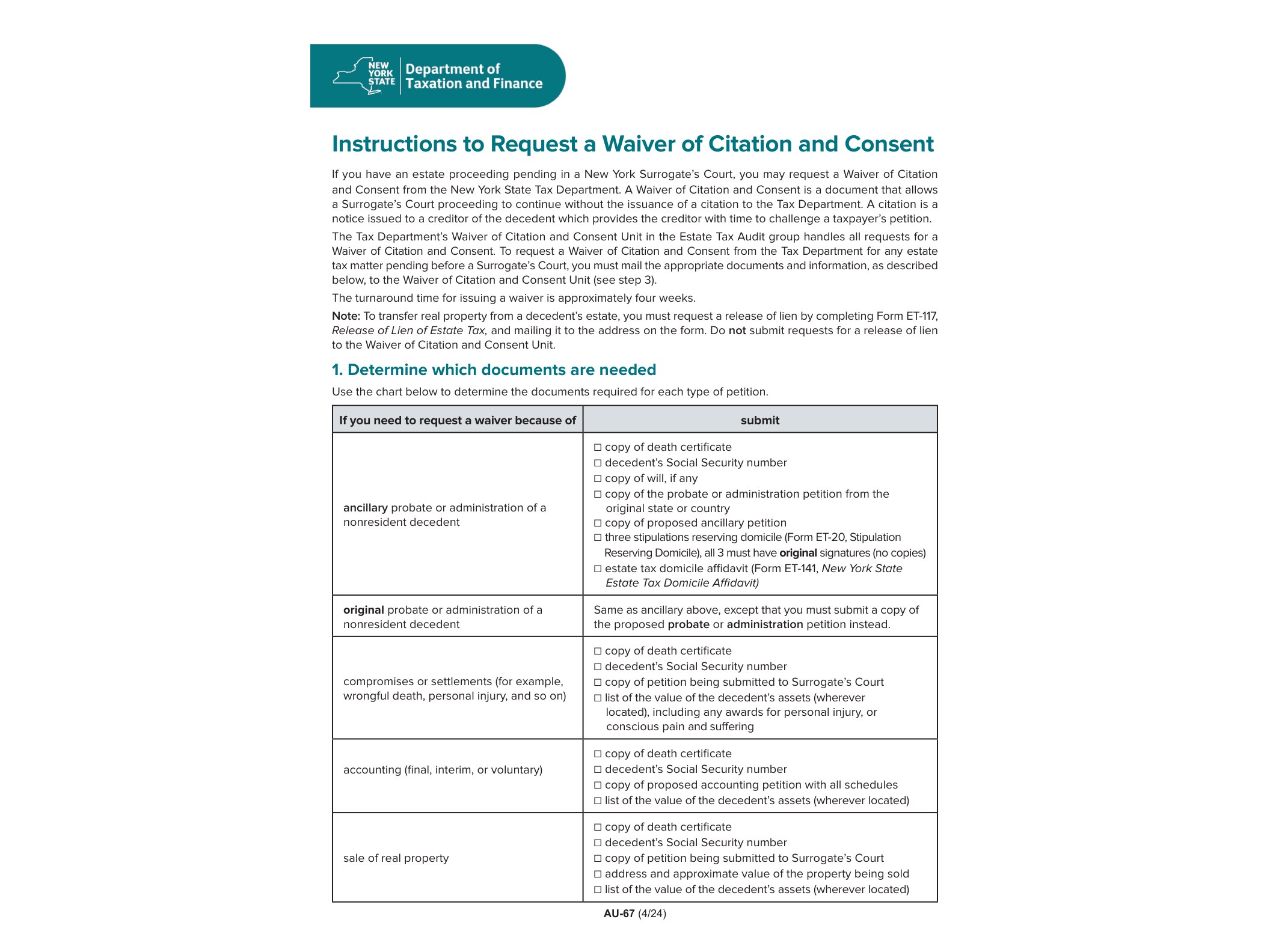
Form AU-67 is issued by the New York State Department of Taxation and Finance and is used specifically in estate tax matters that involve New York’s Surrogate’s Court process. Its formal purpose is to request a waiver of citation and secure consent from interested parties in an estate proceeding, which can save an executor or estate representative significant time and legal expense compared to going through a full citation process.
In plain terms, when someone dies and their estate goes through Surrogate’s Court, certain proceedings normally require a citation — a formal legal notice served on all interested parties (heirs, beneficiaries, or other people with a stake in the estate) informing them of a hearing or a proposed action. Serving a citation and waiting for responses can slow things down considerably. Form AU-67 allows interested parties to voluntarily waive their right to that citation and instead consent directly to the proceeding, which lets the estate move forward faster.
Who Needs to File Form AU-67
This form is typically used by executors, administrators, or attorneys handling a decedent’s estate in New York State. If you’re the person responsible for settling an estate and a particular Surrogate’s Court proceeding would otherwise require formal citation of beneficiaries or other interested parties, you may ask those parties to sign AU-67 instead. It’s especially common in situations tied to estate tax matters, since estate tax issues often intersect with Surrogate’s Court filings.
Anyone who has a legal interest in the estate — a beneficiary named in a will, an heir under intestacy rules, or another party with standing in the proceeding — may be asked to sign this waiver. By signing, that person confirms they’re aware of the proceeding and consents to it without requiring the formal citation process.
When Is This Form Used
Form AU-67 generally comes into play during estate tax proceedings connected to a decedent’s estate, particularly when the executor needs consent from beneficiaries or other interested parties to move a matter along without the delay of formal legal notice. This is often paired with other estate-related filings and can be relevant whether the estate is subject to New York estate tax or not, depending on the specific Surrogate’s Court proceeding at hand.
If you’re already dealing with other state tax paperwork tied to an estate or a decedent’s final returns, it’s worth understanding how different New York tax forms interact. For example, if the decedent had unfiled or amended personal income tax returns, you might also need to review something like the instructions for amending a New York resident income tax return, since estate administrators sometimes have to clean up a decedent’s prior filings before the estate can be closed out.
How to Get and Complete Form AU-67
Form AU-67 is not available as a fillable PDF. You’ll need to download it directly from the New York State Department of Taxation and Finance website, print it out, and complete it by hand. Because this form ties directly into a legal proceeding, accuracy matters — make sure names, estate details, and case information match exactly what’s on file with the Surrogate’s Court.
Typically, the form requires basic identifying information about the estate and decedent, along with signature lines for each interested party who is agreeing to waive citation. Every party whose consent is required should sign and, in some cases, have their signature notarized, depending on the county’s Surrogate’s Court requirements. Once signed, the form is usually filed with the court handling the estate, alongside any other required estate tax documentation.
If you’re unsure whether a particular Surrogate’s Court proceeding requires a citation waiver or you’re dealing with a more complex estate tax situation, it’s a good idea to consult with an estate attorney or tax professional familiar with New York procedures. And if issues come up with how a tax preparer handled a related estate filing, you can find guidance on filing a complaint about a New York State tax return preparer if something doesn’t add up.
Keeping estate paperwork organized — from tax waivers like AU-67 to specialized informational returns such as the wholesale dealer of cigarettes informational return for business-related estates — helps avoid unnecessary delays in Surrogate’s Court and with the Department of Taxation and Finance.
Download Official Form AU67 (PDF)
Opens the official government PDF in a new tab