
Download Official Form CG100AI (PDF)
Opens the official government PDF in a new tab
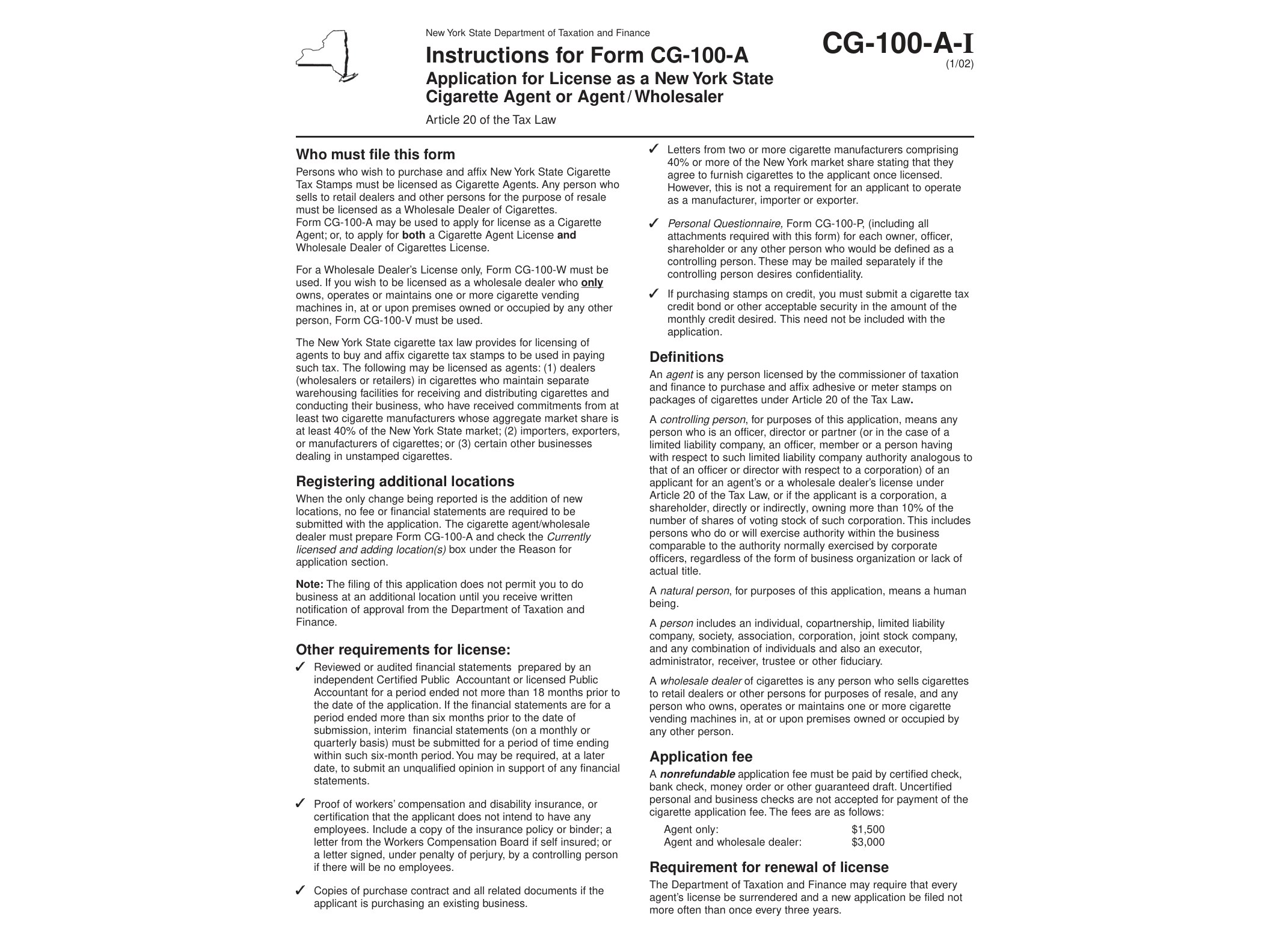
Form CG-100-A-I is the instructional companion to Form CG-100-A, the application businesses must file with the New York State Department of Taxation and Finance to become a licensed cigarette agent or agent/wholesaler. If you’re planning to import, stamp, or distribute cigarettes within New York State, this instruction booklet walks you through exactly what the state expects on the application itself, line by line.
New York regulates cigarette agents heavily because these are the businesses authorized to purchase and affix New York State cigarette tax stamps. That’s a significant responsibility, so the licensing process involves detailed disclosures about ownership, financial history, business structure, and compliance with state tax law. Form CG-100-A-I exists to make sure applicants don’t miss required documentation or misunderstand what a particular section is asking for.
Who Needs This Form
Anyone applying for a cigarette agent license or an agent/wholesaler license in New York needs to reference these instructions alongside the actual CG-100-A application. This typically includes:
- Businesses seeking to become licensed cigarette stamping agents
- Companies applying for combined agent/wholesaler status
- Corporate officers, partners, or LLC members who must be listed on the application
- Accountants or attorneys preparing the licensing package on behalf of a client
Because cigarette tax stamping involves handling state revenue collection directly, the Department of Taxation and Finance reviews these applications carefully, and incomplete submissions are a common reason for delays.
What the Instructions Cover
Form CG-100-A-I breaks down each section of the CG-100-A application, explaining what supporting documents are required, how to report ownership interests, and what financial disclosures need to accompany the form. It also clarifies definitions specific to New York’s cigarette tax law, such as the distinction between an agent and an agent/wholesaler, since the licensing requirements and bonding obligations differ between the two.
The instructions also note where applicants need to attach additional schedules, such as details on business locations, storage facilities, and any prior denials or revocations of tobacco-related licenses in New York or other states. Missing these attachments is one of the most frequent reasons applications get sent back for correction.
Filling It Out by Hand
Form CG-100-A-I itself is not a fillable digital form — there are no interactive fields to type into. It’s a printed instruction document meant to be read alongside the CG-100-A application, which you’ll need to print and complete by hand (or type using a typewriter, if you still have access to one). Once completed, the application package goes to the Department of Taxation and Finance’s Miscellaneous Tax unit, following the mailing instructions listed on the form itself.
Before submitting, it’s worth reviewing Form CG-100-C, the official checklist for CG-100-A, CG-100-W, and CG-100-V applications. It’s designed to catch exactly the kind of missing documentation that causes processing delays, and using it alongside CG-100-A-I gives you a much better shot at a clean first submission.
Other Filing Obligations to Keep in Mind
Getting licensed as a cigarette agent or agent/wholesaler is just the starting point. Once your business is operational, you’ll also have ongoing state filing responsibilities tied to payroll and employment. If you have employees, you’ll eventually need to file Form NYS-45 each quarter to report withholding, wages, and unemployment insurance contributions. And if your business issues retirement or pension distributions to New York residents, you may eventually deal with reporting requirements similar to those covered under Form IT-1099-R.
Since cigarette agent licensing involves both state tax compliance and detailed background disclosures, many applicants choose to have a tax professional or attorney review the CG-100-A-I instructions before submitting the application. Given how strictly the Department of Taxation and Finance enforces bonding, ownership disclosure, and prior-conduct requirements in this industry, a careful read of the instructions upfront can save weeks of back-and-forth correspondence later.
Download Official Form CG100AI (PDF)
Opens the official government PDF in a new tab