
Download Official Form ST860 (PDF)
Opens the official government PDF in a new tab
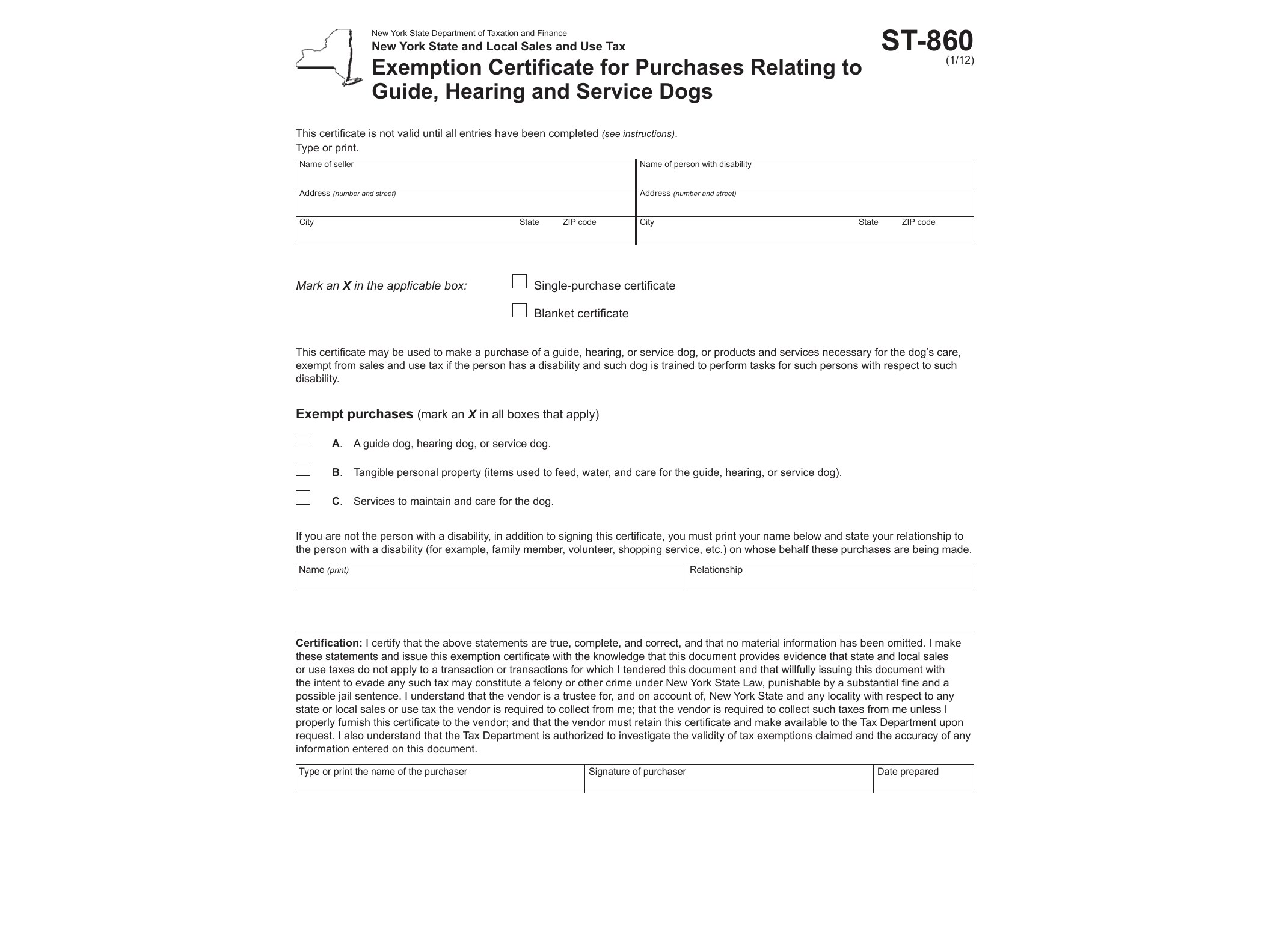
Form ST-860, issued by the New York State Department of Taxation and Finance, is an exemption certificate used when purchasing goods and services related to guide dogs, hearing dogs, and service dogs. New York exempts these purchases from state and local sales tax because the animals are considered essential medical or assistive equipment for people with disabilities, not pets in the ordinary sense.
If you buy a guide dog, hearing dog, or service dog in New York, or purchase items and services related to the care and training of one of these animals, this certificate lets you avoid paying sales tax at the point of sale. Instead of paying tax and requesting a refund later, you give the completed ST-860 directly to the seller, who keeps it on file to document why no tax was charged on the transaction.
Who Needs This Form
Form ST-860 is meant for individuals who rely on a guide, hearing, or service dog for a documented disability. This includes people who are blind or visually impaired and use guide dogs, people who are deaf or hard of hearing who rely on hearing dogs, and individuals with other disabilities who use service dogs trained to perform specific tasks. The exemption also extends to organizations and trainers involved in preparing these animals for service, depending on the nature of the purchase.
It’s worth noting that this exemption doesn’t apply to regular pets, even if a pet provides emotional support in a general sense. The dog must be specifically trained and used as a guide, hearing, or service animal to qualify for the tax break under New York law.
What Purchases Are Covered
The exemption covers a range of items and services tied to these working dogs, including the purchase of the dog itself, food, veterinary care, training equipment, harnesses, leashes, and other supplies necessary for the animal’s function and upkeep. Sellers who accept a properly completed ST-860 from a buyer are not required to collect sales tax on these qualifying purchases.
How to Fill Out Form ST-860
The form is short and straightforward, especially since it’s available as a fillable PDF. You’ll need to provide:
- Your name and address as the purchaser
- A description of the property or service being purchased
- Certification that the dog is a guide, hearing, or service dog used by a person with a disability
- Your signature and the date
Because the PDF supports digital entry, you can type your information directly into the form fields before printing it for the seller, rather than filling it out by hand. Once completed and signed, give the form to the vendor at the time of purchase — you don’t file it with the state directly. The seller retains the certificate as proof that the sale was properly exempted, in case of a future audit.
Sellers should keep these certificates on file for as long as required under New York’s recordkeeping rules for sales tax exemption documentation, similar to how businesses handle other exemption certificates like the one described in our Form ST-123 guide for exempt purchase certificates.
Common Mistakes to Avoid
A frequent issue is submitting the form after the purchase has already been taxed — this exemption is meant to be applied at the time of sale, not requested retroactively through a refund claim. Another common mistake is using the form for a general pet rather than a documented guide, hearing, or service animal. Make sure the certification section clearly reflects the dog’s role and that all buyer information matches your identification.
If you’re a business or organization that regularly deals with multiple types of state tax exemption certificates, it can help to understand how these forms fit into New York’s broader sales tax exemption system. For example, contractors and vendors working on exempt projects often deal with related certifications, such as those explained in our overview of the Form ST-220-TD contractor certification, or compliance reporting requirements like those covered in our Form ST-62 IDA compliance report guide.
Keeping a signed copy of Form ST-860 for your own records is also a good practice, even though you’re not filing it with the state. If a seller ever questions the exemption or if there’s a dispute later, having your own copy on hand makes it easier to resolve.
Download Official Form ST860 (PDF)
Opens the official government PDF in a new tab