
Download Official Form MT15 (PDF)
Opens the official government PDF in a new tab
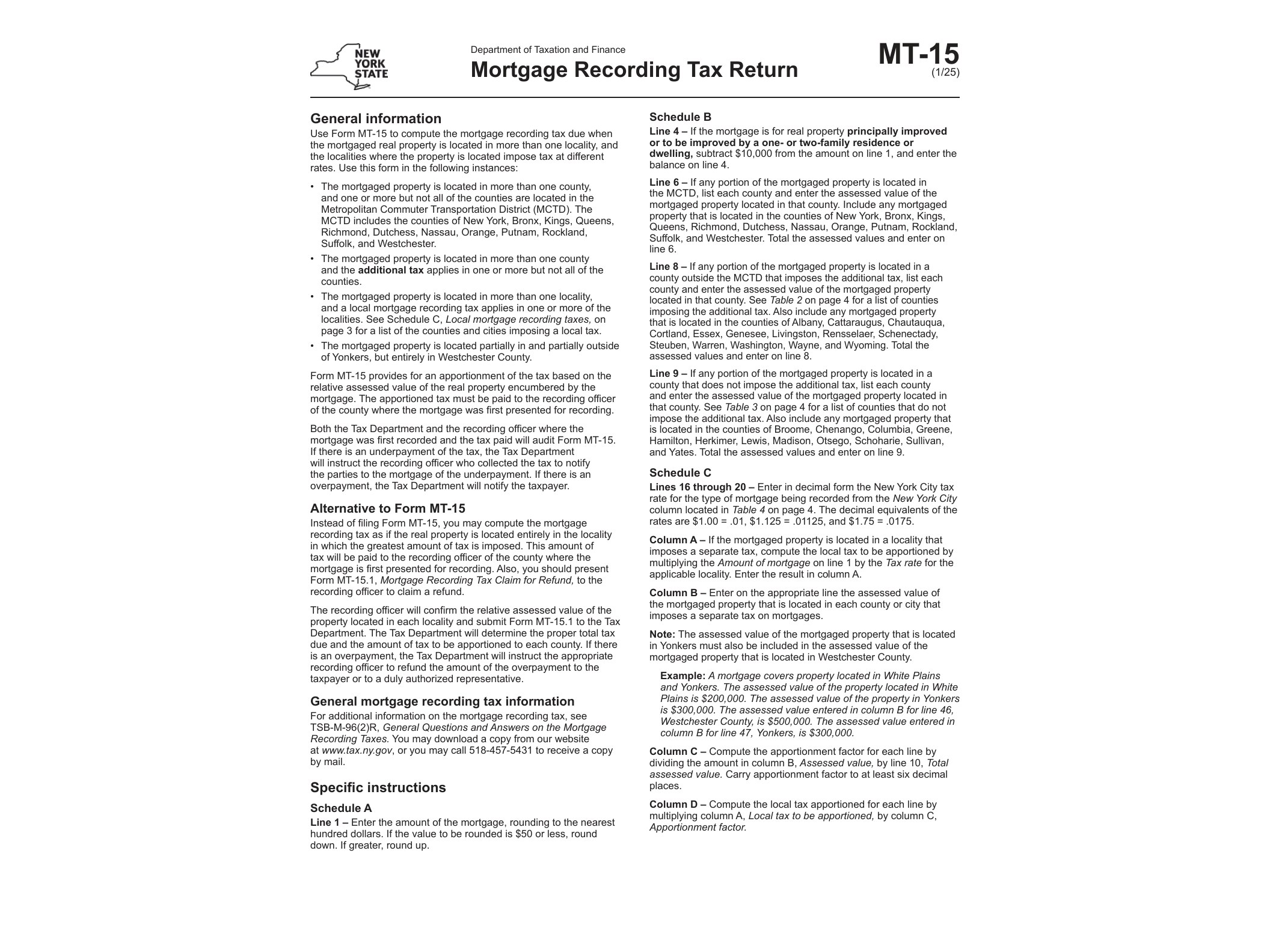
Form MT-15, officially titled Mortgage Recording Tax Return, is a New York State Department of Taxation and Finance form used to report and pay the mortgage recording tax whenever a mortgage on real property located in New York is recorded. If you’re closing on a property in New York and a mortgage is part of that transaction, this form (or the equivalent county version) is part of the paperwork that goes to the county clerk or recording officer.
The mortgage recording tax isn’t a federal tax and it isn’t income tax — it’s a state and local tax tied specifically to the act of recording a mortgage. New York charges this tax based on the amount of the debt secured by the mortgage, and the rate varies depending on the county where the property sits and, in some cases, whether the property is a one- or two-family home. Form MT-15 is the standard statewide version of the return; some counties, like those in New York City, use their own variations, but the underlying purpose is the same.
Who Needs to File Form MT-15
This form is typically completed by whoever is recording the mortgage — usually the lender’s attorney, a title company, or the borrower’s closing attorney, depending on how the transaction is structured. If you’re an individual borrower, you probably won’t fill this out yourself, but it’s worth understanding since the tax it calculates directly affects your closing costs. Real estate attorneys, title agents, and mortgage lenders working on New York property deals are the ones who regularly deal with this paperwork.
Businesses and individuals who take out a mortgage, as well as those who modify, consolidate, or extend an existing mortgage in a way that increases the principal debt, may also need to address MT-15 filings, since additional tax can apply when the secured debt goes up.
When Form MT-15 Is Used
You’ll encounter Form MT-15 at the time a mortgage is presented for recording with the county clerk. Recording is what makes the mortgage a matter of public record and protects the lender’s lien priority, so this step is rarely optional in a financed real estate purchase. The tax return must accompany the mortgage document itself, along with payment of the calculated tax, before the clerk will officially record it.
It also comes into play in situations involving supplemental mortgages, mortgage assignments that increase debt, or consolidation agreements combining multiple mortgages into one. Each of these scenarios can trigger a new or additional mortgage recording tax obligation, meaning MT-15 (or a comparable county-specific form) has to be filed again.
How to Get and Complete the Form
Form MT-15 is available directly from the New York State Department of Taxation and Finance as a PDF. Unlike some newer state forms, this one does not have fillable digital fields — you’ll need to print it out and complete it by hand. Make sure you’re using a printer that produces a clean, legible copy, since county clerks can reject documents that are hard to read.
When filling it out, you’ll typically need to provide details about the property, the parties involved in the mortgage, the principal debt amount, and the calculation of tax owed based on the applicable county rate. Because rates and exemptions can differ by county and property type, it’s a good idea to confirm the correct rate with the county clerk’s office or a real estate attorney before submitting payment, since errors here can delay recording.
If you’re dealing with other New York State tax matters alongside a real estate transaction, it can help to understand your broader rights and obligations as a taxpayer. For general guidance on that front, the Notice of Taxpayer Rights (Form DTF-996) outlines what you’re entitled to when interacting with the state tax department. Businesses navigating more complex New York filings might also find it useful to look at how disclosure forms like Form DTF-664 work, since New York requires specific reporting for certain tax arrangements beyond just property transactions.
Once Form MT-15 is completed and the tax is paid, the county clerk records the mortgage and the transaction can move forward. Keep a copy of the completed form and proof of payment for your records, since questions about mortgage tax paid can come up later during refinancing, property sale, or an audit.
Download Official Form MT15 (PDF)
Opens the official government PDF in a new tab