
Download Official Form DTF686I (PDF)
Opens the official government PDF in a new tab
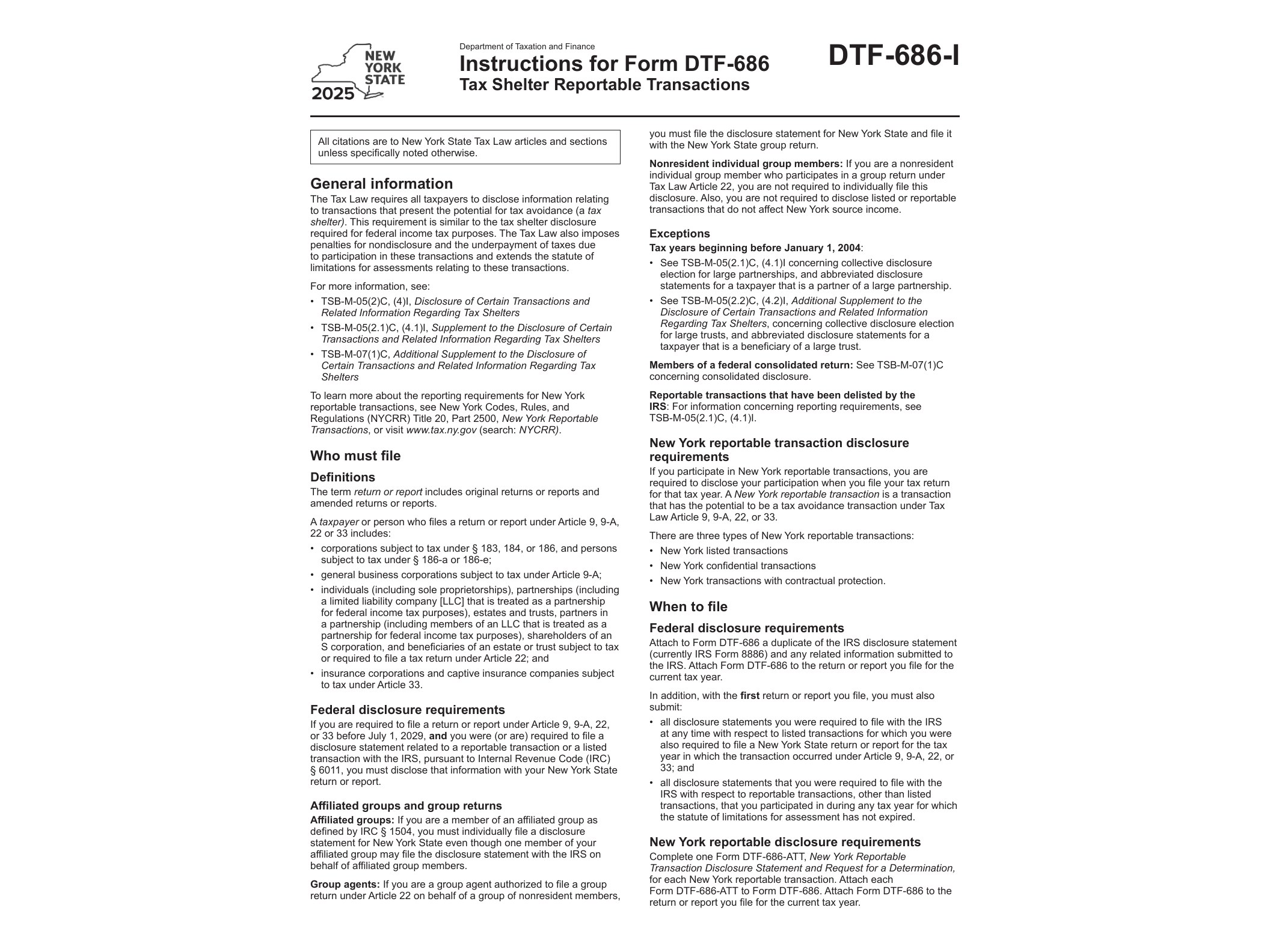
Form DTF-686-I is the instruction booklet that accompanies Form DTF-686, the New York State Department of Taxation and Finance form used to disclose participation in reportable tax shelter transactions. If you or your business took part in a transaction that the state or the IRS considers potentially abusive for tax avoidance purposes, these instructions walk you through exactly how to fill out the disclosure statement correctly and what supporting documentation you need to attach.
New York, like the federal government, keeps a list of transaction types that raise red flags: listed transactions, confidential transactions, transactions with contractual protection, loss transactions, and transactions of interest. If your tax position falls into one of these categories, the state requires you to report it separately from your regular tax return. Form DTF-686-I explains each of these categories in plain terms and helps you determine whether your situation actually triggers a filing requirement.
Who Needs This Form
The instructions are meant for taxpayers—individuals, corporations, partnerships, and other entities—who participated in a reportable transaction and now owe New York State a disclosure. This typically includes taxpayers who already had to file a federal disclosure statement with the IRS under similar tax shelter rules, since New York generally mirrors the federal reportable transaction categories but adds its own state-specific filing obligation.
It’s worth noting the difference between this form and the obligations of material advisors. If you’re a tax professional, accountant, or advisor who organized, managed, or sold interests in a potentially abusive tax shelter, your disclosure requirements fall under a separate form, covered in our breakdown of Form DTF-664: Tax Shelter Disclosure for Material Advisors. DTF-686-I, by contrast, is written for the taxpayer side of the transaction—the person or entity actually claiming the tax benefit.
When You’d Use It
You use these instructions when preparing Form DTF-686 alongside your New York State tax return for tax year 2025. The disclosure isn’t a standalone filing you send in whenever you want—it’s tied to your annual filing deadline, so timing matters. Missing the disclosure or filing it late can expose you to penalties separate from any tax owed on the underlying transaction, so the instructions spend a good amount of space on deadlines and what happens if you’re filing an amended return because a transaction became reportable after the fact.
The booklet also covers situations where you need to file a protective disclosure—cases where you’re not entirely sure the transaction qualifies as reportable, but you’d rather disclose it and avoid penalty exposure than risk noncompliance later.
How to Get and Complete It
Form DTF-686-I is available directly from the New York State Department of Taxation and Finance website as a PDF. It isn’t a fillable digital form, so you’ll need to print it out and complete Form DTF-686 by hand using the instructions as your reference guide. Have your federal disclosure documents on hand before you start, since much of the New York filing cross-references information already reported to the IRS, including transaction identification numbers and descriptions of the tax benefit claimed.
Walk through the instructions section by section rather than skipping to the form itself. The booklet clarifies which schedules apply to your entity type, how to describe the transaction accurately, and where to attach copies of any related federal forms. Once completed, the disclosure gets submitted along with your New York State tax return, not separately.
If you’re new to New York’s tax disclosure requirements generally, it may also help to review Form DTF-996, the Notice of Taxpayer Rights, which outlines what protections you have during any state tax review process, including one triggered by a tax shelter disclosure. And if your filing involves real property transactions in New York, it’s worth checking whether Form MT-15 applies to your situation as well, since mortgage recording tax filings sometimes intersect with larger tax planning structures that draw scrutiny under shelter reporting rules.
Because reportable transaction rules carry real financial consequences if missed or filed incorrectly, many taxpayers choose to work through DTF-686-I with a tax professional rather than going it alone, particularly if the underlying transaction is complex or involves multiple entities.
Download Official Form DTF686I (PDF)
Opens the official government PDF in a new tab