
Download Official Form RP420AB (PDF)
Opens the official government PDF in a new tab
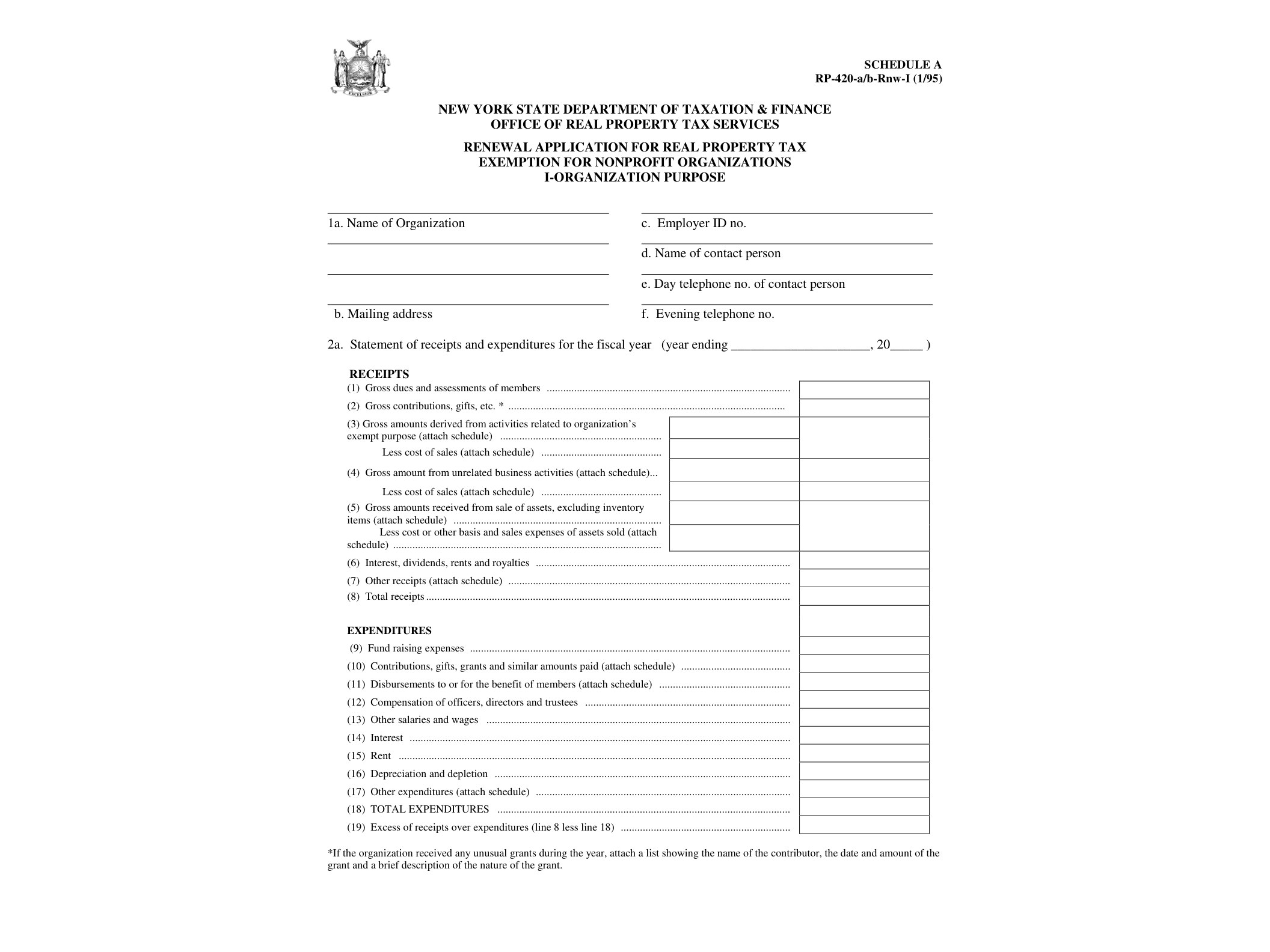
Form RP-420-a/b-Rnw-I is the renewal application New York State nonprofit organizations must file to keep their real property tax exemption active. It’s issued by the New York State Department of Taxation and Finance, specifically the Office of Real Property Tax Services (ORPTS), and it’s filed with the local assessor’s office rather than the state directly.
Unlike a first-time exemption request, this renewal form assumes your organization already has an exemption on file, typically granted through Form RP-420-a/b-Org. The renewal exists because exemptions for nonprofit-owned property aren’t permanent by default in every jurisdiction. Assessors periodically need updated information to confirm the property is still owned by the same organization, still used for the exempt purpose stated originally (religious, charitable, educational, hospital, or similar nonprofit use), and still meets the legal requirements under Real Property Tax Law sections 420-a and 420-b.
Who Needs to File This Form
Any nonprofit organization currently receiving a property tax exemption under RPTL 420-a (mandatory exemptions for religious, charitable, hospital, educational, and similar purposes) or 420-b (permissive exemptions granted at local option) needs to file this renewal when the assessor’s office requests it. This typically includes:
- Churches, synagogues, and other religious institutions
- Charitable organizations and nonprofits providing community services
- Private schools and educational institutions
- Nonprofit hospitals and healthcare facilities
- Historical societies, libraries, and similar cultural organizations
If your organization’s use of the property, ownership structure, or income sources have changed since the last filing, the renewal form is where you disclose that. Assessors use this information to decide whether the exemption should continue, be modified, or in some cases be revoked.
When and How Often It’s Filed
Assessors have discretion to require periodic renewal filings, and the schedule varies by municipality. Some local assessors ask for renewal information every few years, while others may request it whenever there’s a change in property use or ownership. It’s common practice for the assessor’s office to mail a notice with a specific deadline, usually tied to the taxable status date for that assessing unit. Missing the deadline can put the exemption at risk, so nonprofits should treat any renewal notice as time-sensitive.
What Information the Form Requires
The renewal application asks for updated details rather than a full reapplication from scratch. Expect to confirm or update:
- The organization’s legal name and current mailing address
- Property identification (tax map number, address, and current use)
- Whether the property use has changed since the original exemption was granted
- Whether any part of the property is now rented out, used for non-exempt purposes, or generates income
- Officer or board contact information for verification purposes
Because this is an AcroForm PDF, it can be filled out digitally using standard PDF software before printing and submitting to the local assessor. There’s no need to submit it electronically to the state; the completed form goes directly to the assessing unit where the property is located.
Why Assessors Require This Renewal
Property tax exemptions represent lost revenue for local governments, so assessors are required to periodically verify that exempted properties continue to meet the legal standard for exemption. A nonprofit that stops using a building for its stated charitable purpose, or that starts leasing space to a for-profit tenant, may no longer qualify for the full exemption on that portion of the property. The renewal process gives assessors a documented basis for continuing, adjusting, or terminating the exemption.
Organizations that also interact with other local tax and assessment programs, such as those filing Form RP-3616 for county services state aid or agricultural-related filings like Form RP-305-PR, should keep in mind that each of these New York property-related forms has its own filing schedule and local assessor contact. Keeping copies of prior exemption applications and this renewal on file helps speed up future filings and reduces the chance of a lapse in exemption status.
Download Official Form RP420AB (PDF)
Opens the official government PDF in a new tab