
Download Official Form RP483 (PDF)
Opens the official government PDF in a new tab
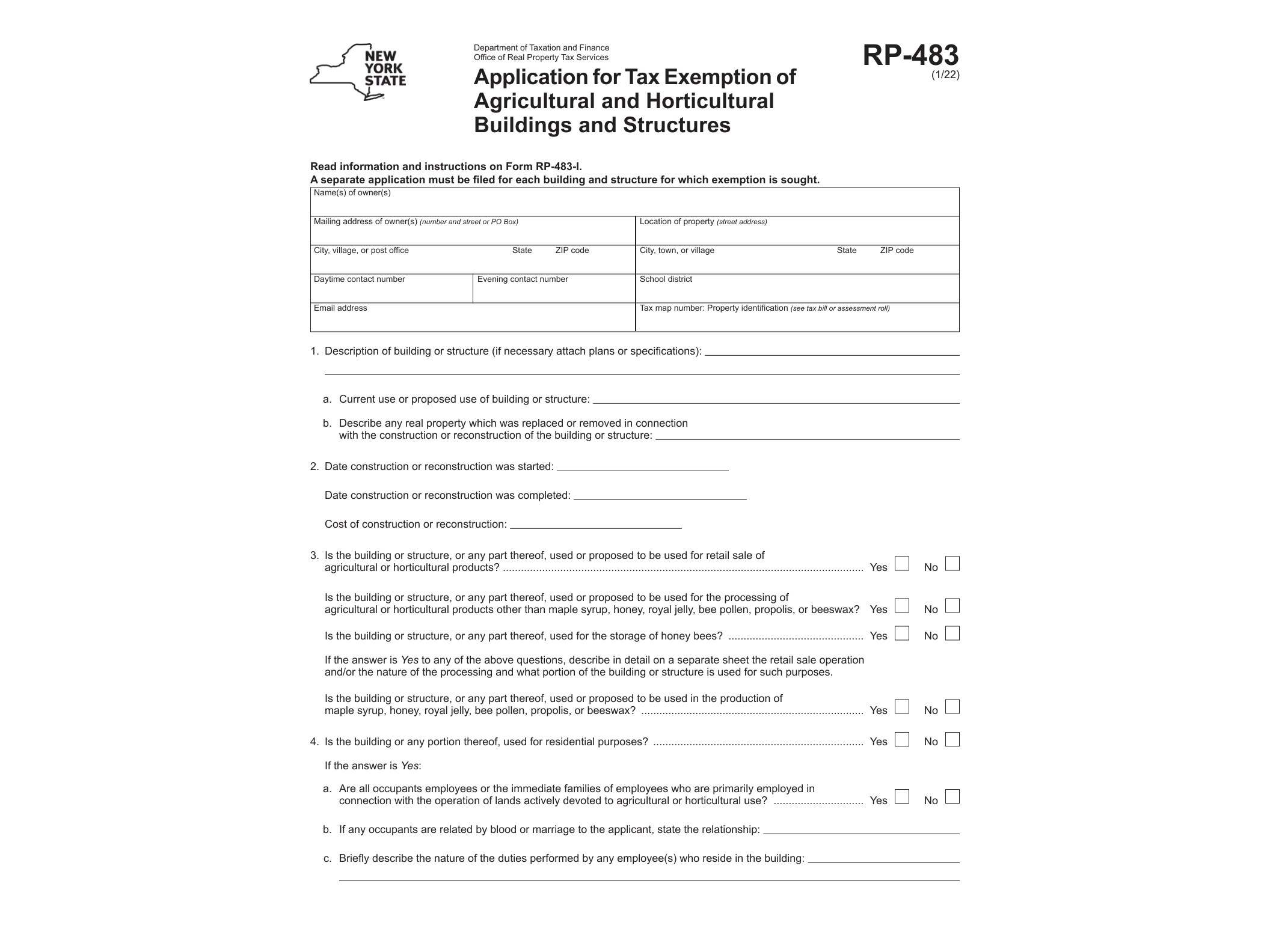
Form RP-483 is the application New York property owners use to request a real property tax exemption on buildings and structures used for agricultural or horticultural purposes. It’s issued by the New York State Department of Taxation and Finance, and this version reflects the January 2022 revision, which is the one local assessors currently accept.
The exemption exists because New York recognizes that farm buildings — barns, greenhouses, silos, storage structures, and similar facilities — support agricultural production rather than generate the kind of value that typical commercial or residential improvements do. Rather than taxing these structures at full assessed value, the law allows owners to exclude a portion of their value from local property tax rolls for a set number of years, provided the buildings meet the eligibility rules.
Who Needs to File RP-483
This form is meant for owners of farm properties who have constructed, reconstructed, or expanded a building or structure used in agricultural or horticultural production. That includes structures used for raising livestock, growing crops, storing farm equipment, processing farm products on-site, or housing horticultural operations like nurseries and greenhouses. The exemption generally applies to new construction or improvements completed within a specific window before filing, so it’s not something you apply for on a building that’s been standing unchanged for decades.
To qualify, the property typically needs to meet certain acreage and gross sales thresholds tied to New York’s definition of a commercial farm operation. Assessors will check that the structure is actually being used for an eligible agricultural purpose and not, for example, converted into a residence or a non-farm commercial space.
Farm owners occasionally confuse this exemption with others available under New York’s agricultural assessment programs. If your operation involves housing seasonal or migrant farm labor, you’d want to look instead at Form RP-483-D, which covers labor camps and commissaries connected to farm or food processing operations. RP-483 is specifically for the buildings and structures used in production itself.
When to File
Timing matters with this exemption. Applications must be filed with the local assessor by the taxable status date, which varies by municipality but is usually March 1 in most of New York (with different dates in New York City and a handful of other jurisdictions). Missing that deadline typically means waiting until the following assessment cycle, so it’s worth confirming the exact date with your local assessor’s office well ahead of time.
The exemption, once granted, generally lasts for ten years from the date the structure is completed, after which the building returns to full taxable assessed value. Owners don’t need to reapply annually during that period unless the assessor requests updated information or the use of the property changes.
How to Complete and Submit the Form
Form RP-483 is a fillable PDF, so you can type your responses directly into the document before printing it for signature and submission — most assessors still require a physical or mailed copy rather than digital submission. The form asks for details about the property owner, the location and description of the structure, the date construction was completed, the cost of construction, and the intended agricultural or horticultural use.
You’ll also need to attach supporting documentation, such as building permits, construction cost records, or evidence tying the structure to a qualifying farm operation. Local assessors sometimes request additional paperwork depending on the county, so a quick call to confirm requirements before submitting can save a round of back-and-forth.
This exemption is separate from other property-based relief programs in New York, such as the Senior Citizens Exemption renewal or exemptions tied to industrial facilities like the one covered under Form RP-477 for waste treatment facilities. Each of these programs has its own eligibility standards and filing deadlines, so farm owners juggling multiple property tax exemptions should keep separate track of each one’s renewal or reporting requirements.
Once submitted, the local assessor reviews the application and supporting documents to confirm the structure qualifies before applying the exemption to the assessment roll. If the application is denied or only partially granted, owners generally have the right to grieve the assessment through their local Board of Assessment Review.
Download Official Form RP483 (PDF)
Opens the official government PDF in a new tab