
Download Official Form RP5217AV (PDF)
Opens the official government PDF in a new tab
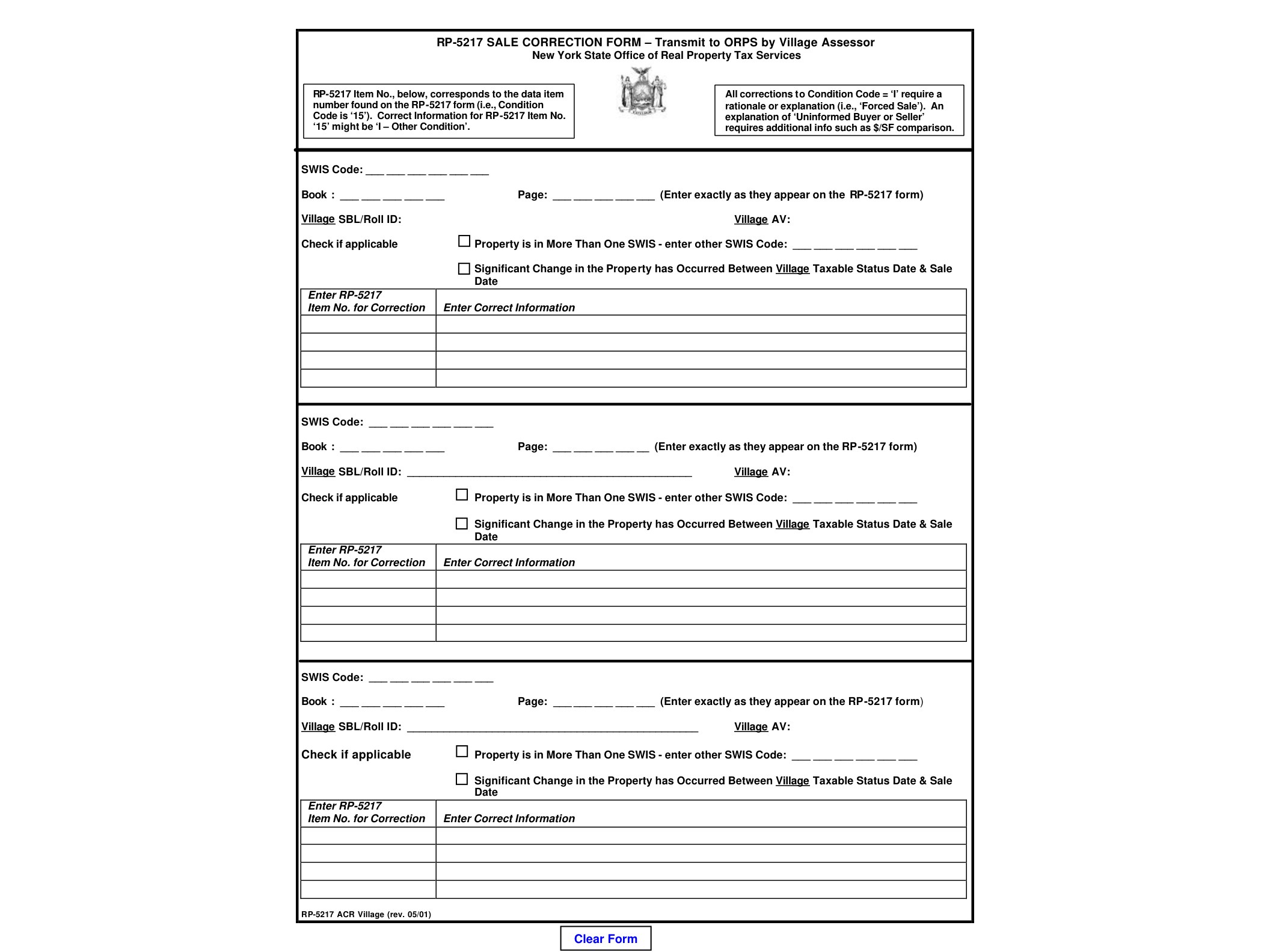
Form RP-5217-ACR-Village is a correction form used within New York’s real property transfer reporting system, specifically for corrections that fall under the jurisdiction of a village assessor. It’s issued by the New York State Department of Taxation and Finance and ties directly into the RP-5217 series, which covers Real Property Transfer Reports filed whenever property changes hands in the state.
The core purpose of this form is narrow but important: it lets a village assessor request or process a correction to information originally submitted on a Real Property Transfer Report (RP-5217). Transfer reports capture details like sale price, property classification, buyer and seller information, and parcel data. Mistakes happen—wrong SBL numbers, incorrect sale amounts, misclassified property types—and once that data is entered into county and state records, it needs a formal mechanism to get fixed. That’s what RP-5217-ACR-Village provides at the village level.
Who Needs This Form
This form is generally used by village assessors, not by individual homeowners or buyers directly filing a transfer report. If you’re a property owner and you notice an error on your original transfer paperwork, your first move is usually to contact your local assessing office rather than filling this out yourself. The assessor’s office then uses RP-5217-ACR-Village to formally document and submit the correction through the appropriate channel.
That said, real estate attorneys, title companies, and closing agents who handle property transfers in villages with their own assessing units should be familiar with this form, since they’re often the ones who first spot discrepancies in recorded sale information and need to loop in the assessor to get it corrected.
When It’s Used
You’ll encounter this form in situations such as:
- A sale price was recorded incorrectly on the original RP-5217 filing.
- Property classification codes were entered wrong, affecting assessment calculations.
- Parcel identification numbers or owner names contain typos or outdated information.
- A village assessor identifies a discrepancy during routine review of transfer data before it’s finalized in the assessment roll.
It’s worth noting that this is a village-specific version. New York has a separate form, Form RP-5217-CF, which handles sale information corrections more broadly and isn’t limited to village assessors. If your property isn’t in a village with its own assessing authority, the correction process likely runs through that form instead.
How to Get and Fill Out the Form
The form is available directly from the New York State Department of Taxation and Finance as a fillable PDF, meaning you can type your entries directly into the form fields on a computer before printing or submitting it, rather than filling it out by hand. This reduces errors and makes the document easier to read once it’s in the assessor’s file.
When completing it, you’ll typically need to reference the original RP-5217 transfer report, including the property’s SBL (Section-Block-Lot) number, the names of the parties involved, and the specific field or fields that require correction. Be precise about what the original entry said versus what it should say—vague corrections tend to get sent back for clarification, which just slows down the process.
Once completed, the form goes to the village assessor’s office rather than directly to the state. The assessor reviews the correction, verifies it against supporting documentation if needed, and updates the record accordingly.
If your issue isn’t about a transfer report at all but rather about a property’s assessed value being wrong on the tax roll, you’re likely looking at a different process entirely. In that case, forms like RP-554: Application for Corrected Tax Roll or a formal grievance filing tied to Form RP-525 would be more relevant, since those deal with assessment disputes rather than transfer report data errors.
Keeping transfer report data accurate matters beyond paperwork tidiness—assessment rolls, equalization rates, and even future sale comparisons rely on this information being correct. If you’re a village assessor handling a correction, having the right form on hand and documenting the change clearly keeps the record straight for everyone who references it down the line.
Download Official Form RP5217AV (PDF)
Opens the official government PDF in a new tab