
Download Official Form 3516 (PDF)
Opens the official government PDF in a new tab
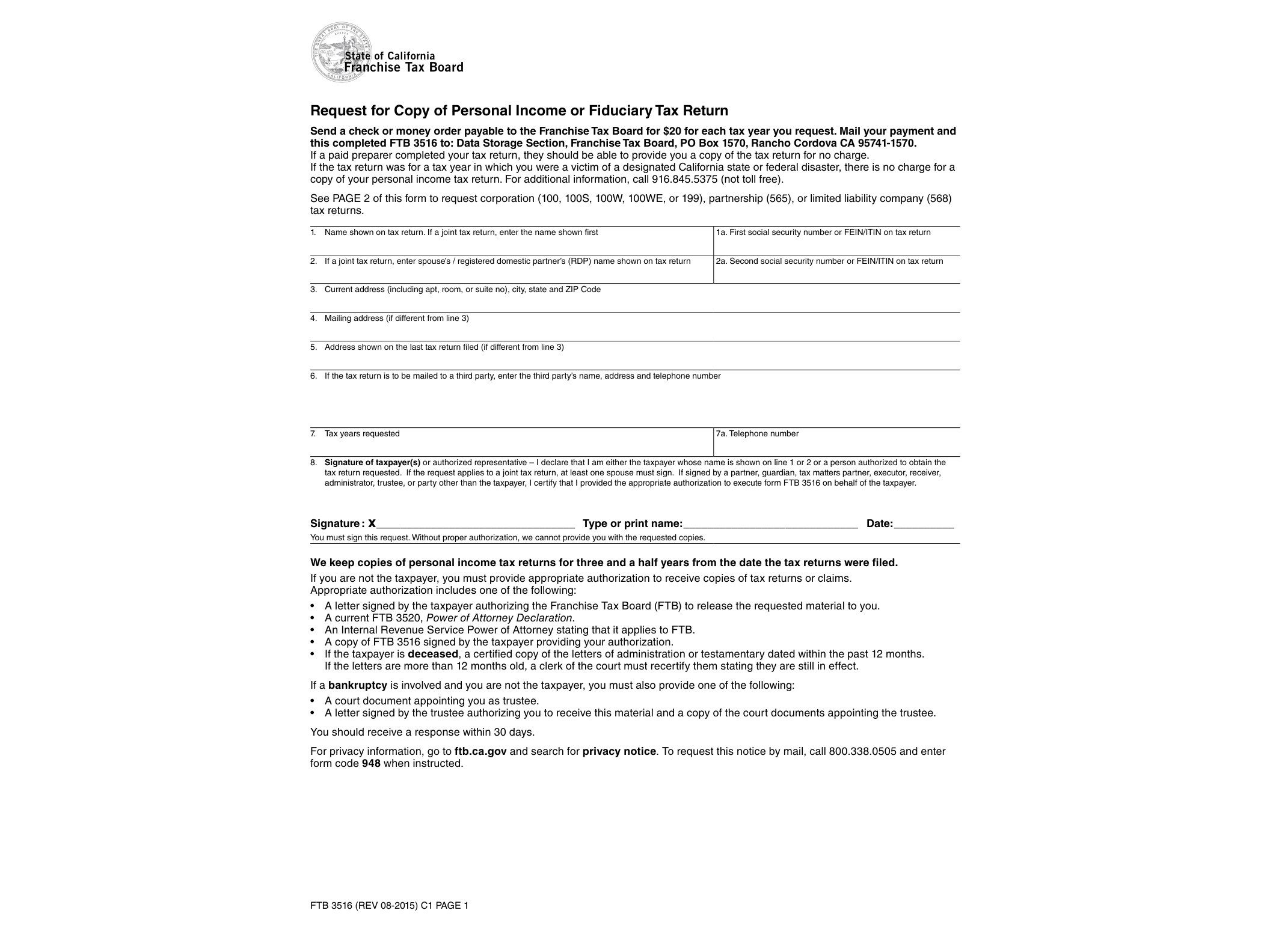
FTB Form 3516, Request for Copy of Personal Income or Fiduciary Tax Return, is the document Californians use to obtain a copy of a previously filed state tax return from the Franchise Tax Board. Unlike a tax transcript, which only summarizes line items, this form gets you an actual copy of the return as it was filed, along with any accompanying schedules you request.
This form applies to two categories of returns: personal income tax returns (Form 540 series) and fiduciary income tax returns filed on behalf of estates or trusts (Form 541). If you need a copy of a business return, this particular form won’t work — FTB has separate procedures for corporate and partnership filings.
Who Needs This Form
People request copies of old California tax returns for several practical reasons: applying for a mortgage or loan, responding to an IRS or FTB audit, verifying income for a rental application, settling an estate, or simply because they lost their own records in a move, fire, or computer crash. Accountants and tax preparers also file this form on behalf of clients who need historical records to prepare an amended return or resolve a discrepancy.
If you’re the executor or trustee handling a deceased person’s estate, you’ll likely need this form to pull the decedent’s past fiduciary or personal returns as part of settling their affairs. In situations involving a trust, it can also help to understand related authorization documents, such as the one-time release process covered in FTB Form 3518, which governs how confidential tax information can be shared with a third party for a single instance.
When to Use FTB Form 3516
You’d file this form any time you need an official, certified copy of a return you already submitted to the FTB — not a new return, and not an amendment. Common triggers include: a lender or government agency demanding a certified copy, missing paperwork during an audit, or needing several years of past filings consolidated for a financial review. The FTB generally keeps returns on file for the current year plus the previous six years, so requests for older returns may come back empty or require additional verification.
How to Fill It Out
The form itself is straightforward and fillable digitally as a PDF, meaning you can type your information directly into the fields before printing and signing. You’ll need to provide:
- Your full name and, if applicable, your spouse’s or the fiduciary’s name
- Social Security Number or Individual Taxpayer Identification Number (or the estate/trust’s FEIN for fiduciary returns)
- Current mailing address
- The specific tax year(s) you’re requesting
- Whether you want the return itself, or specific schedules and attachments
- Signature and date — this is required, since the FTB won’t process an unsigned request
If someone other than the taxpayer is requesting the copy — like a representative, accountant, or authorized third party — additional authorization documentation may be required. This is where taxpayers sometimes run into confusion about who currently holds authorization to act on their behalf. If you’ve previously granted someone power to receive your tax information and now need to cancel that, FTB Form 3535 is the correct form to revoke that authorization before submitting a new request.
There’s a fee attached to each tax year requested, and the FTB typically processes these requests within a few weeks, though times can stretch longer during peak filing season (roughly February through April). Mail the completed form along with payment to the address listed in the instructions — electronic submission isn’t currently an option for this particular request.
One detail worth double-checking before mailing: make sure the tax year and taxpayer identification numbers match exactly what was on the original return. Mismatched information is the most common reason these requests get delayed or rejected. For those managing multi-state filings, it also helps to understand how attachment and reporting requirements differ elsewhere, such as the structure used in New York’s Form IT-203-S-ATT for nonresident group returns, since state-specific documentation rules vary widely.
Download Official Form 3516 (PDF)
Opens the official government PDF in a new tab