
Download Official Form DTF686ATT (PDF)
Opens the official government PDF in a new tab
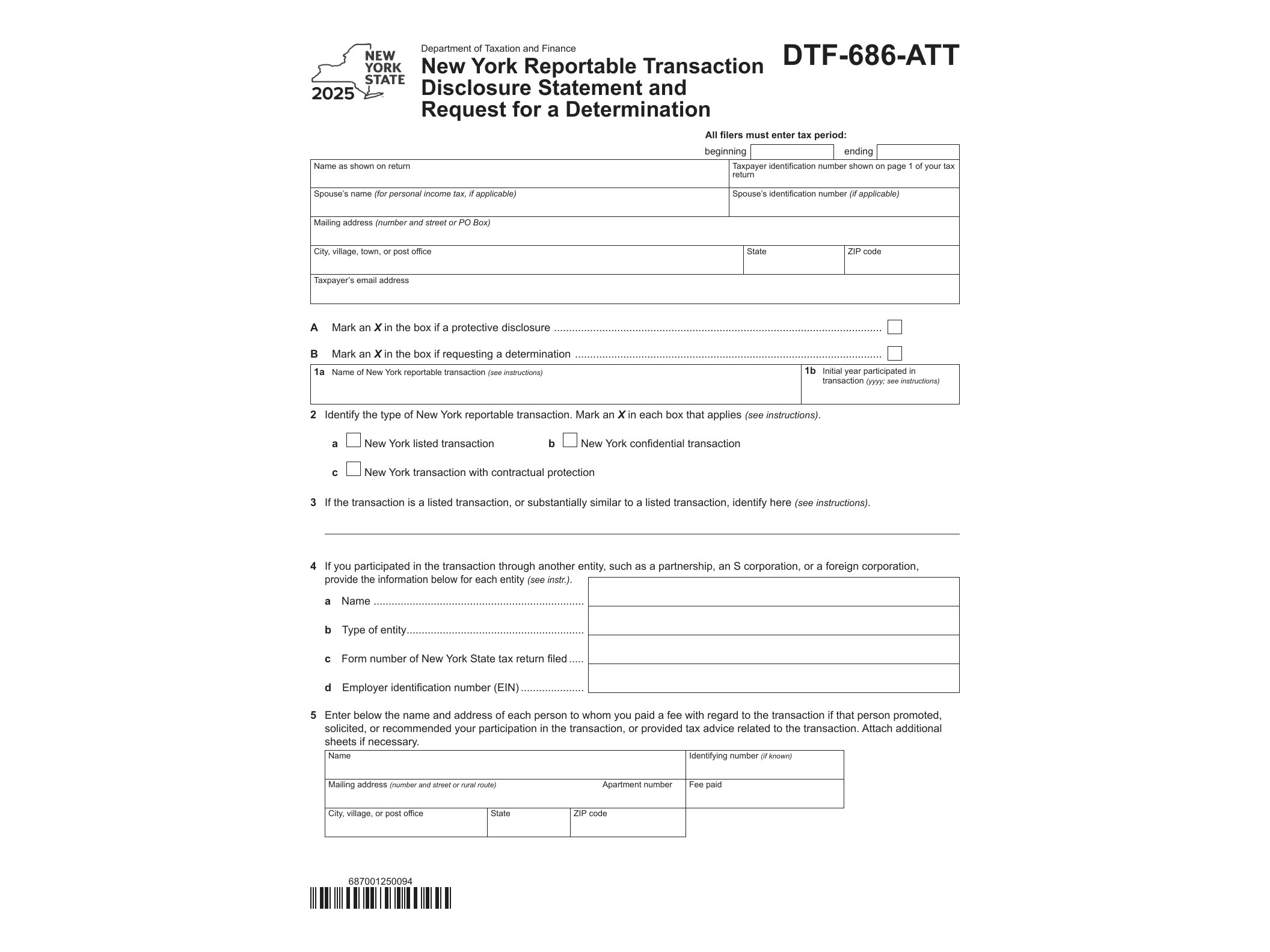
Form DTF-686-ATT is a supplemental attachment used by the New York State Department of Taxation and Finance to collect detailed information about transactions that the state considers “reportable.” It works alongside Form DTF-686, the main Reportable Transaction Disclosure Statement, and is required when a taxpayer participates in certain transactions that carry a higher risk of being used for tax avoidance or aggressive tax planning.
Unlike routine tax forms, this attachment isn’t something most individuals or small businesses will ever encounter. It’s aimed at taxpayers, tax return preparers, and material advisors who are involved in transactions flagged under New York’s reportable transaction rules, which largely mirror federal reportable transaction categories defined by the IRS. If a transaction has been identified as a listed transaction, a transaction of interest, or otherwise meets the criteria for mandatory disclosure, DTF-686-ATT is where the taxpayer lays out the specifics.
Who Needs to File This Form
Generally, filers fall into a few categories:
- Taxpayers who participated in a transaction that New York or the IRS has designated as reportable
- Material advisors who organized, managed, or provided advice on a reportable transaction and have a New York filing obligation
- Businesses or individuals seeking a formal determination from the Department of Taxation and Finance about whether a specific transaction should be treated as reportable
That last point is important: DTF-686-ATT isn’t only for disclosure after the fact. It also serves as the vehicle for requesting a determination when there’s genuine uncertainty about whether a transaction triggers reporting requirements in the first place. Rather than guessing and risking penalties, taxpayers can use this attachment to ask the state directly.
When the Form Comes Into Play
Reportable transaction disclosure isn’t tied to a single calendar event like a sale or purchase. It’s triggered by participation in a transaction type that regulators have already flagged as potentially abusive, or one closely resembling a previously identified scheme. Because these designations can change from year to year, the version dated for tax year 2025 reflects the most current list of transaction categories and filing instructions.
Filers typically submit DTF-686-ATT alongside their New York tax return for the year in which they participated in the transaction, or as a standalone request when seeking a determination outside the normal filing cycle. Missing this disclosure isn’t a minor oversight — failure to report can result in significant penalties, separate from any tax owed on the underlying transaction itself.
What Information Goes Into the Form
The attachment asks for specifics that go well beyond what a standard tax return captures: a description of the transaction, the parties involved, the tax benefits claimed or expected, and the reason the taxpayer believes the transaction may or may not qualify as reportable. If you’re requesting a determination rather than making a disclosure, you’ll need to lay out the facts clearly enough for the Department to issue a meaningful ruling.
Because the stakes involve potential penalties and formal legal determinations, this isn’t a form to fill out casually. Many filers work with a tax attorney or CPA familiar with reportable transaction rules, since the language used to describe the transaction can affect how it’s classified.
Getting and Completing the Form
Form DTF-686-ATT is available as a fillable PDF directly from the New York State Department of Taxation and Finance. The digital fields let you type responses directly into the document before printing or saving it, which helps avoid the illegibility issues that come with handwritten submissions on complex tax paperwork.
Before submitting, review the instructions tied to Form DTF-686 itself, since the attachment doesn’t stand alone — it supplements the primary disclosure statement and should be filed together with it, or as directed by the Department when a standalone determination request is being made.
If you’re dealing with other New York tax compliance matters, it’s worth knowing what related resources exist. Businesses handling bulk sales issues might also need to review Form AU-196.10, while contractors dealing with exempt purchases often reference Form ST-120.1. And if a dispute or delay arises during any part of this process, Form DTF-911 can be used to request help from the Office of the Taxpayer Rights Advocate.
Given the complexity and potential consequences tied to reportable transactions, double-check the current instructions each filing season, since transaction categories and thresholds can shift from one tax year to the next.
Download Official Form DTF686ATT (PDF)
Opens the official government PDF in a new tab