
Download Official Form 2924 (PDF)
Opens the official government PDF in a new tab
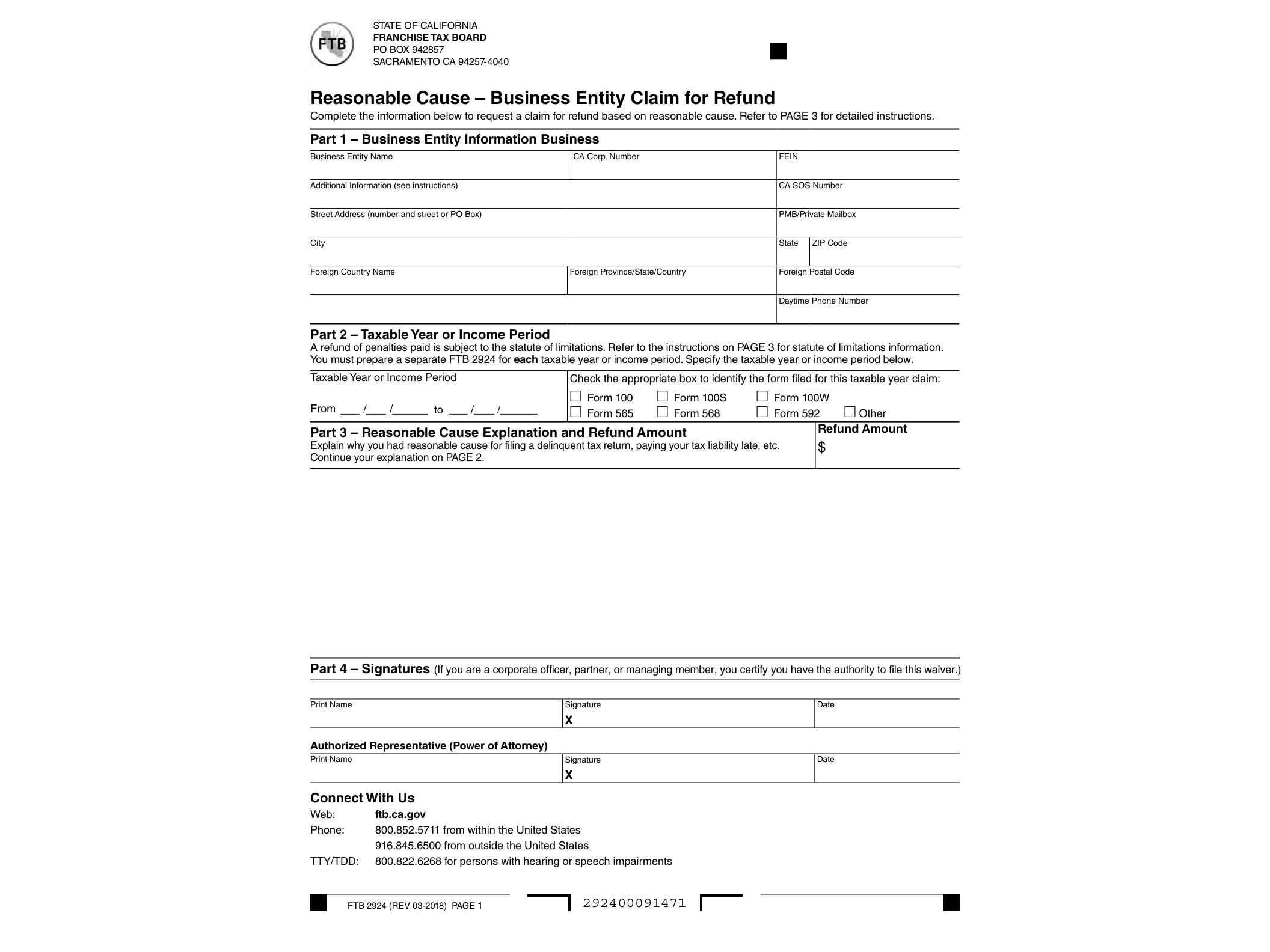
FTB Form 2924, officially titled Reasonable Cause – Business Entity Claim for Refund, is a form issued by the California Franchise Tax Board that lets corporations, LLCs, partnerships, and other business entities ask the state to refund penalties that were assessed for late filing, late payment, or underpayment – when there was a legitimate, defensible reason for the delay.
Penalties from the FTB aren’t automatically waived just because a business had a good reason for missing a deadline. The agency requires a formal written request that lays out the facts, explains why the entity couldn’t comply on time, and asks for the penalty to be reversed and, if already paid, refunded. Form 2924 is the standardized way to make that request instead of writing an informal letter that may get lost or rejected for missing required elements.
Who Needs to File Form 2924
This form is for business entities only – not individuals. That includes C corporations, S corporations, LLCs taxed as corporations or partnerships, and other registered entities that received a notice from the FTB assessing a penalty for something like a late-filed return, late payment of tax due, or a late estimated tax payment. If your business already paid the penalty and now wants that money back, or if the penalty is still outstanding and you want it removed before paying, Form 2924 is the correct vehicle for that request.
Common triggers for penalty assessments include missing the deadline tied to an amended return like Form 100X, failing to submit an annual LLC tax payment reflected in FTB Form 3522, or other timing issues connected to estimated tax obligations. If the delay was tied to circumstances genuinely outside the entity’s control, Form 2924 gives you a structured way to make that case.
When to Use This Form
File Form 2924 after a penalty has been assessed, whether or not you’ve already paid it. If the penalty hasn’t been paid yet, submitting the form can potentially stop collection while the FTB reviews your claim. If it has already been paid, the form functions as a refund claim, and approval results in the FTB returning the penalty amount.
Reasonable cause typically covers situations like serious illness or death of the person responsible for filing, natural disasters, destruction of records, reliance on incorrect written advice from the FTB itself, or other circumstances a reasonable business owner couldn’t have anticipated or avoided. Simply forgetting a deadline, cash flow problems, or an accountant being busy usually don’t qualify, so it’s worth being realistic about your chances before filing.
How to Complete and Submit Form 2924
The form is a fillable PDF, so you can type directly into the fields rather than filling it out by hand. You’ll need to provide the entity’s name, California corporation number or FTB entity ID, the tax year involved, the specific penalty being disputed, and a detailed written explanation of the reasonable cause. The FTB expects specifics – dates, names, and supporting documentation – not a vague statement that something came up.
Attach any evidence that backs up your explanation: medical records, insurance claims, correspondence, or anything else that supports the timeline you’re describing. Weak or unsupported claims are far more likely to be denied.
Once completed, mail the form and attachments to the address listed in the instructions on the FTB website. There’s no online submission option for this particular claim, so keep a copy of everything you send along with proof of mailing. Processing takes time, and the FTB may follow up requesting additional documentation before making a decision.
Entities that also deal with multistate partnership withholding issues should be aware that other exemption paperwork, such as Form CT-2658-E for New York partners, follows a similar logic of documenting your position clearly before submitting a claim.
If your reasonable cause claim is denied, the FTB will send a written explanation, and you generally have the option to appeal or provide additional information. Keeping detailed, organized records from the start makes that follow-up process considerably easier.
Download Official Form 2924 (PDF)
Opens the official government PDF in a new tab