
Download Official Form RP459A (PDF)
Opens the official government PDF in a new tab
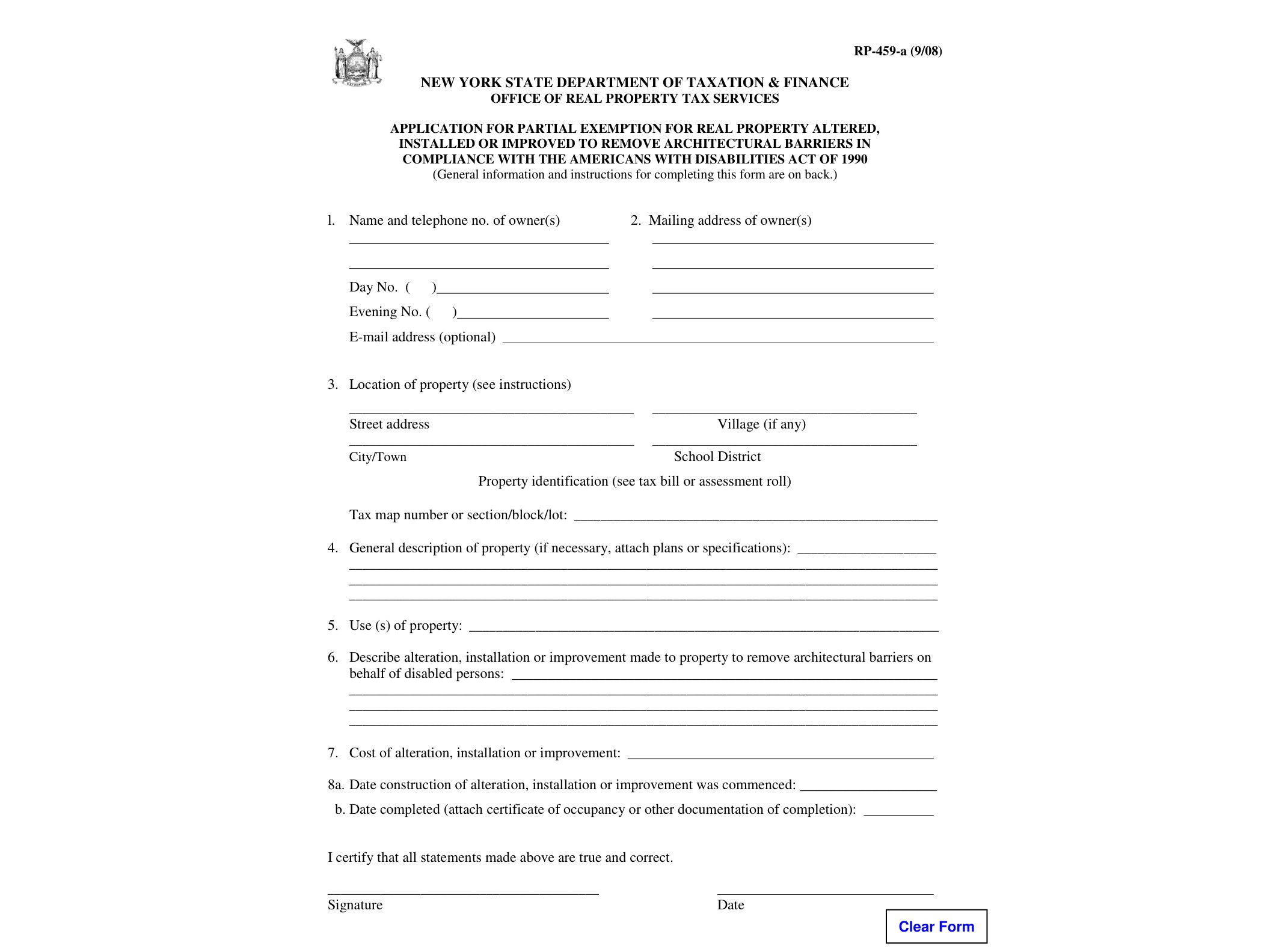
Form RP-459-A is issued by the New York State Department of Taxation and Finance and is used to apply for a partial property tax exemption on the value added to real property when that value comes from alterations, installations, or improvements made to remove architectural barriers for people with disabilities. This exemption exists to encourage property owners to comply with the Americans with Disabilities Act of 1990 without facing a full increase in their assessed value because of it.
In plain terms, if you own a building and you spend money adding a wheelchair ramp, widening doorways, installing an accessible restroom, adding grab bars, or making other structural changes required to remove physical barriers, that construction typically raises the assessed value of your property. Without an exemption, this could mean a higher property tax bill simply for making your building accessible. Form RP-459-A allows the increase in assessed value attributable to those specific ADA-compliance improvements to be exempted from taxation, so owners aren’t penalized financially for meeting federal accessibility requirements.
Who Needs This Form
This form is relevant to owners of commercial, residential, or mixed-use real property in New York State who have recently completed construction work specifically intended to remove architectural barriers as defined under the ADA. It applies to businesses retrofitting a storefront, landlords upgrading rental units, and property owners of any building type where physical modifications were made to improve accessibility for people with disabilities.
It’s worth noting that this exemption is tied to the physical property improvement itself, not to the personal income or disability status of an occupant. That distinguishes it from other disability-related property tax relief programs in New York. For example, property owners looking for exemptions based on an occupant’s disability and income limitations should instead look at Form RP-459-C, which covers partial tax exemptions for persons with disabilities and limited incomes, often supported by the supplemental RP-459-C-Wkst income worksheet. Property owners applying on behalf of crime victims with physical disabilities should reference Form RP-459-B instead. RP-459-A is specifically about the construction work done to the building, regardless of who occupies it.
When to File RP-459-A
This application should be filed with the local assessor’s office after the qualifying ADA-related construction has been completed, and generally before the taxable status date set by the local municipality, since assessment exemptions are tied to that annual deadline. Filing deadlines can vary slightly by town or city, so it’s a good idea to confirm the taxable status date with your local assessor before submitting the completed form, since missing that window can push your exemption request to the following assessment year.
What Information You’ll Need
The form asks for standard identifying details about the property, including the owner’s name, property location, and tax map identification. You’ll also need to describe the specific alterations made to remove architectural barriers, provide the cost of that construction, and indicate the completion date of the work. Supporting documentation, such as contractor invoices or permits related to the accessibility improvements, is typically expected to back up the claimed costs, since the exemption is calculated based on the increase in assessed value directly tied to that documented spending.
How to Get and Complete the Form
Form RP-459-A is available directly from the New York State Department of Taxation and Finance as a fillable PDF, which means you can type your information directly into the form fields on a computer before printing it for signature and submission. There is no fee to file the application itself. Once completed, the form is submitted to the assessor in the city or town where the property is located rather than to the state tax department directly, since local assessors are responsible for reviewing and granting these exemptions on the municipal tax roll.
Download Official Form RP459A (PDF)
Opens the official government PDF in a new tab