
Download Official Form RP5217AC (PDF)
Opens the official government PDF in a new tab
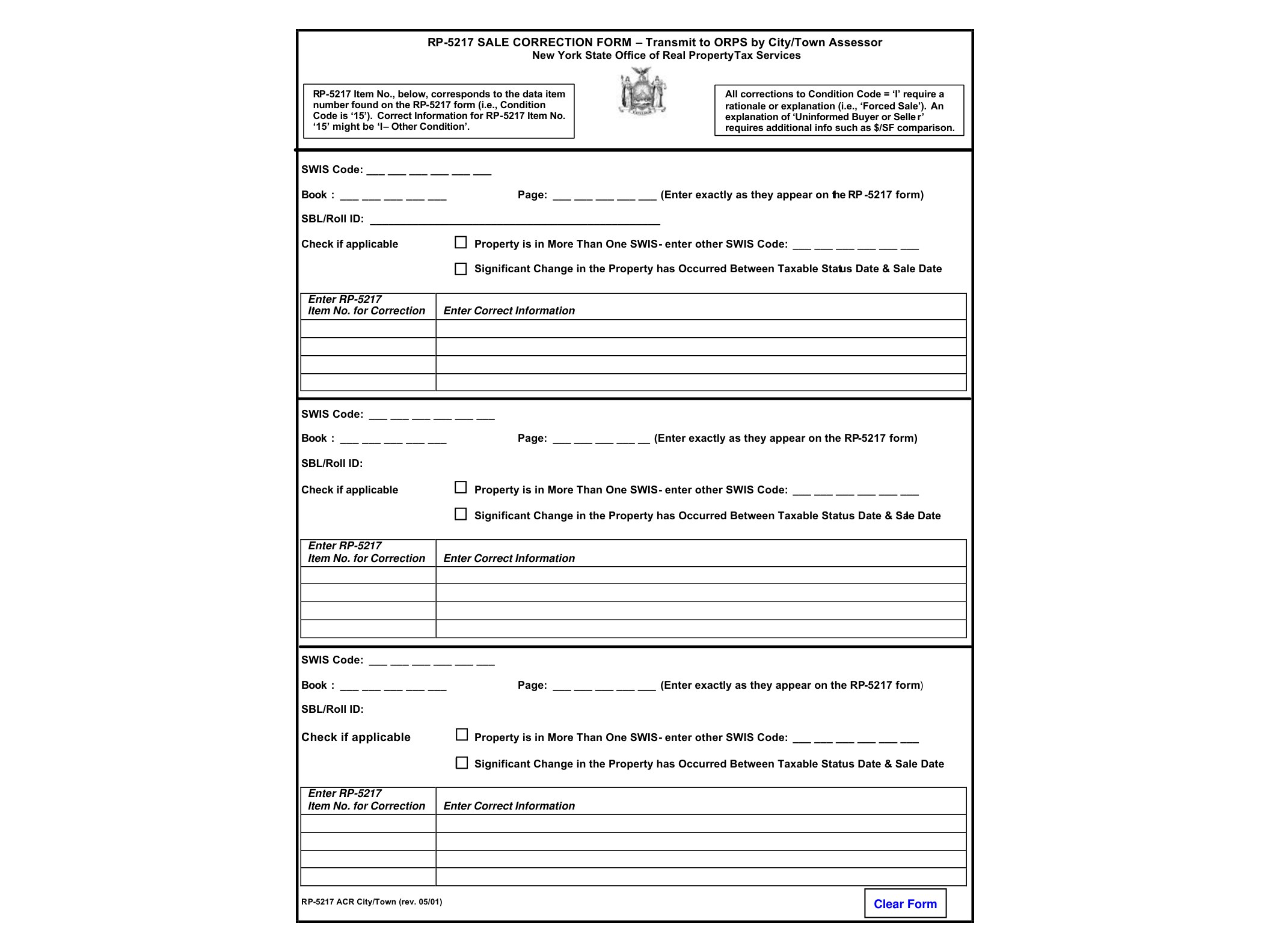
Form RP-5217ACR is the city/town version of the Sale Correction Form used across New York’s real property tax system to fix errors on a previously filed RP-5217 Real Property Transfer Report. When a deed transfer is recorded and the original RP-5217 contains mistakes — wrong sale price, incorrect property classification, a typo in the buyer or seller name, or an inaccurate parcel description — this correction form is what puts the record straight at the local level.
The form is issued by the New York State Department of Taxation and Finance, but it’s filed and processed through the city or town assessor’s office rather than directly with the state. That’s the key distinction between this version and the county-level equivalent. If you’ve already looked into Form RP-5217-ACR for county directors, this city/town form serves the same corrective purpose but routes through a different office depending on where the property sits and how that jurisdiction handles real property records.
Who Needs to File This Form
City and town assessors are the primary users of Form RP-5217ACR, but the request to correct a record typically originates from someone else — an attorney closing a real estate transaction, a title company that caught a discrepancy, or even the buyer or seller who noticed an error after the deed was recorded. In practice, the assessor’s office fills out and submits the form once they’ve verified what needs to change.
Real estate attorneys and title agents should know this form exists because sale price errors and classification mistakes on RP-5217 filings are common, especially on transactions involving multiple parcels or unusual property types. Catching these errors early avoids downstream problems with assessment rolls and equalization rates.
When This Form Comes Into Play
You’ll need Form RP-5217ACR any time an already-submitted RP-5217 Real Property Transfer Report needs correcting after it’s been processed at the city or town level. Common triggers include:
- The sale price entered on the original report doesn’t match the actual consideration paid
- The property classification code is wrong (residential vs. commercial, for example)
- Grantor or grantee names were misspelled or transposed
- The parcel ID or tax map number doesn’t match the actual property
- The date of sale or deed recording information was entered incorrectly
Timing matters here. The sooner an error is identified and corrected, the less likely it is to affect assessment records, sales ratio studies, or any state equalization calculations that rely on accurate transfer data. Assessors generally want these corrections filed as soon as the mistake is discovered rather than waiting for the next assessment cycle.
How to Get and Complete the Form
Form RP-5217ACR is available as a fillable PDF directly from the New York State Department of Taxation and Finance website. Since it includes AcroForm fields, you can type information directly into the form on your computer before printing it for signature and submission — no need to fill it out by hand.
To complete it accurately, you’ll need the original RP-5217 filing information on hand: the parcel’s SWIS code, print key or tax map number, and the specific fields being corrected. The form asks you to identify the original entry and the corrected value side by side, so having the deed and the original transfer report in front of you makes the process much faster.
Once completed, the form goes to the city or town assessor’s office where the original RP-5217 was filed, not to the state Tax Department directly. If you’re unsure whether your municipality processes these locally or forwards them through the county, it’s worth a quick call to the assessor’s office before submitting anything.
This form works alongside other real property tax administration documents assessors handle regularly, including tax map maintenance filings. If you’re dealing with related parcel or tax map discrepancies, Form RP-503 covers tax map maintenance certification, which sometimes intersects with sale correction issues when parcel boundaries or identifiers are involved. Separately, property transfers involving exempt status changes may also require a look at Form RP-520/551, which notifies tax levying bodies about exempt property transfers.
Download Official Form RP5217AC (PDF)
Opens the official government PDF in a new tab