
Download Official Form 2917 (PDF)
Opens the official government PDF in a new tab
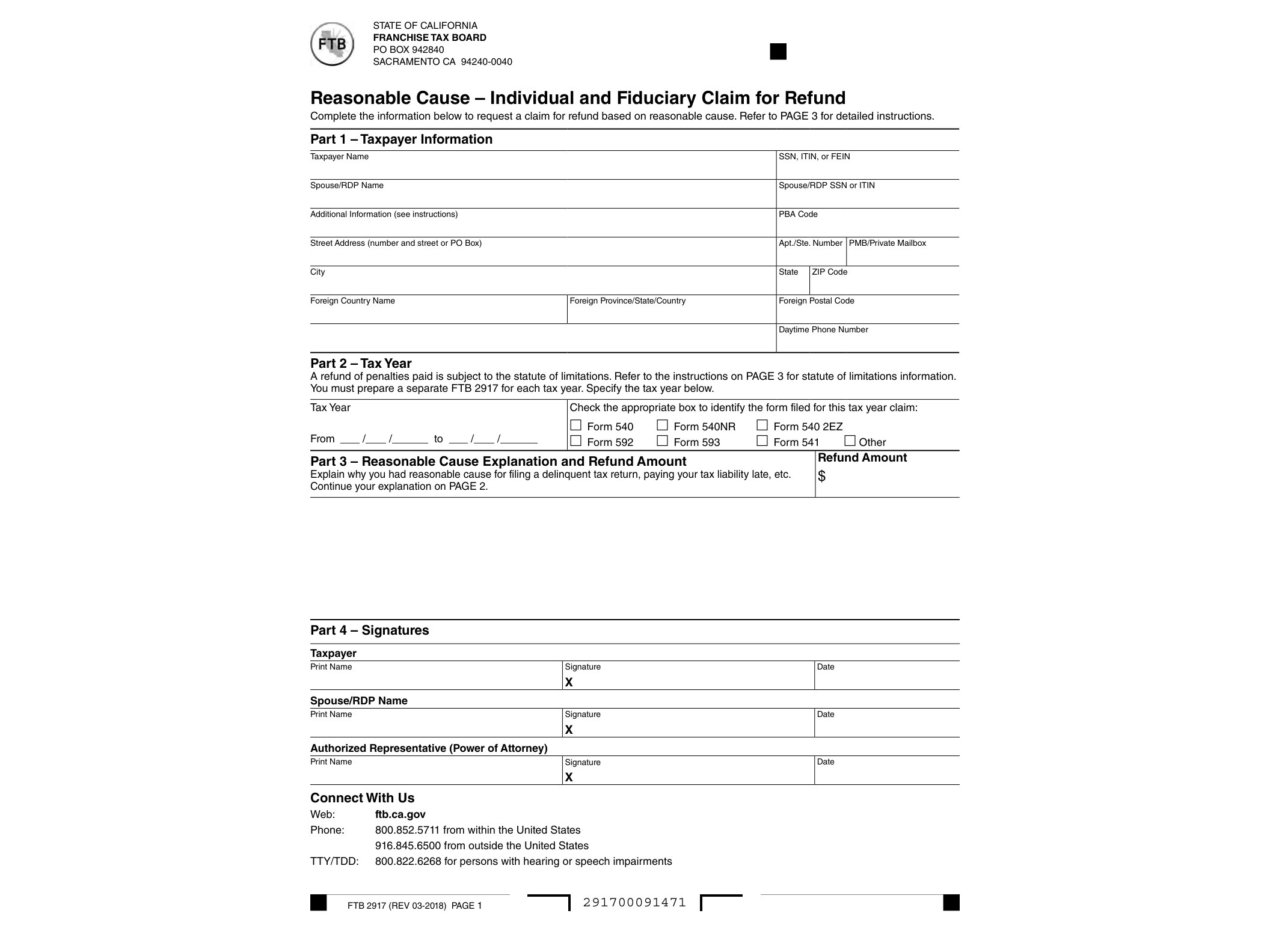
FTB Form 2917, officially titled Reasonable Cause – Individual and Fiduciary Claim for Refund, is a form issued by the California Franchise Tax Board (FTB) that lets individual taxpayers and fiduciaries request a refund of penalties already paid, when there was a valid reason for not filing or paying on time. It’s essentially a written explanation, submitted on a standardized form, that walks the FTB through why a penalty shouldn’t have applied in the first place.
This form is separate from an original return or an amended return. You use it specifically when a penalty has been assessed and paid, and you believe the circumstances that caused the late filing or late payment qualify as “reasonable cause” under California tax law.
Who Needs FTB Form 2917
This form applies to two types of filers: individual taxpayers and fiduciaries (people or institutions managing an estate or trust on behalf of someone else). If either was hit with a penalty by the FTB — commonly a late-filing penalty or a late-payment penalty — and there’s a legitimate explanation behind the delay, Form 2917 is the vehicle for making that case.
Typical situations that might qualify as reasonable cause include:
- Serious illness or hospitalization of the taxpayer or an immediate family member
- Natural disasters or other events beyond the taxpayer’s control
- Death of the taxpayer or a close family member around the filing deadline
- Reliance on incorrect written advice from the FTB itself
- Unavoidable absence, such as military deployment or being out of the country
Simply forgetting to file, running out of time, or not having enough funds to pay generally won’t meet the reasonable cause standard on their own. The FTB expects a specific, documented reason, not just a general excuse.
When to Use This Form
Form 2917 comes into play after a penalty has already been assessed and paid. It’s not a form you file alongside your original tax return to avoid a penalty upfront — it’s a refund claim, meaning the money has already left your pocket and you’re asking the FTB to give it back based on the circumstances you explain.
Keep in mind that refund claims in California generally must be filed within the later of four years from the original due date of the return, or one year from the date the penalty was paid. Missing that window usually means losing the right to the refund, so it’s worth acting on this soon after paying the penalty rather than waiting.
How to Fill Out and Submit Form 2917
The form itself is short, but the explanation section is where the real work happens. You’ll need to provide:
- Your name, Social Security Number or taxpayer ID, and contact information
- The tax year and the specific penalty being disputed
- A detailed written statement explaining what happened and why it prevented timely filing or payment
- Supporting documentation — medical records, obituaries, disaster declarations, or correspondence from the FTB, depending on your situation
Because this form has fillable digital fields (it’s an AcroForm PDF), you can complete it on your computer using Adobe Acrobat Reader or similar software instead of printing it out and writing by hand. That said, since supporting documents often need to be attached, most people end up printing the completed form along with their evidence and mailing the packet to the FTB address listed in the form’s instructions.
Vague statements like “I was busy” or “I didn’t know the deadline” rarely succeed. The FTB is looking for a direct connection between the specific event and the specific missed deadline — the more concrete and well-documented your explanation, the better your odds.
If you’re dealing with California tax matters more broadly, it can help to understand how other state-specific credits and forms interact with your filing. For example, taxpayers who split time between states sometimes need to reference Form IT-112-R for New York State Resident Credit when reconciling taxes paid to multiple jurisdictions. Military members stationed in California, meanwhile, may also want to look into FTB Form 2334 for Military VITA Sites, which connects service members with free tax preparation assistance that can help avoid penalty situations in the first place.
Once submitted, the FTB reviews the claim and either approves the refund, denies it, or requests additional information. There’s no guaranteed timeline, so it’s reasonable to follow up if you haven’t heard back within a few months. If your claim is denied, you generally retain the right to appeal through the FTB’s protest and appeals process, similar to disputing other adjustments made to a state return.
Download Official Form 2917 (PDF)
Opens the official government PDF in a new tab